
Satya Nadella says days of operating system and apps are over, era of Agents is beginning
Microsoft CEO Satya Nadella says computing is entering a new era where AI agents, not operating systems or apps, become the primary interface. The company unveiled Project Solara, a platform designed with Qualcomm to power agent-first devices capable of working across apps, workflows and screens.
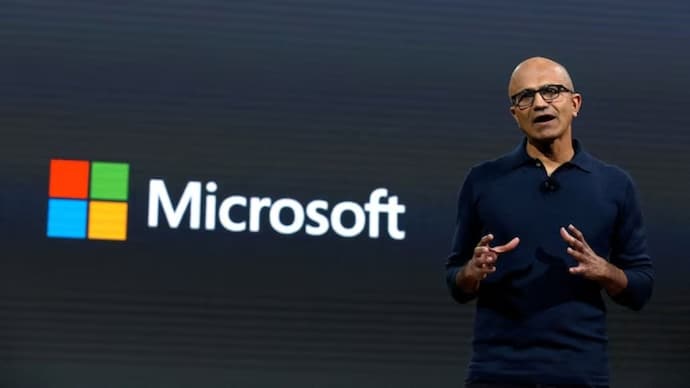

Microsoft believes the next computing revolution will not be defined by operating systems or applications, but by artificial intelligence agents. Speaking at the company's Build 2026 developer conference, chief executive Satya Nadella said Microsoft is moving away from a world centred on apps and devices towards one where AI agents become the primary interface between people and computers.
Nadella's comments came as Microsoft unveiled Project Solara, a new chip-to-cloud platform designed in partnership with Qualcomm for what it calls "agent-first computing". The company argues that AI agents are evolving beyond assistants embedded inside apps and will increasingly work across software, devices and workflows, potentially reshaping how future computers are built and used.
During a conversation with Qualcomm president and chief executive Cristiano Amon, Nadella described the transition as a platform shift unlike previous computing eras. "There's a real platform shift. We're moving from building operating systems and devices for apps to agents," he said.
Project Solara is built around Microsoft's belief that AI agents will increasingly become the primary way people interact with technology. Instead of opening individual applications and manually carrying out tasks, users would rely on AI agents capable of working across multiple apps, devices and services on their behalf.
What is Project Solara?
Microsoft describes Project Solara as a chip-to-cloud platform that combines hardware, software and Azure cloud services to enable agent-first experiences. The platform allows users to interact dynamically with artificial intelligence through new, specialized form factors. According to the company, Solara is designed around the idea that AI agents are becoming both a new unit of programming and a new way for humans to interact with computers.
In a detailed technical paper released alongside the announcement, Microsoft argued that computing has continually evolved from mainframes to personal computers, smartphones and wearables, with each generation moving closer to the user. The company believes AI agents represent the next interaction layer, allowing people to communicate with computers through natural language rather than navigating apps, menus and interfaces.
How Microsoft thinks AI agents will replace apps
Meanwhile, Microsoft outlined three stages of AI integration. The first places AI beside an app as a helper, similar to today's chatbots and copilots. The second embeds AI directly inside applications, making it central to the user experience. The third, and most ambitious stage, sees AI operating outside individual apps, coordinating workflows across multiple applications, services and devices while maintaining context. Solara is designed specifically for this third model.
A key component of the platform is what Microsoft calls "just-in-time UI". Rather than developers building separate interfaces for different devices, agents would dynamically adapt the user experience based on screen size, content and interaction methods such as voice, touch, vision and multimodal inputs. The company argues this could significantly reduce the cost and complexity of creating entirely new device categories.
Solara is built for multi agent world
Microsoft also emphasised that the future will not revolve around a single AI assistant. Instead, Solara is being built for what it describes as an open, multi-agent world. The company is developing technologies such as an agent dispatcher and an agent task manager to coordinate multiple specialised agents and determine which one should handle a specific task.