
Vadodara student slammed for dance video but not everyone's on the same page
A student's dance video at Vadodara's Maharaja Sayajirao University received immense backlash but a section of the internet took a stand for her.
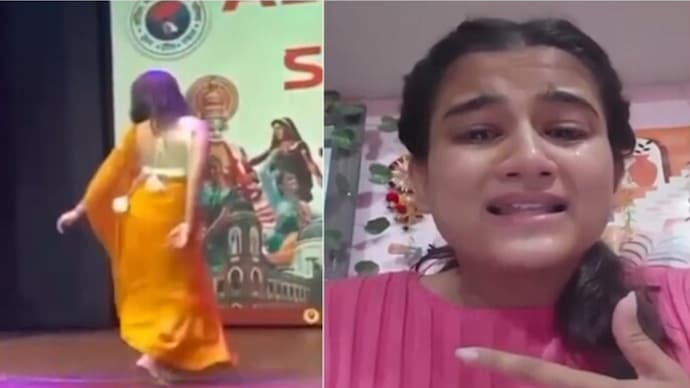
Vadodara student breaks down after backlash over dance performance at campus event

New Delhi,UPDATED: Apr 15, 2026 13:13 IST
A viral video of a student dancing at a university event in Vadodara may have sparked controversy, but a large section of the internet firmly stood by her, urging her not to apologise for something they believed was completely harmless.
The incident took place at Maharaja Sayajirao University during the ‘Sanskar Sangam’ event organised by Akhil Bharatiya Vidyarthi Parishad at the CC Mehta auditorium. The video showed a student, dressed in a saree, performing to the Bollywood song Dhak Dhak Karne Lagaa.
As the clip began circulating on social media, it triggered sharp reactions from some quarters, with critics questioning the appropriateness of the performance at the event. Amid the backlash, the student issued an apology, which further fuelled debate online.
However, the narrative quickly shifted as several users came out in her support, questioning why she had felt the need to apologise in the first place.
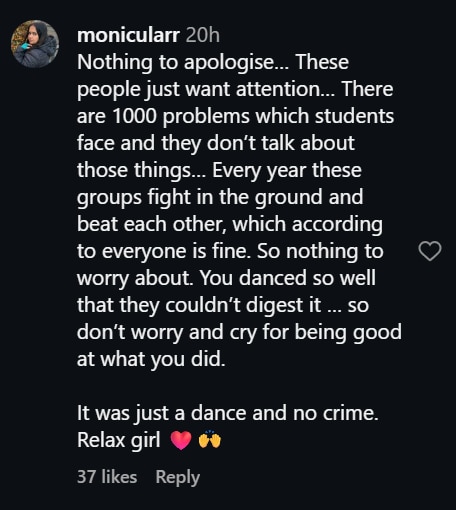
“Nothing to apologise. These people just want attention. There are 1000 problems which students face and they don’t talk about those things. Every year these groups fight on the ground and beat each other, which according to everyone is fine. So nothing to worry about. You danced so well that they couldn’t digest it, so don’t worry and cry for being good at what you did. It was just a dance and no crime. Relax girl,” one Instagram user wrote.
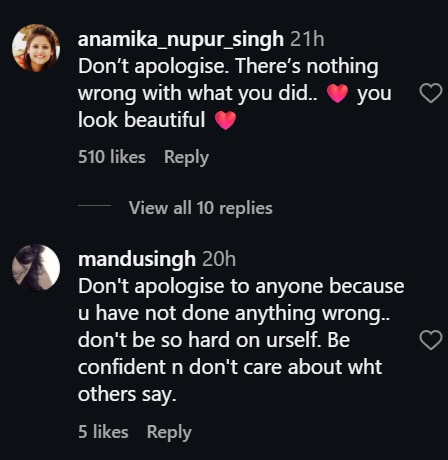
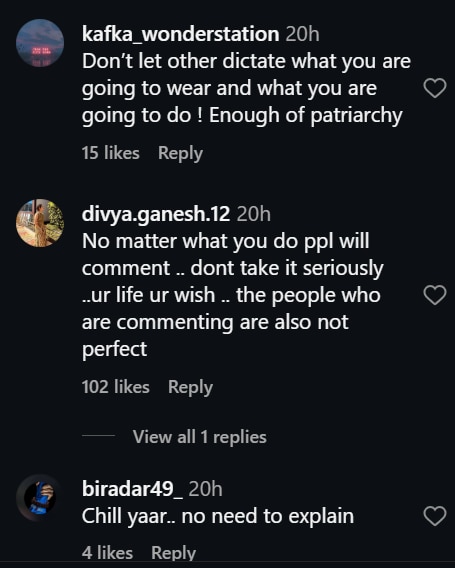
Others echoed similar sentiments. “Don't cry and don't apologize, it's fine, keep smiling,” read another comment. A third user added, “Why do you bother about others so much? Your intention was good so keep smiling & move on.”
“Don't apologise to anyone because you have not done anything wrong., don't be so hard on yourself. Be confident and don't care about what others say,” another comment read.
As the video continued to circulate, the incident opened up a broader conversation around expression, moral policing, and the pressures young people faced in public spaces.
- Ends