
Against hegemony, double standard: China jabs US at SPIEF, calls for greater UN role
Chinese Vice President Han Zheng used the SPIEF 2026 plenary session to call for a stronger role for the United Nations and greater international cooperation, while warning against hegemony and double standards in global affairs.
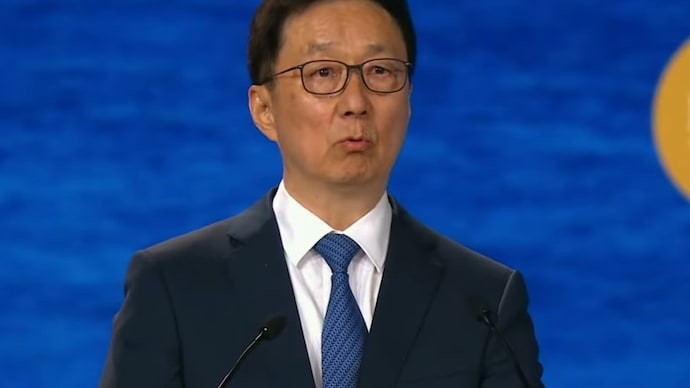

Chinese Vice President Han Zheng used the SPIEF 2026 plenary session to call for a stronger role for the United Nations and greater international cooperation, while warning against hegemony and double standards in global affairs.
Addressing the session, Han said the world is facing a deficit of global leadership amid growing international challenges and uncertainties. He stressed that the current global environment requires stronger cooperation and coordinated efforts among nations to tackle shared economic and geopolitical issues.
Han called for strengthening the role of the United Nations and promoting comprehensive development to address global challenges. He said countries should work together to improve the welfare of their populations and pursue inclusive development.
The Chinese Vice President also spoke against hegemony and double standards, arguing that nations should work collectively to build a more balanced and cooperative international order.
His remarks came during the SPIEF 2026 plenary session, where he underscored the need for effective global leadership, enhanced multilateral cooperation and development-focused policies to respond to rising global uncertainties.
China in a statement on Friday also opposed US sanctions on Cuba's president, the Chinese foreign ministry said on Friday, adding that the US move "once again exposes ... its hegemonic, overbearing, and bullying face" and "will ultimately backfire."
The four-day SPIEF leadership plenary is being viewed as one of the most significant geopolitical conversations of the year, bringing together key leaders from Russia, China, Central Asia and Africa.
The high-profile session comes at a time of growing global uncertainty driven by conflicts in West Asia, shifting geopolitical alliances and changing global power equations. The developments have also underscored India’s strategic balancing in recent months.