
Trump, Xi agree Hormuz must remain open, Iran can never have nukes
Donald Trump and Xi Jinping met in Beijing and agreed the Strait of Hormuz must remain open. The White House said they also agreed Iran must never obtain a nuclear weapon.
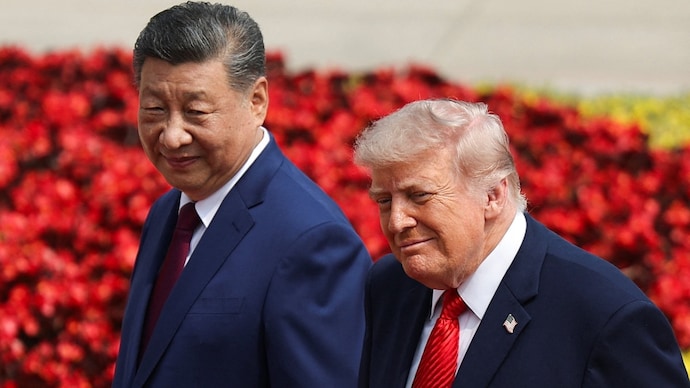

US President Donald Trump and Chinese President Xi Jinping found rare common ground during high-stakes talks in Beijing on Thursday, agreeing that the Strait of Hormuz must remain open. According to the White House, they also agreed that Iran should never obtain a nuclear weapon.
"The two sides agreed that the Strait of Hormuz must remain open to support the free flow of energy," the White House said in a statement after more than two hours of meetings between the American and Chinese delegations in Beijing.
The statement added that Xi opposed "the militarisation of the Strait and any effort to charge a toll for its use".
It also revealed that China had expressed interest in purchasing more American oil in an effort to reduce its long-term dependence on the Gulf route, which has been heavily disrupted since Iran tightened control over Hormuz following the outbreak of the US-Israeli war.
"Both countries agreed that Iran can never have a nuclear weapon," the White House added.
CHINA TAKES MORE GUARDED STANCE
However, China's state-run Xinhua News Agency offered a far more restrained summary, saying only that the two leaders had "exchanged views on major international and regional issues, including the Middle East situation". The Chinese statement made no direct mention of Iran, Hormuz or nuclear weapons.
The future of the Strait of Hormuz loomed over nearly every aspect of Trump's visit to China.
The waterway has become one of the core flashpoints in the Iran conflict after Tehran effectively restricted Gulf shipping routes, which propelled global oil prices higher and forced several countries to tap emergency energy reserves.
Trump arrived in Beijing with mounting political pressure back home, where rising fuel prices, inflation and growing public frustration over the fallout from the Iran war have started weighing heavily on his presidency.
RUBIO SAYS TRUMP DID NOT SEEK XI'S HELP ON IRAN
It was expected the US President will seek Beijing's help in persuading Iran to step back from the blockade and return to broader negotiations. But Secretary of State Marco Rubio stated the US was not asking China to mediate on America's behalf.
"We're not asking for China's help. We don't need their help," Rubio told NBC News after the summit. However, he admitted that the Chinese side had aligned with Washington on keeping the strait open and opposing any tolling system imposed on maritime traffic.
"The Chinese side said they are not in favour of militarising the Straits of Hormuz, and they're not in favour of a tolling system, and that's our position," Rubio said.
The war with Iran has changed the relationship between Washington and Beijing in ways neither side can fully ignore. Trump's visit to China itself was pushed back by six weeks as the conflict escalated and tensions spread across the Gulf.
Even though Iran dominated much of the discussion, the two leaders also touched on Taiwan, trade disputes and the case of jailed Hong Kong publisher Jimmy Lai, according to Marco Rubio.
Rubio acknowledged that while the US may be less vulnerable to oil shocks than many countries, no major economy can avoid the consequences of prolonged disruption in Gulf shipping routes. "We are not immune to global oil prices at some point, because we do buy from the global market, but other countries around the world are paying a much higher price," he said.