
Trump weighs high-risk op to seize 450 kg uranium from Iran, safety concerns loom
A high-risk US plan to seize Iran's uranium stockpile is under consideration, raising the stakes in an already volatile conflict, as diplomacy struggles and military options quietly take shape behind the scenes.
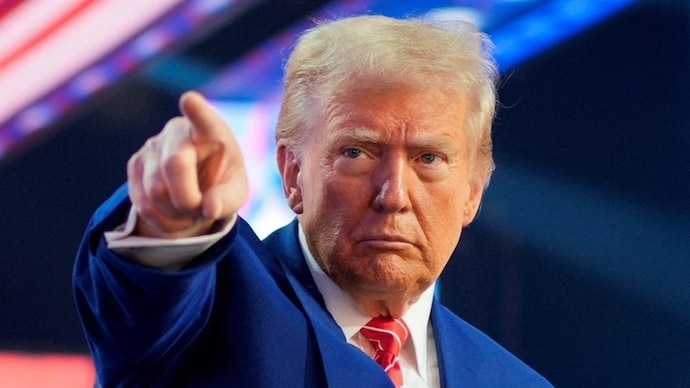

A high-stakes military option is under consideration in Washington, with President Donald Trump weighing whether to send American forces into Iran to extract nearly 1,000 pounds (453.5 kg) of enriched uranium, officials familiar with the discussions said.
The proposed mission, if approved, would place US troops inside Iranian territory for days, possibly longer, marking a significant escalation in the ongoing conflict, as reported by the Wall Street Journal.
Officials said no final decision has been taken, but Trump remains open to the idea as it aligns with his long-standing objective of ensuring Iran never develops a nuclear weapon. At the same time, concerns over the safety of US troops remain central to the deliberations.
The president has also pushed for a diplomatic alternative, asking advisers to pressure Iran into surrendering the material as part of a broader agreement to end the war. However, he has made it clear in private discussions that “the Iranians can’t keep the material”, and has explored the possibility of taking it by force if talks fail.
On Sunday night, Trump issued a blunt warning, telling reporters that Iran must comply with US demands or “they’re not going to have a country”. Referring to the uranium, he added, “They’re going to give us the nuclear dust.”
NO DIRECT TALKS YET
Despite backchannel efforts involving intermediaries such as Pakistan, Turkey and Egypt, there have been no direct negotiations between Washington and Tehran so far.
White House press secretary Karoline Leavitt said preparations were routine. “It’s the job of the Pentagon to make preparations in order to give the commander-in-chief maximum optionality. It does not mean the president has made a decision,” she said.
The Pentagon and US Central Command declined to comment on operational details.
WHERE THE URANIUM IS BELIEVED TO BE
Before airstrikes carried out by the US and Israel in June last year, Iran was believed to possess more than 400 kilograms of 60 percent highly enriched uranium and nearly 200 kilograms of 20 percent fissile material.
According to Rafael Grossi, the stockpile is likely concentrated at two key sites targeted in those strikes: an underground tunnel at Isfahan and a facility at Natanz. Experts say Iran retains the capability to establish new underground enrichment sites if required.
COMPLEX AND DANGEROUS OPERATION
Military experts warn that any attempt to seize the uranium would be among the most complex operations undertaken by the US in recent years.
American forces would have to enter hostile territory under threat from Iranian air defences, drones and missiles. Once on the ground, troops would secure the perimeter while specialised teams search for the material, navigating debris, mines and potential booby traps.
The uranium, believed to be stored in 40 to 50 specialised cylinders, would then need to be safely transported in protective casks, possibly requiring multiple vehicles.
“This is not a quick in and out kind of deal,” said Joseph Votel, a former commander of US Central Command.
The mission could take several days or even a week, depending on conditions on the ground. If no suitable airfield is available, forces may need to establish one to move equipment and extract the material.
RISK OF ESCALATION
Analysts warn that such an operation could trigger retaliation from Iran and extend the conflict beyond the four to six week timeline publicly outlined by Trump’s team.
At the same time, some within the administration are keen to avoid a prolonged war, especially with midterm elections approaching and political pressures mounting at home.
MILITARY PREPARATIONS UNDERWAY
US forces in the region are already preparing for multiple scenarios. Officials said options include deploying additional troops, positioning Marine rapid response units, and mobilising paratroopers from the 82nd Airborne Division to secure strategic locations.
The Pentagon is also considering sending up to 10,000 additional ground troops to expand operational flexibility.
Defence Secretary Pete Hegseth suggested earlier this month that Washington prefers a negotiated outcome but retains military options.
“The president has kept his eye focused on nuclear capabilities,” he said on March 13. “We have a range of options we would welcome Iran deciding that they will give those up.”
DIPLOMATIC PATH STILL OPEN
A peaceful resolution remains possible. The US has previously overseen the removal of enriched uranium from other countries, including Kazakhstan in 1994 and Georgia in 1998.
Officials say such an arrangement would eliminate the need for a risky ground operation. However, with no direct talks underway and positions hardening, the window for diplomacy may be narrowing.
For now, the decision rests with Trump, as military planners continue to prepare for what could become one of the most consequential operations of the conflict.