Can 'Robin Hood of Murshidabad' Adhir Chowdhury win back Baharampur?
Adhir Ranjan Chowdhury faces a crucial test in Baharampur after his Lok Sabha defeat, with a three-cornered contest set to decide his political future and Congress's prospects in Murshidabad.
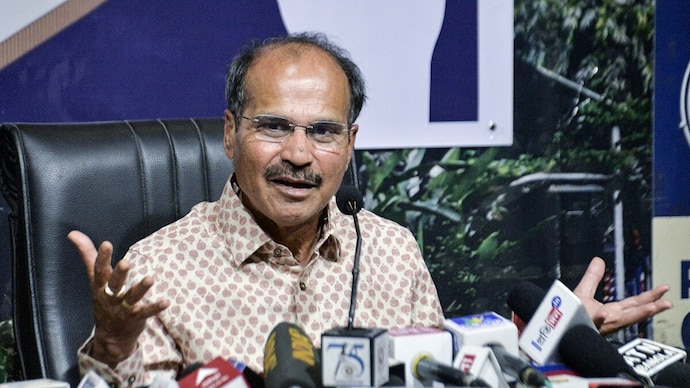
The first phase of the 2026 West Bengal Assembly elections on April 23 could prove decisive for Congress leader Adhir Ranjan Chowdhury, as he attempts a political comeback in Baharampur.
Once seen as the “Robin Hood of Murshidabad”, the 70-year-old leader is now facing what many describe as a battle for relevance.
Chowdhury, a five-time MP and former Union minister, is contesting the Baharampur Assembly seat, part of his long-held Lok Sabha constituency. The move comes after his defeat in the 2024 general elections, where Trinamool Congress (TMC) candidate Yusuf Pathan unseated him, ending his 25-year run in Parliament.
That loss marked a turning point for a leader who had long symbolised Congress dominance in Murshidabad.
Chowdhury’s association with the region spans over three decades. He joined the Congress during Rajiv Gandhi’s tenure and, after losing his first Assembly contest from Nabagram in 1991, won the seat in 1996. He went on to represent Baharampur in Parliament for five consecutive terms, often by comfortable margins.
His defeat in 2024 surprised many observers, as Baharampur had remained one of the few Congress strongholds in West Bengal, alongside pockets like Malda, even as the party declined elsewhere in the state.
The numbers underline the challenge before him. In the 2021 Assembly election, Congress candidate Manoj Chakraborty finished third in Baharampur with a 20.33% vote share. BJP’s Subrata Maitra led with 45.21%, while the Trinamool Congress secured 31.62% to finish second.
This time, the Congress has fielded Chowdhury in place of Chakraborty. The BJP has renominated Maitra, while the Trinamool Congress has put up Narugopal Mukherjee, chairman of the Baharampur Municipality.
The contest has turned into a triangular fight, with Chowdhury up against two established local figures. For the Congress, Murshidabad remains central to any revival strategy in the state. For Chowdhury, the stakes are more immediate.
Campaigning over the past fortnight has focused on local development, minority outreach and organisational strength. The Trinamool Congress has leaned on its governance record, while the BJP has highlighted its strong performance in the 2021 Assembly polls.
Chowdhury, meanwhile, has invoked his five-term record as MP, his accessibility, and his identity as a “son of the soil”. Senior Congress leaders have camped in the district, underlining the importance of the seat.
Polling in Baharampur will be held on April 23, with counting scheduled for May 4.
Political observers say the outcome will show whether Chowdhury still retains his grip on the constituency or if voters have moved on. It may also clarify whether the contest remains triangular or is increasingly tilting towards a direct fight between the BJP and the Trinamool Congress.
For a leader once seen as the “uncrowned king of Murshidabad”, this election could be a crucial test of political survival.
The first phase of the 2026 West Bengal Assembly elections on April 23 could prove decisive for Congress leader Adhir Ranjan Chowdhury, as he attempts a political comeback in Baharampur.
Once seen as the “Robin Hood of Murshidabad”, the 70-year-old leader is now facing what many describe as a battle for relevance.
Chowdhury, a five-time MP and former Union minister, is contesting the Baharampur Assembly seat, part of his long-held Lok Sabha constituency. The move comes after his defeat in the 2024 general elections, where Trinamool Congress (TMC) candidate Yusuf Pathan unseated him, ending his 25-year run in Parliament.
That loss marked a turning point for a leader who had long symbolised Congress dominance in Murshidabad.
Chowdhury’s association with the region spans over three decades. He joined the Congress during Rajiv Gandhi’s tenure and, after losing his first Assembly contest from Nabagram in 1991, won the seat in 1996. He went on to represent Baharampur in Parliament for five consecutive terms, often by comfortable margins.
His defeat in 2024 surprised many observers, as Baharampur had remained one of the few Congress strongholds in West Bengal, alongside pockets like Malda, even as the party declined elsewhere in the state.
The numbers underline the challenge before him. In the 2021 Assembly election, Congress candidate Manoj Chakraborty finished third in Baharampur with a 20.33% vote share. BJP’s Subrata Maitra led with 45.21%, while the Trinamool Congress secured 31.62% to finish second.
This time, the Congress has fielded Chowdhury in place of Chakraborty. The BJP has renominated Maitra, while the Trinamool Congress has put up Narugopal Mukherjee, chairman of the Baharampur Municipality.
The contest has turned into a triangular fight, with Chowdhury up against two established local figures. For the Congress, Murshidabad remains central to any revival strategy in the state. For Chowdhury, the stakes are more immediate.
Campaigning over the past fortnight has focused on local development, minority outreach and organisational strength. The Trinamool Congress has leaned on its governance record, while the BJP has highlighted its strong performance in the 2021 Assembly polls.
Chowdhury, meanwhile, has invoked his five-term record as MP, his accessibility, and his identity as a “son of the soil”. Senior Congress leaders have camped in the district, underlining the importance of the seat.
Polling in Baharampur will be held on April 23, with counting scheduled for May 4.
Political observers say the outcome will show whether Chowdhury still retains his grip on the constituency or if voters have moved on. It may also clarify whether the contest remains triangular or is increasingly tilting towards a direct fight between the BJP and the Trinamool Congress.
For a leader once seen as the “uncrowned king of Murshidabad”, this election could be a crucial test of political survival.

