Mamata vs Mamata? 2023 Jadavpur remark returns to haunt Bengal CM
Prime Minister Narendra Modi's attack on alleged anarchy at Jadavpur University prompted a sharp rebuttal from Chief Minister Mamata Banerjee. The exchange has reopened questions over her changing stand on the campus as West Bengal enters a crucial election phase.
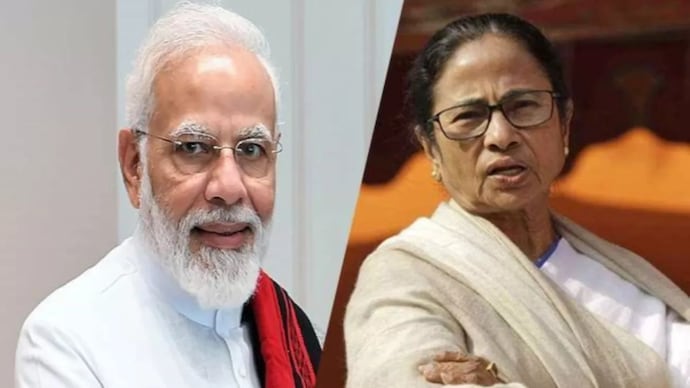
In West Bengal’s politically charged landscape, Chief Minister Mamata Banerjee is facing fresh scrutiny over her shifting stance on Jadavpur University — a debate now sharpened by a direct clash with Prime Minister Narendra Modi.
The issue flared up on Friday after Modi, addressing a rally in Jadavpur, accused the Trinamool Congress (TMC) government of allowing the university to slip into “anarchy.”
“Students face threats. Anti-national posters are put up How can a government that can’t save its biggest university save the future of the state?” Modi said, invoking the institution’s past reputation.
Banerjee responded swiftly and sharply. In a post addressed to the Prime Minister, she accused him of insulting “meritorious students” of a premier institution.
“Is this how you describe the students of Jadavpur University? That is not anarchy. That is education and excellence,” she wrote, adding that dissent should not be equated with disorder. Speaking later at a rally in Howrah, she said the remarks amounted to an insult to the entire student community.
OLD REMARKS, NEW QUESTIONS
The fresh political clash has also revived Banerjee’s own controversial 2023 remark, when she had described Jadavpur University as an “atankapur” — a hub of fear — amid campus unrest and allegations of radical activity.
At the time, the comment signalled a hardline stance against what her government saw as disruptive elements. Now, opposition parties — particularly the BJP — argue that her tone has shifted.
Framing the issue as “Mamata versus Mamata,” BJP leaders allege that the Chief Minister is now adopting a more conciliatory approach towards the same student groups and Left-leaning activists she had earlier criticised, driven by electoral considerations.
A Political Flashpoint
Political observers say the row reflects a deeper contest over narrative in Bengal, where student politics often intersects with ideological battles. Jadavpur University has long been a flashpoint — a space associated with academic activism, Left-leaning politics, and resistance movements, including protests against policies like the NRC.
The university’s academic standing also adds complexity to the debate. It has consistently ranked among the top institutions in India under the National Institutional Ranking Framework (NIRF), a point Banerjee highlighted while defending students.
ELECTION HEAT BUILDS
The high-voltage exchange comes as West Bengal heads into the second and final phase of polling, with top BJP and TMC leaders criss-crossing districts, including Kolkata, in aggressive campaigns.
Banerjee also took aim at Modi’s campaign optics, criticising his Ganga visit and questioning governance priorities, signalling that the JU row is now firmly embedded in the broader election narrative.
Meanwhile, developments beyond the state — including the reported elevation of Ashok Lahiri and Gobardhan Das to roles in NITI Aayog — are being seen by some analysts as part of a wider political recalibration involving Bengal.
PERCEPTION BATTLE AHEAD
For Banerjee, the challenge is no longer just about policy or campus politics — it is about perception.
Whether her evolving stance on Jadavpur University is seen as pragmatic leadership or political inconsistency could shape voter sentiment as Bengal moves closer to a crucial electoral test.
In West Bengal’s politically charged landscape, Chief Minister Mamata Banerjee is facing fresh scrutiny over her shifting stance on Jadavpur University — a debate now sharpened by a direct clash with Prime Minister Narendra Modi.
The issue flared up on Friday after Modi, addressing a rally in Jadavpur, accused the Trinamool Congress (TMC) government of allowing the university to slip into “anarchy.”
“Students face threats. Anti-national posters are put up How can a government that can’t save its biggest university save the future of the state?” Modi said, invoking the institution’s past reputation.
Banerjee responded swiftly and sharply. In a post addressed to the Prime Minister, she accused him of insulting “meritorious students” of a premier institution.
“Is this how you describe the students of Jadavpur University? That is not anarchy. That is education and excellence,” she wrote, adding that dissent should not be equated with disorder. Speaking later at a rally in Howrah, she said the remarks amounted to an insult to the entire student community.
OLD REMARKS, NEW QUESTIONS
The fresh political clash has also revived Banerjee’s own controversial 2023 remark, when she had described Jadavpur University as an “atankapur” — a hub of fear — amid campus unrest and allegations of radical activity.
At the time, the comment signalled a hardline stance against what her government saw as disruptive elements. Now, opposition parties — particularly the BJP — argue that her tone has shifted.
Framing the issue as “Mamata versus Mamata,” BJP leaders allege that the Chief Minister is now adopting a more conciliatory approach towards the same student groups and Left-leaning activists she had earlier criticised, driven by electoral considerations.
A Political Flashpoint
Political observers say the row reflects a deeper contest over narrative in Bengal, where student politics often intersects with ideological battles. Jadavpur University has long been a flashpoint — a space associated with academic activism, Left-leaning politics, and resistance movements, including protests against policies like the NRC.
The university’s academic standing also adds complexity to the debate. It has consistently ranked among the top institutions in India under the National Institutional Ranking Framework (NIRF), a point Banerjee highlighted while defending students.
ELECTION HEAT BUILDS
The high-voltage exchange comes as West Bengal heads into the second and final phase of polling, with top BJP and TMC leaders criss-crossing districts, including Kolkata, in aggressive campaigns.
Banerjee also took aim at Modi’s campaign optics, criticising his Ganga visit and questioning governance priorities, signalling that the JU row is now firmly embedded in the broader election narrative.
Meanwhile, developments beyond the state — including the reported elevation of Ashok Lahiri and Gobardhan Das to roles in NITI Aayog — are being seen by some analysts as part of a wider political recalibration involving Bengal.
PERCEPTION BATTLE AHEAD
For Banerjee, the challenge is no longer just about policy or campus politics — it is about perception.
Whether her evolving stance on Jadavpur University is seen as pragmatic leadership or political inconsistency could shape voter sentiment as Bengal moves closer to a crucial electoral test.

