Walked in during ED raid on I-PAC, put democracy in peril: SC raps Mamata Banerjee
The Supreme Court came down heavily on West Bengal Chief Minister Mamata Banerjee for entering the premises of an ED raid on the residence of I-PAC co-founder Pratik Jain in January, saying such conduct puts "democracy in peril".
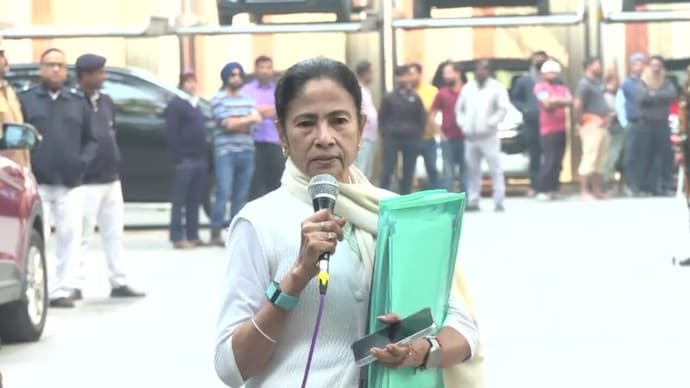
The Supreme Court on Wednesday lashed out at West Bengal Chief Minister Mamata Banerjee for “walking into” an Enforcement Directorate (ED) raid on the residence of I-PAC co-founder Pratik Jain in January, observing that such an act puts “democracy in peril”.
Hearing the ED’s plea seeking a probe by the CBI into the incident, a bench of Justices PK Mishra and NV Anjaria said the case was “extraordinary” given the prevailing circumstances in West Bengal ahead of the April 23 and 29 Assembly polls.
"A chief minister of any state cannot walk in the midst of an investigation, put democracy in peril, and then say, 'don’t convert this into a dispute between the state and the union'. This is per se an act committed by an individual who happens to be the chief minister, putting democracy in jeopardy," the court said.
The controversy stems from a January 8 raid by the ED at Jain’s residence in connection with alleged money laundering. The central agency has accused Banerjee of entering the premises during the investigation and removing key evidence -- a charge that turned the episode into a major political flashpoint.
The bench said that constitutional experts like HM Seervai and BR Ambedkar could not have envisioned a situation where a sitting chief minister would interrupt an active probe.
The Supreme Court hearing came as West Bengal gears up for the Assembly polls, with the ruling TMC facing a stiff challenge from the opposition BJP.
Appearing for the West Bengal government, senior advocate Abhishek Manu Singhvi argued that the ED, as an agency, does not possess fundamental rights and therefore, cannot claim violation of such rights. Citing past judgments, he contended that the agency is not a separate juristic entity and has no fundamental right to investigate.
Representing Banerjee, senior advocate Menaka Guruswamy submitted that the court’s writ jurisdiction is limited to “juristic persons” and exists to protect citizens from unlawful state action. She argued that fundamental rights are meant to safeguard individuals against the state, not to enable the state to claim violation of its own rights.
Guruswamy also contended that the Centre was attempting to unsettle settled constitutional principles, pointing to precedents, including the Kesavananda Bharati case.
The court continued hearing arguments on the ED’s petition, repeatedly questioning the implications of a sitting chief minister intervening in an ongoing investigation, and underlining that the matter raises serious concerns about institutional boundaries and the rule of law.
WHAT IS THE I-PAC CASE?
The case centres on an ED raid conducted on January 8 at Jain's residence in Kolkata. During the search operation, Banerjee entered the premises, triggering a political and legal controversy.
The central agency has alleged that Banerjee removed documents and electronic devices from the location while the raid was underway. The Chief Minister has denied any wrongdoing, maintaining that the materials she took were linked to the TMC’s political work with I-PAC during the 2019 Lok Sabha polls and unrelated to the money laundering probe.
Banerjee has also accused the ED of pursuing the case out of “political vendetta”. The central agency, however, says the raid was part of its probe into an alleged money laundering and coal smuggling network tied to businessman Anup Majee.
The investigation has widened in recent months, with the ED arresting I-PAC co-founder Vinesh Chandel over his alleged links to the coal scam.
The Supreme Court on Wednesday lashed out at West Bengal Chief Minister Mamata Banerjee for “walking into” an Enforcement Directorate (ED) raid on the residence of I-PAC co-founder Pratik Jain in January, observing that such an act puts “democracy in peril”.
Hearing the ED’s plea seeking a probe by the CBI into the incident, a bench of Justices PK Mishra and NV Anjaria said the case was “extraordinary” given the prevailing circumstances in West Bengal ahead of the April 23 and 29 Assembly polls.
"A chief minister of any state cannot walk in the midst of an investigation, put democracy in peril, and then say, 'don’t convert this into a dispute between the state and the union'. This is per se an act committed by an individual who happens to be the chief minister, putting democracy in jeopardy," the court said.
The controversy stems from a January 8 raid by the ED at Jain’s residence in connection with alleged money laundering. The central agency has accused Banerjee of entering the premises during the investigation and removing key evidence -- a charge that turned the episode into a major political flashpoint.
The bench said that constitutional experts like HM Seervai and BR Ambedkar could not have envisioned a situation where a sitting chief minister would interrupt an active probe.
The Supreme Court hearing came as West Bengal gears up for the Assembly polls, with the ruling TMC facing a stiff challenge from the opposition BJP.
Appearing for the West Bengal government, senior advocate Abhishek Manu Singhvi argued that the ED, as an agency, does not possess fundamental rights and therefore, cannot claim violation of such rights. Citing past judgments, he contended that the agency is not a separate juristic entity and has no fundamental right to investigate.
Representing Banerjee, senior advocate Menaka Guruswamy submitted that the court’s writ jurisdiction is limited to “juristic persons” and exists to protect citizens from unlawful state action. She argued that fundamental rights are meant to safeguard individuals against the state, not to enable the state to claim violation of its own rights.
Guruswamy also contended that the Centre was attempting to unsettle settled constitutional principles, pointing to precedents, including the Kesavananda Bharati case.
The court continued hearing arguments on the ED’s petition, repeatedly questioning the implications of a sitting chief minister intervening in an ongoing investigation, and underlining that the matter raises serious concerns about institutional boundaries and the rule of law.
WHAT IS THE I-PAC CASE?
The case centres on an ED raid conducted on January 8 at Jain's residence in Kolkata. During the search operation, Banerjee entered the premises, triggering a political and legal controversy.
The central agency has alleged that Banerjee removed documents and electronic devices from the location while the raid was underway. The Chief Minister has denied any wrongdoing, maintaining that the materials she took were linked to the TMC’s political work with I-PAC during the 2019 Lok Sabha polls and unrelated to the money laundering probe.
Banerjee has also accused the ED of pursuing the case out of “political vendetta”. The central agency, however, says the raid was part of its probe into an alleged money laundering and coal smuggling network tied to businessman Anup Majee.
The investigation has widened in recent months, with the ED arresting I-PAC co-founder Vinesh Chandel over his alleged links to the coal scam.

