In 10 minutes if there's gap: Fleeing Bangladeshis reveal how they crossed into India
Illegal Bangladeshi migrants, who are flocking to the Bangladesh border amid a crackdown in West Bengal, are describing how middlemen moved them into India and helped them in securing documents. Here's the entire trail, reconstructed from the admissions by the illegal immigrants themselves.
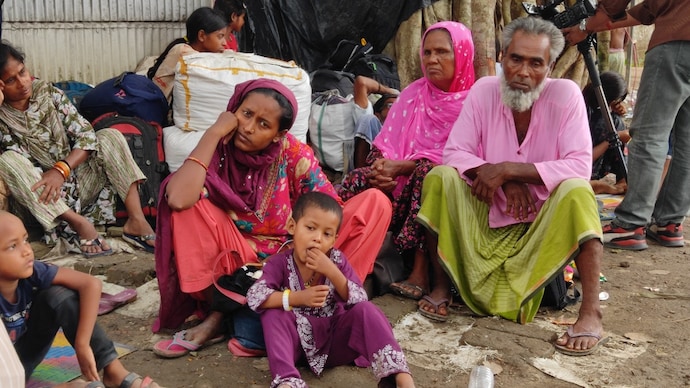
Fearing being detained at holding centres amid a crackdown, hundreds of Bangladeshi illegal immigrants are now flocking to border points and transit terminals in West Bengal. While unsure about crossing over, Bangladeshi aliens who have lived in India for decades, and in some cases their entire lives, are now speaking about how they entered India illegally and procured documents.
Some recalled crossing rivers to enter India, while others spoke about how dalal, or middlemen, used the cover of darkness to coordinate crossings. A person revealed that they could slip into India in 10 minutes if the middlemen found a "patrolling gap". Others claimed that people of a network, which included workers of the Trinamool Congress (TMC) in West Bengal, helped arrange identity documents. They said they received cash benefits through various schemes and even voted in India.
The accounts come amid a crackdown on illegal immigrants in West Bengal. Chief Minister Suvendu Adhikari has declared that illegal Bangladeshi migrants should neither be sheltered nor produced in court, but instead be directly handed over to the BSF at the border. The BJP government has also said that welfare benefits for illegal migrants in Bengal are being identified and cut off.
Border districts in West Bengal have seen increased checking and monitoring in recent weeks. Amid this, reports have also emerged of people voluntarily seeking to return to Bangladesh to avoid detention centres or deportation proceedings.
Union Home Minister Amit Shah on Thursday, referring to the reports of hundreds of people heading to Bangladesh, said "since the infiltrators were returning on their own", the government would not take any legal action against them. He "congratulated Suvendu Adhikari for handing over 600 hectares of land to the BSF", including some along the Chicken Neck.
The most striking detail in the testimonies is how organised some of the crossings allegedly were. The entire trail has been reconstructed from admissions by illegal immigrants to several outlets.
A carpenter from Bangladesh's Kushtia district said that he paid Rs 7,000-8,000 to a middleman who watched the movement of BSF personnel at night and sent groups across whenever there was a "gap" in patrolling. Another Bangladeshi illegal migrant in Bengaluru claimed he crossed over despite "military at the border" after paying Rs 20,000 to an agent.
'THE MOMENT THEY FIND A GAP, THEY SEND BANGLADESHIS ACROSS TO INDIA'
An illegal Bangladeshi migrant told a local YouTube channel, Haldia Live, that he crossed into India from Kushtia with his brothers through a middleman network.
"I worked in Kerala. Now they are asking for a voter card and Aadhaar card to even give a room on rent, and I don't have those [documents]," he said. He then described how the border crossing worked.
"They have teams of five to six people. At night, they check which areas have the BSF presence and which do not. The moment they find a gap, they send people across. That's the system," he said.
"Sometimes you have to wait the whole night for a chance to cross. Sometimes it happens within 10 minutes," the Bangladeshi illegal told the YouTube channel.
According to the man, the middleman charged around Rs 7,000 to Rs 8,000 per person.
Another illegal Bangladeshi migrant in Bengaluru gave a similar account.
"By paying Rs 2,000 to the man who brought people across, he would take us from Bangladesh into India, even with the military at the border," he said.
"An Aadhaar card was arranged for Rs 2,000 to Rs 3,000. We later travelled to Bengaluru by train," he added.
These routes are not entirely unknown to authorities. India's 4,096-km border with Bangladesh includes riverine stretches, agricultural land and densely populated areas. The human traffickers exploit these loopholes to send Bangladeshis into India. Security agencies have for years flagged the role of trafficking and smuggling networks that also facilitate illegal crossings.
Meghalaya Chief Minister Conrad Sangma on Wednesday said that the border fencing work along the Indo-Bangladesh border in Meghalaya is nearing completion, with only 40-45 kilometres remaining out of the total stretch.
The Ministry of Home Affairs said in February 2025 that around 79% of the 4,096.7-km India-Bangladesh border has been fenced, with 3,232.218 km already covered.
'I GOT MY VOTER CARD AND RATION CARD MADE IN INDIA'
An illegal Bangladeshi migrant claimed local political workers of the Trinamool Congress helped them arrange documents after she entered India.
"I got my voter card and ration card made when Mamata's party was in power. The party people helped me get the documents. I also received Lakshmir Bhandar benefits for two to three years," she told ABP News.
Another migrant described how things changed after recent anti-illegal migrant crackdowns in West Bengal began.
"No one said anything during the Trinamool Congress rule. Now the government has changed. Now people are after us. Our landlords were also afraid that if they kept Bangladeshi people, they would be fined Rs 2 lakhs and two years in jail," he said.
People renting out their properties are now under pressure to not harbour illegal immigrants.
The person admitted that he had voted once and claimed his wife received cash transfers through the Lakshmir Bhandar scheme.
West Bengal Chief Minister Suvendu Adhikari on Wednesday said 30 lakh ineligible people were receiving cash benefits under Mamata Banerjee's Lakshmir Bhandar. He said these bogus beneficiaries, including non-Indians, had been weeded out, and won't be receiving benefits under the new Annapurna Bhandar scheme.
YEARS IN INDIA AS CARPENTERS, MASONS, DOMESTIC WORKERS, BANGLADESHIS LEAVE FOR HOME
Many of those now returning to Bangladesh or waiting near border points in West Bengal said that they had been in India for years.
Salam Dali, while waiting near the Hakimpur border with his wife and child, told India Today TV that he worked as a carpenter in India. Dali, who said he's from Khulna district of Bangladesh, said he entered India around five years ago after paying Rs 8,000-10,000 to a middleman.
Another migrant told ABP News that his parents had brought him to India when he was around 10 years old.
"My parents brought me to this country when I was young. Father worked as a carpenter. No one said anything. We just ate, drank and worked," he said.
The Times of India also reported similar accounts from migrants waiting at border terminals.
Among them was Taklima Khatun from Khulna, who said she entered India through the Ghojadanga border two years ago to work as a domestic help.
According to the report, Khatun said she was returning voluntarily because she feared detention centres or forced deportation. Shahidul Gazi, a mason from Bangladesh's Satkhira, said he entered India three years ago through the Swarupnagar border with the help of a middleman.
He said the absence of Indian citizenship documents had left many with little choice but to leave.
These testimonies of illegal Bangladeshi migrants also show how this is not just a border security issue, but is facilitated by an organised ecosystem involving middlemen, forged documents and networks stretching across Indian states. Beyond the political controversies, these admissions by the Bangladeshi aliens also show how this led to a financial and an administrative burden for India. It drained public welfare resources and put additional pressure on India's exchequer and security apparatus.
Fearing being detained at holding centres amid a crackdown, hundreds of Bangladeshi illegal immigrants are now flocking to border points and transit terminals in West Bengal. While unsure about crossing over, Bangladeshi aliens who have lived in India for decades, and in some cases their entire lives, are now speaking about how they entered India illegally and procured documents.
Some recalled crossing rivers to enter India, while others spoke about how dalal, or middlemen, used the cover of darkness to coordinate crossings. A person revealed that they could slip into India in 10 minutes if the middlemen found a "patrolling gap". Others claimed that people of a network, which included workers of the Trinamool Congress (TMC) in West Bengal, helped arrange identity documents. They said they received cash benefits through various schemes and even voted in India.
The accounts come amid a crackdown on illegal immigrants in West Bengal. Chief Minister Suvendu Adhikari has declared that illegal Bangladeshi migrants should neither be sheltered nor produced in court, but instead be directly handed over to the BSF at the border. The BJP government has also said that welfare benefits for illegal migrants in Bengal are being identified and cut off.
Border districts in West Bengal have seen increased checking and monitoring in recent weeks. Amid this, reports have also emerged of people voluntarily seeking to return to Bangladesh to avoid detention centres or deportation proceedings.
Union Home Minister Amit Shah on Thursday, referring to the reports of hundreds of people heading to Bangladesh, said "since the infiltrators were returning on their own", the government would not take any legal action against them. He "congratulated Suvendu Adhikari for handing over 600 hectares of land to the BSF", including some along the Chicken Neck.
The most striking detail in the testimonies is how organised some of the crossings allegedly were. The entire trail has been reconstructed from admissions by illegal immigrants to several outlets.
A carpenter from Bangladesh's Kushtia district said that he paid Rs 7,000-8,000 to a middleman who watched the movement of BSF personnel at night and sent groups across whenever there was a "gap" in patrolling. Another Bangladeshi illegal migrant in Bengaluru claimed he crossed over despite "military at the border" after paying Rs 20,000 to an agent.
'THE MOMENT THEY FIND A GAP, THEY SEND BANGLADESHIS ACROSS TO INDIA'
An illegal Bangladeshi migrant told a local YouTube channel, Haldia Live, that he crossed into India from Kushtia with his brothers through a middleman network.
"I worked in Kerala. Now they are asking for a voter card and Aadhaar card to even give a room on rent, and I don't have those [documents]," he said. He then described how the border crossing worked.
"They have teams of five to six people. At night, they check which areas have the BSF presence and which do not. The moment they find a gap, they send people across. That's the system," he said.
"Sometimes you have to wait the whole night for a chance to cross. Sometimes it happens within 10 minutes," the Bangladeshi illegal told the YouTube channel.
According to the man, the middleman charged around Rs 7,000 to Rs 8,000 per person.
Another illegal Bangladeshi migrant in Bengaluru gave a similar account.
"By paying Rs 2,000 to the man who brought people across, he would take us from Bangladesh into India, even with the military at the border," he said.
"An Aadhaar card was arranged for Rs 2,000 to Rs 3,000. We later travelled to Bengaluru by train," he added.
These routes are not entirely unknown to authorities. India's 4,096-km border with Bangladesh includes riverine stretches, agricultural land and densely populated areas. The human traffickers exploit these loopholes to send Bangladeshis into India. Security agencies have for years flagged the role of trafficking and smuggling networks that also facilitate illegal crossings.
Meghalaya Chief Minister Conrad Sangma on Wednesday said that the border fencing work along the Indo-Bangladesh border in Meghalaya is nearing completion, with only 40-45 kilometres remaining out of the total stretch.
The Ministry of Home Affairs said in February 2025 that around 79% of the 4,096.7-km India-Bangladesh border has been fenced, with 3,232.218 km already covered.
'I GOT MY VOTER CARD AND RATION CARD MADE IN INDIA'
An illegal Bangladeshi migrant claimed local political workers of the Trinamool Congress helped them arrange documents after she entered India.
"I got my voter card and ration card made when Mamata's party was in power. The party people helped me get the documents. I also received Lakshmir Bhandar benefits for two to three years," she told ABP News.
Another migrant described how things changed after recent anti-illegal migrant crackdowns in West Bengal began.
"No one said anything during the Trinamool Congress rule. Now the government has changed. Now people are after us. Our landlords were also afraid that if they kept Bangladeshi people, they would be fined Rs 2 lakhs and two years in jail," he said.
People renting out their properties are now under pressure to not harbour illegal immigrants.
The person admitted that he had voted once and claimed his wife received cash transfers through the Lakshmir Bhandar scheme.
West Bengal Chief Minister Suvendu Adhikari on Wednesday said 30 lakh ineligible people were receiving cash benefits under Mamata Banerjee's Lakshmir Bhandar. He said these bogus beneficiaries, including non-Indians, had been weeded out, and won't be receiving benefits under the new Annapurna Bhandar scheme.
YEARS IN INDIA AS CARPENTERS, MASONS, DOMESTIC WORKERS, BANGLADESHIS LEAVE FOR HOME
Many of those now returning to Bangladesh or waiting near border points in West Bengal said that they had been in India for years.
Salam Dali, while waiting near the Hakimpur border with his wife and child, told India Today TV that he worked as a carpenter in India. Dali, who said he's from Khulna district of Bangladesh, said he entered India around five years ago after paying Rs 8,000-10,000 to a middleman.
Another migrant told ABP News that his parents had brought him to India when he was around 10 years old.
"My parents brought me to this country when I was young. Father worked as a carpenter. No one said anything. We just ate, drank and worked," he said.
The Times of India also reported similar accounts from migrants waiting at border terminals.
Among them was Taklima Khatun from Khulna, who said she entered India through the Ghojadanga border two years ago to work as a domestic help.
According to the report, Khatun said she was returning voluntarily because she feared detention centres or forced deportation. Shahidul Gazi, a mason from Bangladesh's Satkhira, said he entered India three years ago through the Swarupnagar border with the help of a middleman.
He said the absence of Indian citizenship documents had left many with little choice but to leave.
These testimonies of illegal Bangladeshi migrants also show how this is not just a border security issue, but is facilitated by an organised ecosystem involving middlemen, forged documents and networks stretching across Indian states. Beyond the political controversies, these admissions by the Bangladeshi aliens also show how this led to a financial and an administrative burden for India. It drained public welfare resources and put additional pressure on India's exchequer and security apparatus.

