Accident, lapse or plot? Anti-terror agency probes Rajasthan oil refinery fire
A fire broke out in the Crude Distillation Unit (CDU) unit of the Pachpadra refinery in Rajasthan's Barmer on April 20, a day before Prime Minister Narendra Modi was scheduled to inaugurate the facility.
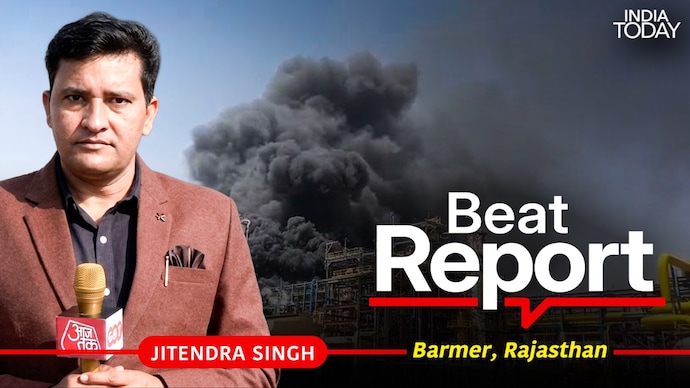
Was the massive blaze at the HPCL Rajasthan Refinery in Barmer an industrial accident, a safety lapse, or something more sinister? With questions mounting over the April 20 fire, multiple central agencies, including the National Investigation Agency, have launched an extensive probe to determine whether the incident was triggered by technical failure, human negligence or a possible act of sabotage.
Sources told India Today TV that an NIA team reached the refinery site from Jaipur and has begun preliminary assessment of the facility. The team includes intelligence officials, forensic experts, and cyber specialists who are examining the Crude Distillation Unit (CDU), where the fire reportedly originated.
Investigators are collecting physical evidence, reviewing operational processes, and mapping the sequence of events leading up to the blaze.
CISF GUARDS BARMER REFINERY
Security at the refinery is maintained through a three-tier system led by the Central Industrial Security Force (CISF).
Access to the facility is tightly controlled, with strict entry protocols for personnel and vehicles.
Only a limited number of pre-approved vehicles are allowed inside critical zones, and these are fitted with mandatory fire safety mechanisms.
Sources indicate that around 100 CISF personnel are deployed in shifts to ensure round-the-clock security.
While the CISF oversees perimeter and access security, fire safety operations are handled by HPCL’s internal systems. Investigators are reviewing whether there were any lapses in enforcement of these protocols or any breach that may have contributed to the incident.
HOW SPARK ARRESTER SYSTEM WORKS INSIDE REFINERY
A key safety feature under scrutiny is the spark arrestor system used in vehicles operating within refinery premises.
These devices are designed to prevent ignition risks by trapping or extinguishing sparks emitted from engine exhaust systems.
Spark arrestors typically work on a centrifugal principle, forcing hot particles to collide with internal surfaces, cooling them before they can escape.
Made of metal mesh or housing, they are mandatory for vehicles entering high-risk zones like refineries.
Agencies are examining whether all safety norms related to such equipment were properly followed at the time of the incident.
SIMILAR REFINERY FIRE INCIDENTS ACROSS THE WORLD
The Barmer refinery blaze has drawn added attention because it comes amid a series of fires involving oil and energy infrastructure across multiple countries in recent months. Since February 28, around the time tensions escalated in the Middle East following US and Israeli strikes on Iran, several refineries and fuel facilities outside active conflict zones have reported major incidents, prompting discussions over a possible global pattern.
In the US, multiple energy-related fires were reported in Texas, including incidents at the Valero Port Arthur Refinery and the Martin Lake Power Plant. Australia’s Geelong Refinery suffered a major blaze in April that disrupted diesel, jet fuel and gasoline production for hours. Similar refinery or fuel-facility fires were also reported in Ecuador, Mexico, Kazakhstan and Myanmar.
In Myanmar, a major explosion at a river port destroyed several fuel tankers and barges on April 20. On the same day, Romania reported a blast at a heat and power plant in Bucharest that disrupted utilities across parts of the capital.
India too saw another energy-sector incident earlier this month when a fire broke out at an offshore oil field operated by Oil and Natural Gas Corporation near Mumbai.
PM'S BARMER VISIT CANCELLED
The Barmer refinery fire has also led to the postponement of PM Modi's scheduled visit to inaugurate the refinery project. The inauguration, planned for April 21, was deferred after the incident occurred less than a day earlier.
Officials have stated that a revised date will be announced after the situation stabilises. Preliminary findings suggest that a hydrocarbon leak in the CDU’s heat exchanger circuit may have triggered the fire.
However, a major concern is the reported delay in alarm activation, raising questions about the refinery’s safety systems. Investigators are probing why alerts were not triggered before the fire escalated.
The probe is focusing on three critical aspects:
- Technical failure
- Possible human error
- Cyber interference
The refinery’s SCADA system, which controls operations digitally, is being examined for anomalies in command logs and network activity. Investigators are also exploring whether system parameters were tampered with or if there was any external cyber intrusion.
Additionally, the timing of similar refinery incidents reported globally is being reviewed to rule out any coordinated pattern. While no definitive evidence of sabotage has emerged so far, agencies are keeping all angles open.
Rajasthan Chief Minister Bhajan Lal Sharma and top bureaucrats have visited the site, and a parallel state-level inquiry may also be initiated. For now, the focus remains on uncovering the exact cause of the fire and ensuring accountability.
Was the massive blaze at the HPCL Rajasthan Refinery in Barmer an industrial accident, a safety lapse, or something more sinister? With questions mounting over the April 20 fire, multiple central agencies, including the National Investigation Agency, have launched an extensive probe to determine whether the incident was triggered by technical failure, human negligence or a possible act of sabotage.
Sources told India Today TV that an NIA team reached the refinery site from Jaipur and has begun preliminary assessment of the facility. The team includes intelligence officials, forensic experts, and cyber specialists who are examining the Crude Distillation Unit (CDU), where the fire reportedly originated.
Investigators are collecting physical evidence, reviewing operational processes, and mapping the sequence of events leading up to the blaze.
CISF GUARDS BARMER REFINERY
Security at the refinery is maintained through a three-tier system led by the Central Industrial Security Force (CISF).
Access to the facility is tightly controlled, with strict entry protocols for personnel and vehicles.
Only a limited number of pre-approved vehicles are allowed inside critical zones, and these are fitted with mandatory fire safety mechanisms.
Sources indicate that around 100 CISF personnel are deployed in shifts to ensure round-the-clock security.
While the CISF oversees perimeter and access security, fire safety operations are handled by HPCL’s internal systems. Investigators are reviewing whether there were any lapses in enforcement of these protocols or any breach that may have contributed to the incident.
HOW SPARK ARRESTER SYSTEM WORKS INSIDE REFINERY
A key safety feature under scrutiny is the spark arrestor system used in vehicles operating within refinery premises.
These devices are designed to prevent ignition risks by trapping or extinguishing sparks emitted from engine exhaust systems.
Spark arrestors typically work on a centrifugal principle, forcing hot particles to collide with internal surfaces, cooling them before they can escape.
Made of metal mesh or housing, they are mandatory for vehicles entering high-risk zones like refineries.
Agencies are examining whether all safety norms related to such equipment were properly followed at the time of the incident.
SIMILAR REFINERY FIRE INCIDENTS ACROSS THE WORLD
The Barmer refinery blaze has drawn added attention because it comes amid a series of fires involving oil and energy infrastructure across multiple countries in recent months. Since February 28, around the time tensions escalated in the Middle East following US and Israeli strikes on Iran, several refineries and fuel facilities outside active conflict zones have reported major incidents, prompting discussions over a possible global pattern.
In the US, multiple energy-related fires were reported in Texas, including incidents at the Valero Port Arthur Refinery and the Martin Lake Power Plant. Australia’s Geelong Refinery suffered a major blaze in April that disrupted diesel, jet fuel and gasoline production for hours. Similar refinery or fuel-facility fires were also reported in Ecuador, Mexico, Kazakhstan and Myanmar.
In Myanmar, a major explosion at a river port destroyed several fuel tankers and barges on April 20. On the same day, Romania reported a blast at a heat and power plant in Bucharest that disrupted utilities across parts of the capital.
India too saw another energy-sector incident earlier this month when a fire broke out at an offshore oil field operated by Oil and Natural Gas Corporation near Mumbai.
PM'S BARMER VISIT CANCELLED
The Barmer refinery fire has also led to the postponement of PM Modi's scheduled visit to inaugurate the refinery project. The inauguration, planned for April 21, was deferred after the incident occurred less than a day earlier.
Officials have stated that a revised date will be announced after the situation stabilises. Preliminary findings suggest that a hydrocarbon leak in the CDU’s heat exchanger circuit may have triggered the fire.
However, a major concern is the reported delay in alarm activation, raising questions about the refinery’s safety systems. Investigators are probing why alerts were not triggered before the fire escalated.
The probe is focusing on three critical aspects:
- Technical failure
- Possible human error
- Cyber interference
The refinery’s SCADA system, which controls operations digitally, is being examined for anomalies in command logs and network activity. Investigators are also exploring whether system parameters were tampered with or if there was any external cyber intrusion.
Additionally, the timing of similar refinery incidents reported globally is being reviewed to rule out any coordinated pattern. While no definitive evidence of sabotage has emerged so far, agencies are keeping all angles open.
Rajasthan Chief Minister Bhajan Lal Sharma and top bureaucrats have visited the site, and a parallel state-level inquiry may also be initiated. For now, the focus remains on uncovering the exact cause of the fire and ensuring accountability.

