TVK MLA who won by single vote can't vote in floor test: Madras HC's interim order
A Bench of Justices Victoria Gowri and Senthilkumar passed the interim order on KR Periakaruppan's plea after he lost the Tiruppattur seat by one vote, with TVK's R Seenivasa Sethupathy polling 83,375 against the DMK candidate's 83,374.
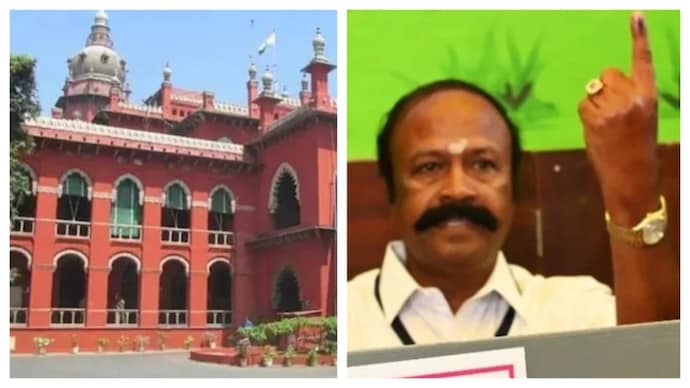
In a setback to Vijay’s Tamilaga Vettri Kazhagam (TVK) ahead of the floor test, the Madras High Court on Tuesday barred R Seenivasa Sethupathy, the newly elected party MLA from Tiruppattur, from taking part in any proceedings of the Tamil Nadu Legislative Assembly after his razor-thin victory was challenged by DMK’s KR Periakaruppan.
A Bench of Justices Victoria Gowri and Senthilkumar passed the interim order while hearing a petition filed by Periakaruppan, who lost the No. 185 Tiruppattur Assembly seat in Sivagangai district by just one vote.
Sethupathy had secured 83,375 votes against Periakaruppan’s 83,374, making it one of the narrowest margins in the state’s electoral history.
The Court said a prima facie case had been made out and restrained Sethupathy from voting or participating in any confidence motion, no-confidence motion, trust vote or any proceeding where the numerical strength of the House is tested, until further orders, Bar and Bench reported.
However, the Bench clarified that the order does not amount to setting aside Sethupathy’s election and does not entitle Periakaruppan to be declared elected.
The order has immediate political significance as the TVK-led alliance, which currently holds 120 seats in the 234-member Assembly, effectively drops to 119 active members for voting purposes. This leaves the ruling coalition with a slender majority of one MLA in the House.
WHAT DMK CANDIDATE SAID IN PLEA
Periakaruppan challenged the result, alleging irregularities in counting and discrepancies in vote records. He claimed a postal ballot meant for No. 185 Tiruppattur constituency was mistakenly sent to No. 50 Tiruppattur constituency in Tirupattur district and was rejected there instead of being forwarded to the correct Returning Officer.
He also alleged an 18-vote discrepancy between the electronic voting machine figures recorded in the consolidated round-wise counting abstract and those uploaded on the Election Commission of India website.
In his petition, Periakaruppan argued that the disputed postal ballot could have altered the result given the one-vote margin.
He had sought directions to secure that ballot, preserve all relevant records and restrain Sethupathy from taking part in Assembly proceedings while the case is heard.
The Court accepted the plea for preservation of records and directed officials to secure all materials related to counting held on May 4.
These include consolidated counting abstracts, statutory forms, round-wise counting sheets, EVM vote account records, postal ballot papers, rejected postal ballot covers, declarations and all related documentation.
It also directed officials to identify and separately seal any postal ballot intended for No. 185 Tiruppattur that may have been received, handled or rejected in No. 50 Tiruppattur constituency. The Bench ordered that such records must be preserved without opening or tampering.
Further, the Court ordered preservation of videographic footage related to counting, scrutiny and rejection of postal ballots, along with backup copies in original electronic form.
The judges made it clear that their directions should not be treated as an order for recounting or reopening ballot papers, nor as validation of any rejected postal vote. They said all rights and remedies under the Representation of the People Act, 1951 remain open to the parties.
During earlier hearings, the Election Commission argued that it was only the administrator and custodian of election records and not the authority to decide the winner after results had been declared.
It submitted that once the Returning Officer announced the result, the officer became functus officio (having performed his or her office), and any factual determination would require opening sealed materials through a trial-like process.
Periakaruppan had told the Court that he had submitted multiple representations to election authorities after the result but received no response.
On Monday, the High Court directed the Election Commission to file an affidavit explaining why those representations were not acted upon.
The case has drawn political attention because Tiruppattur became symbolic of TVK’s breakthrough election performance under Vijay, with Sethupathi’s one-vote win emerging as one of the most dramatic contests of the 2026 Tamil Nadu Assembly elections.
In a setback to Vijay’s Tamilaga Vettri Kazhagam (TVK) ahead of the floor test, the Madras High Court on Tuesday barred R Seenivasa Sethupathy, the newly elected party MLA from Tiruppattur, from taking part in any proceedings of the Tamil Nadu Legislative Assembly after his razor-thin victory was challenged by DMK’s KR Periakaruppan.
A Bench of Justices Victoria Gowri and Senthilkumar passed the interim order while hearing a petition filed by Periakaruppan, who lost the No. 185 Tiruppattur Assembly seat in Sivagangai district by just one vote.
Sethupathy had secured 83,375 votes against Periakaruppan’s 83,374, making it one of the narrowest margins in the state’s electoral history.
The Court said a prima facie case had been made out and restrained Sethupathy from voting or participating in any confidence motion, no-confidence motion, trust vote or any proceeding where the numerical strength of the House is tested, until further orders, Bar and Bench reported.
However, the Bench clarified that the order does not amount to setting aside Sethupathy’s election and does not entitle Periakaruppan to be declared elected.
The order has immediate political significance as the TVK-led alliance, which currently holds 120 seats in the 234-member Assembly, effectively drops to 119 active members for voting purposes. This leaves the ruling coalition with a slender majority of one MLA in the House.
WHAT DMK CANDIDATE SAID IN PLEA
Periakaruppan challenged the result, alleging irregularities in counting and discrepancies in vote records. He claimed a postal ballot meant for No. 185 Tiruppattur constituency was mistakenly sent to No. 50 Tiruppattur constituency in Tirupattur district and was rejected there instead of being forwarded to the correct Returning Officer.
He also alleged an 18-vote discrepancy between the electronic voting machine figures recorded in the consolidated round-wise counting abstract and those uploaded on the Election Commission of India website.
In his petition, Periakaruppan argued that the disputed postal ballot could have altered the result given the one-vote margin.
He had sought directions to secure that ballot, preserve all relevant records and restrain Sethupathy from taking part in Assembly proceedings while the case is heard.
The Court accepted the plea for preservation of records and directed officials to secure all materials related to counting held on May 4.
These include consolidated counting abstracts, statutory forms, round-wise counting sheets, EVM vote account records, postal ballot papers, rejected postal ballot covers, declarations and all related documentation.
It also directed officials to identify and separately seal any postal ballot intended for No. 185 Tiruppattur that may have been received, handled or rejected in No. 50 Tiruppattur constituency. The Bench ordered that such records must be preserved without opening or tampering.
Further, the Court ordered preservation of videographic footage related to counting, scrutiny and rejection of postal ballots, along with backup copies in original electronic form.
The judges made it clear that their directions should not be treated as an order for recounting or reopening ballot papers, nor as validation of any rejected postal vote. They said all rights and remedies under the Representation of the People Act, 1951 remain open to the parties.
During earlier hearings, the Election Commission argued that it was only the administrator and custodian of election records and not the authority to decide the winner after results had been declared.
It submitted that once the Returning Officer announced the result, the officer became functus officio (having performed his or her office), and any factual determination would require opening sealed materials through a trial-like process.
Periakaruppan had told the Court that he had submitted multiple representations to election authorities after the result but received no response.
On Monday, the High Court directed the Election Commission to file an affidavit explaining why those representations were not acted upon.
The case has drawn political attention because Tiruppattur became symbolic of TVK’s breakthrough election performance under Vijay, with Sethupathi’s one-vote win emerging as one of the most dramatic contests of the 2026 Tamil Nadu Assembly elections.

