Can you guess Rajinikanth's first salary? A viral 1971 ID card has the answer
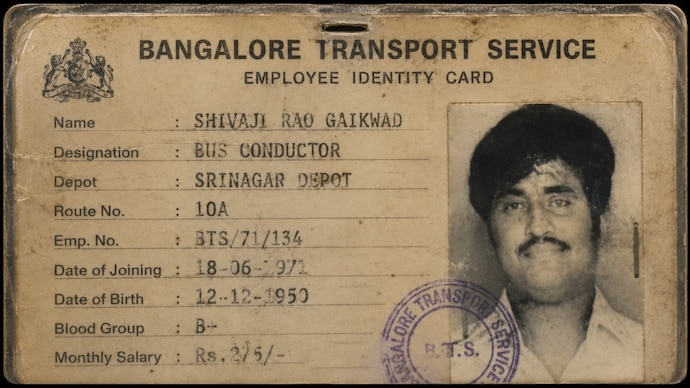
A viral 1971 Bangalore Transport Service identity card has revealed that Rajinikanth, then known as Shivaji Rao Gaikwad, earned just Rs 275 a month as a bus conductor in Bengaluru. The throwback has sparked admiration among fans, highlighting the superstar's remarkable journey.
Before the blockbuster films, the trademark sunglasses flip and the deafening cheers inside packed theatres, there was a young man named Shivaji Rao Gaikwad collecting tickets on a Bengaluru bus.
Today, the world knows him as Rajinikanth, or simply "Thalaivar." At 75, he remains one of Indian cinema's most celebrated stars. But a decades-old identity card that has resurfaced online is taking fans back to the very beginning of his remarkable journey.
The viral Bangalore Transport Service (BTS) identity card, issued in 1971, shows Rajinikanth working as a bus conductor under his birth name, Shivaji Rao Gaikwad. One detail on the card has especially caught people's attention: his monthly salary was just Rs. 275.
For fans, the card is more than an old document. It is a glimpse into the humble beginnings of a man who would go on to become one of India's biggest film icons.
A VIRAL THROWBACK FROM 1971
Long before he ruled the box office, Rajinikanth worked as a conductor on Bengaluru's Route No. 10A. At a time when few could have imagined the scale of success that awaited him, he was earning 275 a month and working as a conductor in Bengaluru.
The photograph has sparked admiration across social media, with many users celebrating his rise from a modest salaried job to becoming one of Indian cinema's highest-paid actors.
THE BREAKTHROUGH THAT CHANGED EVERYTHING
Rajinikanth's life changed when he enrolled in the Madras Film Institute. There, his talent caught the attention of renowned filmmaker K. Balachander, who cast him in the 1975 film Apoorva Raagangal. The role marked the beginning of a career that would span more than five decades.
Over the years, Rajinikanth evolved from a promising newcomer into a cultural phenomenon. His larger-than-life screen presence, unique style, and connection with audiences turned him into a household name across India and beyond.
The contrast between his first salary and his present-day success is striking. From earning Rs. 275 a month as a bus conductor, Rajinikanth went on to become one of the country's top stars and featured in the Forbes India Celebrity 100 list in 2018.
MORE THAN JUST AN OLD ID CARD
Yet, for many admirers, the viral ID card is not really about money. It is a reminder of perseverance, ambition, and the power of humble beginnings.
More than 50 years after it was issued, the BTS identity card continues to resonate because it captures a timeless truth: every legend starts somewhere.
And for Rajinikanth, that journey began in a conductor's uniform, earning Rs. 275 a month, long before he became India's beloved "Thalaivar."
Before the blockbuster films, the trademark sunglasses flip and the deafening cheers inside packed theatres, there was a young man named Shivaji Rao Gaikwad collecting tickets on a Bengaluru bus.
Today, the world knows him as Rajinikanth, or simply "Thalaivar." At 75, he remains one of Indian cinema's most celebrated stars. But a decades-old identity card that has resurfaced online is taking fans back to the very beginning of his remarkable journey.
The viral Bangalore Transport Service (BTS) identity card, issued in 1971, shows Rajinikanth working as a bus conductor under his birth name, Shivaji Rao Gaikwad. One detail on the card has especially caught people's attention: his monthly salary was just Rs. 275.
For fans, the card is more than an old document. It is a glimpse into the humble beginnings of a man who would go on to become one of India's biggest film icons.
A VIRAL THROWBACK FROM 1971
Long before he ruled the box office, Rajinikanth worked as a conductor on Bengaluru's Route No. 10A. At a time when few could have imagined the scale of success that awaited him, he was earning 275 a month and working as a conductor in Bengaluru.
The photograph has sparked admiration across social media, with many users celebrating his rise from a modest salaried job to becoming one of Indian cinema's highest-paid actors.
THE BREAKTHROUGH THAT CHANGED EVERYTHING
Rajinikanth's life changed when he enrolled in the Madras Film Institute. There, his talent caught the attention of renowned filmmaker K. Balachander, who cast him in the 1975 film Apoorva Raagangal. The role marked the beginning of a career that would span more than five decades.
Over the years, Rajinikanth evolved from a promising newcomer into a cultural phenomenon. His larger-than-life screen presence, unique style, and connection with audiences turned him into a household name across India and beyond.
The contrast between his first salary and his present-day success is striking. From earning Rs. 275 a month as a bus conductor, Rajinikanth went on to become one of the country's top stars and featured in the Forbes India Celebrity 100 list in 2018.
MORE THAN JUST AN OLD ID CARD
Yet, for many admirers, the viral ID card is not really about money. It is a reminder of perseverance, ambition, and the power of humble beginnings.
More than 50 years after it was issued, the BTS identity card continues to resonate because it captures a timeless truth: every legend starts somewhere.
And for Rajinikanth, that journey began in a conductor's uniform, earning Rs. 275 a month, long before he became India's beloved "Thalaivar."

