Is masala dosa an incomplete breakfast option?
Masala Dosa is a popular breakfast, not just down south but in most parts of the country. However, have you wondered whether it is a complete meal to start your day?
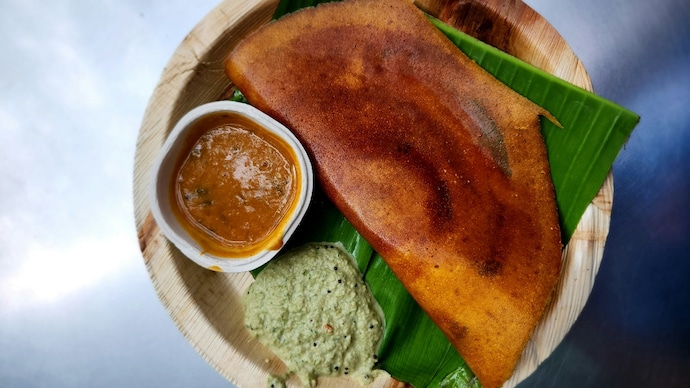
South Indian fare for breakfast, like dosa, idli, sambar, and vada, is a go-to option for many households. They are light and easy to digest, and feel like the perfect way to kickstart the day, no? But masala dosa for breakfast might not be an ideal choice, that’s what celebrity fitness trainer Siddhartha Singh says.
He says the problem isn’t the dosa itself, it’s what’s missing from it.
Not unhealthy, just incomplete
In a recent Instagram video, Singh stirred up debate by saying, “Stop having dosa for breakfast if you want to lose weight.” But his point wasn’t to demonise the South Indian staple.
“Dosa in itself has nothing unhealthy in it,” he clarified. “It’s just rice and ground black gram fermented and made into a crepe. Even sambar is a dal—there’s nothing unhealthy about it.”
The issue, he says, is satiety.
The ‘one-hour hunger’ problem
A typical dosa, made primarily from rice and lentils, is easy to digest. That sounds like a good thing, but it also means it doesn’t keep you full for long.
“You are going to have your dosa, and in one hour you will feel hungry,” Singh explained. “Those cravings are going to kick in, and then you're going to have excess calories.”
In other words, it’s not the dosa that leads to weight gain, it’s what comes after. This is what nutritionists often refer to as a high glycaemic response: your blood sugar rises quickly, drops just as fast, and leaves you feeling hungry again.
So, should you stop eating dosa?
Not really.
Singh’s advice is surprisingly simple: don’t remove the dosa, just fix it. “Dosa isn’t unhealthy; it’s just incomplete,” he said.
“All you need to do is add some crushed paneer to your dosa. Make a masala out of it and put it inside.”
The idea is to balance the meal by adding protein, which slows down digestion and helps you stay full for longer.
What a ‘better’ dosa breakfast looks like
If paneer isn’t your thing, the logic still holds. Adding any protein-rich element can make a difference, such as:
- Paneer bhurji as a filling
- Eggs on the side
- Peanut or coconut chutney (for added fats and some protein)
- A bowl of thicker, dal-heavy sambar
The goal is simple, make your breakfast more balanced, not necessarily more restrictive.
Dosa isn’t the villain here. But if your breakfast is leaving you hungry too soon, it might be time to rethink what’s on your plate.
South Indian fare for breakfast, like dosa, idli, sambar, and vada, is a go-to option for many households. They are light and easy to digest, and feel like the perfect way to kickstart the day, no? But masala dosa for breakfast might not be an ideal choice, that’s what celebrity fitness trainer Siddhartha Singh says.
He says the problem isn’t the dosa itself, it’s what’s missing from it.
Not unhealthy, just incomplete
In a recent Instagram video, Singh stirred up debate by saying, “Stop having dosa for breakfast if you want to lose weight.” But his point wasn’t to demonise the South Indian staple.
“Dosa in itself has nothing unhealthy in it,” he clarified. “It’s just rice and ground black gram fermented and made into a crepe. Even sambar is a dal—there’s nothing unhealthy about it.”
The issue, he says, is satiety.
The ‘one-hour hunger’ problem
A typical dosa, made primarily from rice and lentils, is easy to digest. That sounds like a good thing, but it also means it doesn’t keep you full for long.
“You are going to have your dosa, and in one hour you will feel hungry,” Singh explained. “Those cravings are going to kick in, and then you're going to have excess calories.”
In other words, it’s not the dosa that leads to weight gain, it’s what comes after. This is what nutritionists often refer to as a high glycaemic response: your blood sugar rises quickly, drops just as fast, and leaves you feeling hungry again.
So, should you stop eating dosa?
Not really.
Singh’s advice is surprisingly simple: don’t remove the dosa, just fix it. “Dosa isn’t unhealthy; it’s just incomplete,” he said.
“All you need to do is add some crushed paneer to your dosa. Make a masala out of it and put it inside.”
The idea is to balance the meal by adding protein, which slows down digestion and helps you stay full for longer.
What a ‘better’ dosa breakfast looks like
If paneer isn’t your thing, the logic still holds. Adding any protein-rich element can make a difference, such as:
- Paneer bhurji as a filling
- Eggs on the side
- Peanut or coconut chutney (for added fats and some protein)
- A bowl of thicker, dal-heavy sambar
The goal is simple, make your breakfast more balanced, not necessarily more restrictive.
Dosa isn’t the villain here. But if your breakfast is leaving you hungry too soon, it might be time to rethink what’s on your plate.

