Rice paper rolls, momo, gol gappa: How a Vietnamese staple won Indian kitchens
Not too long ago, rice paper was something most we only encountered in restaurant menus or travel videos. Today, it is just as likely to be found tucked next to atta and sooji in the pantry.
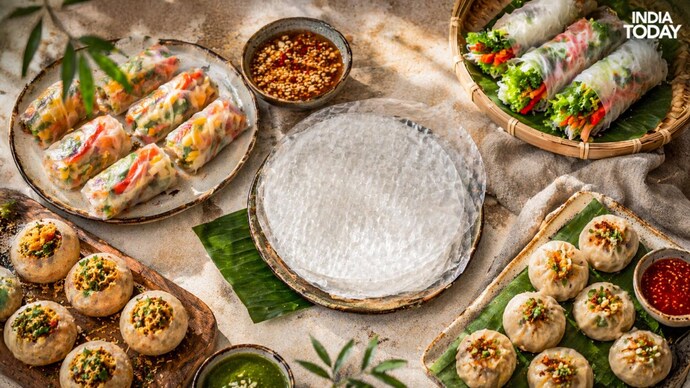
At first, it could pass for a whiter version of our desi papad. Press it lightly and it seems like it would snap the same way. But that is where the similarity ends. Rice paper sheets behave very differently. You do not roast, fry or microwave them.
Instead, a quick dip in water transforms them completely. They soften, turn flexible and take on a slightly silky, almost slippery texture. Fill them with fresh veggies to make Vietnamese summer rolls. That is what our Instagram feeds are suggesting now that summer is here. These easy-to-make, low-on-calories, refreshing rolls go so well with soy, peanuts, chilli oil, sesame and honey dip. Drooling already?
But that is just one way Indians are using rice paper sheets in their kitchens. This Vietnamese ingredient is slowly becoming a staple in urban Indian kitchens. Not too long ago, rice paper was something most we only encountered in restaurant menus or travel videos. Today, it is just as likely to be found tucked next to atta and sooji in the pantry.
The rise and rise of rice paper
From your local grocery store to quick delivery platforms like Instamart and Blinkit, rice paper is now everywhere, at least in cities like Delhi, Mumbai and Bengaluru. The price range is also now affordable. You no longer have to shell out Rs 300–350 to buy a pack of rice paper sheets; you can get a packet for as little as Rs 99.
“We have started keeping rice paper sheets only from last year. Before that, we did not know there was anything like this,” says Arun Kumar, a grocery store owner in Noida Sector 70. The phenomenon, he shares, is quite similar to how the Korean ramen and noodles trend unfolded.
“Earlier, we only stocked Maggi, Top Ramen, Wai Wai and Knorr noodles, but because there were so many enquiries about Buldak and other Korean ramen, we now prominently display those as well,” he adds.
Travel, Insta & health boost rice paper trend
A quick poll of people around me confirmed that rice paper sheets did not gain traction in Indian kitchens out of nowhere. Their rise mirrors broader societal shifts, starting with heightened interest in healthier snacking. As health, fitness and nutrition influencers raise awareness about calorie intake and empty calories, people are seeking ways to lighten up their treats. Rice paper fits perfectly: it is used for crunchy air-fried crisps, homemade dumplings and low-calorie spring rolls.
That said, rice paper is mostly tapioca starch, water and salt, making it naturally gluten-free, low in calories (about 30 per sheet) and low-fat. This makes it a smart swap for fried snacks. However, it is low in protein, fibre and essential nutrients, so it is not “healthy” in a nutrient-dense sense. Pair it with veggies, lean proteins or dips for balance.
Next up is how social media shapes what we eat.
For many, like Rishibha Aery, a Noida-based professional, Instagram Reels were the introduction to rice paper. “About three years ago, I remember going to INA Market to source these sheets and make veggie rolls. At first, the visual appeal enticed me. Because the sheets are translucent, you see colourful vegetables through them, it just looks so pretty,” she shares.
Now, with mango season around the corner, she is looking forward to having them with mango salsa and also occasionally preparing pan-fried dumplings. “Instead of kneading maida dough, wrapping the chicken filling in rice paper sheets is much easier and feels healthier too. At least this way, I know how the meat is prepared and that the quality of oil I am using is good,” she tells us.
With more exposure to travel, urban Indian millennials are also increasingly open to experimenting with new cuisines. This shift is visible in the growing number of international cuisine-focused restaurants across cities, from Vietnamese and Thai to Korean, Mexican and Japanese, making global flavours far more accessible than before. Dining out, or even recreating these dishes at home, is now seen as an affordable luxury, something aspirational yet within reach.
As a result, ingredients that were once niche are becoming mainstream. Rice paper, commonly used in Vietnamese and Thai cooking, fits right into this evolving food culture. Its rise in Indian kitchens, then, is hardly surprising. It is a way to bring these global tastes into everyday meals.
Among the new viral recipes on Indian food pages are rice paper pizza, rice paper cheese crisps, rice paper gol gappe, laphing and pancakes. Yes, even gol gappas now have a rice paper version. What was once an unfamiliar ingredient has become a go-to for everything from healthy wraps to late-night experiments.
Have you tried it yet?
At first, it could pass for a whiter version of our desi papad. Press it lightly and it seems like it would snap the same way. But that is where the similarity ends. Rice paper sheets behave very differently. You do not roast, fry or microwave them.
Instead, a quick dip in water transforms them completely. They soften, turn flexible and take on a slightly silky, almost slippery texture. Fill them with fresh veggies to make Vietnamese summer rolls. That is what our Instagram feeds are suggesting now that summer is here. These easy-to-make, low-on-calories, refreshing rolls go so well with soy, peanuts, chilli oil, sesame and honey dip. Drooling already?
But that is just one way Indians are using rice paper sheets in their kitchens. This Vietnamese ingredient is slowly becoming a staple in urban Indian kitchens. Not too long ago, rice paper was something most we only encountered in restaurant menus or travel videos. Today, it is just as likely to be found tucked next to atta and sooji in the pantry.
The rise and rise of rice paper
From your local grocery store to quick delivery platforms like Instamart and Blinkit, rice paper is now everywhere, at least in cities like Delhi, Mumbai and Bengaluru. The price range is also now affordable. You no longer have to shell out Rs 300–350 to buy a pack of rice paper sheets; you can get a packet for as little as Rs 99.
“We have started keeping rice paper sheets only from last year. Before that, we did not know there was anything like this,” says Arun Kumar, a grocery store owner in Noida Sector 70. The phenomenon, he shares, is quite similar to how the Korean ramen and noodles trend unfolded.
“Earlier, we only stocked Maggi, Top Ramen, Wai Wai and Knorr noodles, but because there were so many enquiries about Buldak and other Korean ramen, we now prominently display those as well,” he adds.
Travel, Insta & health boost rice paper trend
A quick poll of people around me confirmed that rice paper sheets did not gain traction in Indian kitchens out of nowhere. Their rise mirrors broader societal shifts, starting with heightened interest in healthier snacking. As health, fitness and nutrition influencers raise awareness about calorie intake and empty calories, people are seeking ways to lighten up their treats. Rice paper fits perfectly: it is used for crunchy air-fried crisps, homemade dumplings and low-calorie spring rolls.
That said, rice paper is mostly tapioca starch, water and salt, making it naturally gluten-free, low in calories (about 30 per sheet) and low-fat. This makes it a smart swap for fried snacks. However, it is low in protein, fibre and essential nutrients, so it is not “healthy” in a nutrient-dense sense. Pair it with veggies, lean proteins or dips for balance.
Next up is how social media shapes what we eat.
For many, like Rishibha Aery, a Noida-based professional, Instagram Reels were the introduction to rice paper. “About three years ago, I remember going to INA Market to source these sheets and make veggie rolls. At first, the visual appeal enticed me. Because the sheets are translucent, you see colourful vegetables through them, it just looks so pretty,” she shares.
Now, with mango season around the corner, she is looking forward to having them with mango salsa and also occasionally preparing pan-fried dumplings. “Instead of kneading maida dough, wrapping the chicken filling in rice paper sheets is much easier and feels healthier too. At least this way, I know how the meat is prepared and that the quality of oil I am using is good,” she tells us.
With more exposure to travel, urban Indian millennials are also increasingly open to experimenting with new cuisines. This shift is visible in the growing number of international cuisine-focused restaurants across cities, from Vietnamese and Thai to Korean, Mexican and Japanese, making global flavours far more accessible than before. Dining out, or even recreating these dishes at home, is now seen as an affordable luxury, something aspirational yet within reach.
As a result, ingredients that were once niche are becoming mainstream. Rice paper, commonly used in Vietnamese and Thai cooking, fits right into this evolving food culture. Its rise in Indian kitchens, then, is hardly surprising. It is a way to bring these global tastes into everyday meals.
Among the new viral recipes on Indian food pages are rice paper pizza, rice paper cheese crisps, rice paper gol gappe, laphing and pancakes. Yes, even gol gappas now have a rice paper version. What was once an unfamiliar ingredient has become a go-to for everything from healthy wraps to late-night experiments.
Have you tried it yet?

