Republic illustrated | Nandalal Bose's 'Colours of Swades: From Haripura to the Constitution'
A new exhibition in Mumbai explores how Nandalal Bose's art captured the spirit of a nation in the making
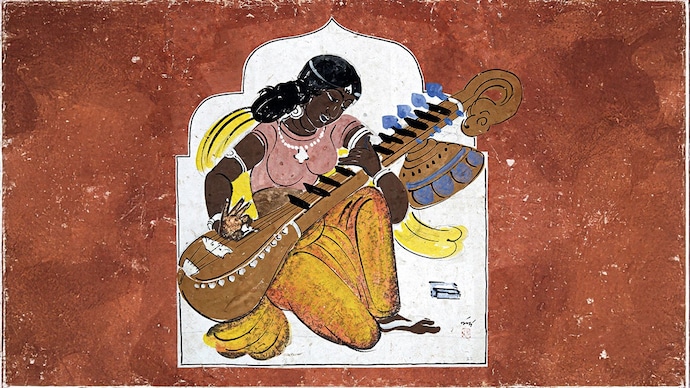
At the behest of Mahatma Gandhi, Nandalal Bose put brush to paper to create a landmark moment in modern Indian art. The Haripura Panels of 1938, created for the Indian National Congress session at Haripura (Gujarat), are remarkable works that celebrate the vitality of rural India. Rendered in bold lines and luminous colours inspired by folk traditions, they depict farmers, potters, artisans, musicians and women at work. They are now on display at Mumbai’s National Gallery of Modern Art (NGMA) as part of the exhibition Colours of Swades: From Haripura to the Constitution.
At the behest of Mahatma Gandhi, Nandalal Bose put brush to paper to create a landmark moment in modern Indian art. The Haripura Panels of 1938, created for the Indian National Congress session at Haripura (Gujarat), are remarkable works that celebrate the vitality of rural India. Rendered in bold lines and luminous colours inspired by folk traditions, they depict farmers, potters, artisans, musicians and women at work. They are now on display at Mumbai’s National Gallery of Modern Art (NGMA) as part of the exhibition Colours of Swades: From Haripura to the Constitution.
A disciple of Abanindranath Tagore and later the first principal of Kala Bhavana at Santiniketan, Bose believed that Indian art must grow from its own soil. Nidhi Choudhari, director of NGMA Mumbai, says: “Nandalal Bose occupies a foundational place in the story of Indian modern art. Instead of borrowing from Western academic traditions, he drew inspiration from Ajanta murals, folk traditions, temple sculpture and the rhythms of everyday rural life. He created a visual language rooted in Indian civilisation, yet profoundly modern in its expression.” Each panel is accompanied by a QR code, which when scanned, immerses the viewer into an AI-assisted animation created by Mumbai-based filmmaker Ebyug Akhil. This digital interpretation brings the panels to life, offering audiences a more experiential way to engage with the art.
The exhibition also explores Bose’s role in defining the visual aesthetics of the manuscript of the Constitution of India. Along with his students at Kala Bhavana, he designed the decorative borders and illustrations that frame the text. Through these images, he evoked India’s civilisational journey, drawing on visual references from the Indus Valley civilisation, scenes from the Ramayana, moments from the Mughal era and stories from the freedom movement.
—The exhibition is on view at NGMA Mumbai until April 9

