Turkish dreams | Imran Mulla's 'The Indian Caliphate: Exiled Ottomans and the Billionaire Prince'
Imran Mulla's compelling book, 'The Indian Caliphate', recounts how the last Ottoman Caliph tried to resurrect the Caliphate in the princely state of Hyderabad
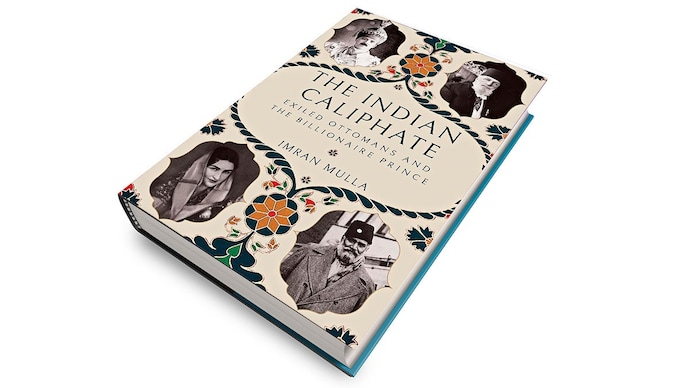
As British rule in India came to an end, some of the larger princely states aspired for independence or a near-autonomous status. Some had even bigger ambitions—Hari Singh in Kashmir envisaged heading a “Dograistan”, a federation of Kashmir and other Himalayan states with a capital in Lahore. Most audacious was the Nizam of Hyderabad’s hope of becoming the Caliph of Islam—the symbolic leader of Muslims the world over. The Indian Caliphate compellingly tells the story of this scheme.
As British rule in India came to an end, some of the larger princely states aspired for independence or a near-autonomous status. Some had even bigger ambitions—Hari Singh in Kashmir envisaged heading a “Dograistan”, a federation of Kashmir and other Himalayan states with a capital in Lahore. Most audacious was the Nizam of Hyderabad’s hope of becoming the Caliph of Islam—the symbolic leader of Muslims the world over. The Indian Caliphate compellingly tells the story of this scheme.
Imran Mulla brings together three different strands to tell the story. The first describes the final extinction of the long-tottering Ottoman empire after World War I. A Turkish Republic first abolished the Sultanate in 1922 and then its secular leadership did away with the Caliphate. The last Caliph found himself in exile in 1924, unreconciled but helpless to counter it.
The abolition of the Caliphate—not by an outside imperialism, but by the Turks themselves—was a body blow for India’s Khilafat movement, which sought to defend the embattled Ottomans. Its anti-imperialism provided nationalists like Mahatma Gandhi an ideal platform to cement Hindu-Muslim unity in the struggle against the British. However, the movement and the joint platform ultimately dissolved in communal polarisation and violence. One of its leaders, Maulana Shaukat Ali, refused to give up, and even dreamt of resurrecting the Caliph’s status.
The third strand comes from Osman Ali Khan, the Nizam of Hyderabad—the richest of the Indian princely states—who, moved by the Caliph’s plight in exile, decided to provide him financial support to live reasonably well in France. He clearly expected his generosity to impress fellow Muslims as he was otherwise financially austere to the point of eccentricity. In time, the relationship between the deposed Caliph and the Nizam would further deepen. Intermediaries such as Shaukat Ali suggested marriage between the Caliph’s daughter, Princess Durru Shehvar, and the Nizam’s eldest son, Prince Azam Jah. The marriage in 1931 and offspring thereafter consolidated thinking, at least among a few, that the coming together of the two dynasties created possibilities for the Islamic Caliphate being transplanted to Hyderabad and resurrected in the next generation Nizam.
It did not happen, of course, as events on the ground after World War II proceeded on a trajectory in India that nobody had quite expected. But Imran Mulla has given us a great read and some real insight into an age where these schemes appeared almost possible but have since disappeared from our memories.

