The winning formula | Asia's 50 Best Restaurants
Asia's 50 Best Restaurants list isn't just an accolade, it's a spotlight on innovation, resilience, and flavours that endure. So what spins the magic that transforms each restaurant into a global culinary ambassador? Spice brings you shared wisdom from some iconic and awarded chefs this year.
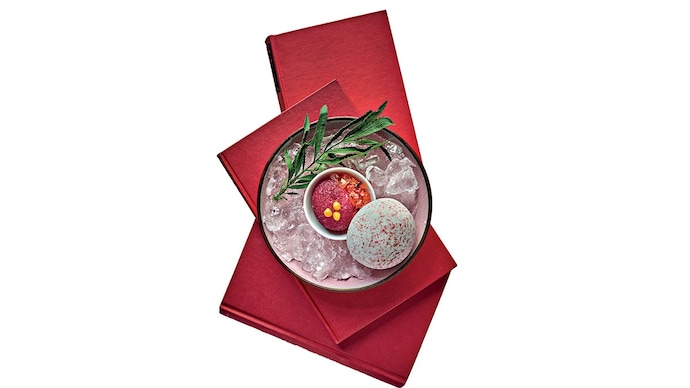
From Bangkok’s electric streets to the misty hills of Himachal, the recent Asia’s 50 Best Restaurants 2026 proves that Indian Chefs are rewriting the rules, bolder, sharper, and rooted in their own soil. At No.3, ‘Gaggan’ in Bangkok is still the rebel we love, but with a newfound elegance. Gaggan Anand’s latest incarnation, reborn in 2019, is less punk rock rebellion, more rock opera masterpiece, cacophony tempered by craft. Thailand’s finest? No doubt about it. In Mumbai, ‘Masque’ (No.15) turned a forgotten shed into India’s most celebrated kitchen. Co-founders Aditya and Aditi Dugar saw magic where others saw dust. A decade later, their vision is reality, with a five-time Best Restaurant in India win, now with Asia’s ‘Art of Hospitality’ title to top up that boast. Service here is pure intuitive grace, glasses topped up before you blink, napkins refolded silently, seasonal tastes traipsing from Goa to Kashmir. Chef Varun Totlani, who started as a commis in 2016, now leads the kitchen with a tasting menu that’s part pilgrimage, part art. Just as remarkable, ‘Masque 2.0’ promises a reboot, evolving its walls but never its soul.
From Bangkok’s electric streets to the misty hills of Himachal, the recent Asia’s 50 Best Restaurants 2026 proves that Indian Chefs are rewriting the rules, bolder, sharper, and rooted in their own soil. At No.3, ‘Gaggan’ in Bangkok is still the rebel we love, but with a newfound elegance. Gaggan Anand’s latest incarnation, reborn in 2019, is less punk rock rebellion, more rock opera masterpiece, cacophony tempered by craft. Thailand’s finest? No doubt about it. In Mumbai, ‘Masque’ (No.15) turned a forgotten shed into India’s most celebrated kitchen. Co-founders Aditya and Aditi Dugar saw magic where others saw dust. A decade later, their vision is reality, with a five-time Best Restaurant in India win, now with Asia’s ‘Art of Hospitality’ title to top up that boast. Service here is pure intuitive grace, glasses topped up before you blink, napkins refolded silently, seasonal tastes traipsing from Goa to Kashmir. Chef Varun Totlani, who started as a commis in 2016, now leads the kitchen with a tasting menu that’s part pilgrimage, part art. Just as remarkable, ‘Masque 2.0’ promises a reboot, evolving its walls but never its soul.
Headlining destination dining, ensconced in its quiet Himalayan abode, ‘Naar’ (No.30) has made significant noise conquering new frontiers. Helmed by Chef Prateek Sadhu, its smoky, rugged cuisine whispers the smells, sounds, and soul of the mountains. It’s not about chasing trends any more, India is creating its own legacy. And the world is beginning to notice.
THE MATRIX
It’s when chefs don’t just cook but inspire others to rethink the very essence of food that signals a revolution. “Over and above the awards, what’s always been the end goal for us is to run a successful, well-loved restaurant where all the seats are sold out every day”, says Totlani, Head Chef Masque & Bar Paradox Mumbai. At Dubai’s Tresind Studio, Himanshu Saini (India’s first 3 Michelin star chef) is most proud of the team they have built. “What stays is the culture in the kitchen, the discipline, the respect, and the shared belief in what we’re trying to do, which I hope encourages others to value teamwork and shared values”, he says. Championing less noise, more depth, Naar is moving towards preserving ingredients, not just serving them. “Seed saving, fermentation archives, documenting Himalayan foodways before they disappear. The restaurant is just one expression”, chips in Sadhu, Chef Patron, Naar.
WHERE TASTE IS THE TEST
When Michelin star Chef Vivek Singh opened The Cinnamon Club in London 25 years ago with a 100% plated-dishes-only principle, and no curries or poppadoms on the menu, he believed that people ate with their eyes first, therefore care in plating and presentation was important! “A 3 -4 course eating format meant dishes were smaller than just conventional curries, carefully considered combinations and just enough so one felt satiated at four courses. Fast forward to now, meals have evolved into 12-15-20-25 courses with portions so small, sometimes you still leave hungry after 15 courses! As a result, flavours often get muted in order to allow for progression of courses, while dishes remain merely suggestive of the dish it was meant to be.
While stoking passions and stirring up surprises is power for the course, more often than not, the evolution of options, sizes of plates and presentation paradigms now include smoke, dry ice, leaves, shapes, stands, and tubes; a lot of innovation outside the dish itself that doesn’t necessarily impact flavours. Certain dishes just cook, eat, and taste better when prepared in larger quantities, they lose their soul when attempts are made to modernise them. While presentation and care are important, ultimately, taste rules!” says Vivek Singh Chef, Author & Chief Dreamer celebrating 25 years of London’s Cinnamon Collection.
“In truly great restaurants, taste still leads everything. Sustainability, farm-to-table sourcing, and beautiful plating are evolutions of respect: for the ingredient, the farmer, and the guest. The risk begins when story and spectacle become the dish, instead of supporting it. A perfect plate should do three things in harmony: Flavour, memory, and meaning. If flavour is missing, the other two collapse. The best chefs today understand restraint. They use technique and presentation to elevate taste, not distract from it. A dish should never feel like a performance first and a meal second. In the end, guests don’t return for foam, smoke, or theatrics. They return for how something tasted, and how it made them feel”, says Chef Vikas Khanna of Bungalow New York.
CONCEPT RESTAURANTS
Farm to Table As concepts go, Farmlore in Bengaluru, flips the script. Set inside a working farm, the experience begins the moment you enter its gates. “Here, ‘farm-to-table’ isn’t a slogan, it’s a way of life. Unaffected by lengthy transit durations, each ingredient radiates freshness. The plates, crafted by artisans such as Adil Writer and Mabbu Studios, are stunning, but they’re just the stage. The real drama? The food. Flavours are precise and powerful, transforming humble produce into unforgettable moments. At Farmlore, taste is the heart of it, leaving you craving more long after”, shares Chef Owner Johnson Ebenezer.
Destination Dining
“Taste comes from memory, intuition, and restraint. At Naar, we don’t start with ‘what’s the story?’ We start with ‘would you crave this again tomorrow?’ If the answer is no, nothing else matters”, add Sadhu. For Chef Manish Mehrotra of Nisaba, this translates to chaat; a dish bursting with flavour, texture, and controlled chaos. He describes chaat as “organized chaos,” where spice, crunch, sweetness, and tang come together perfectly. For him, taste is everything. “Taste is supreme, flavours are king,” he says. Forget fancy plating, what matters is making guests come back, driven by unforgettable flavours. Like chaat, his cooking is lively, balanced, and straight from the heart, a dish you try once and crave forever.
Chef’s Table
Cooking is more than simply a talent, it’s an alchemy of hands and heart—a language expressed via flavour and flame. That’s the secret ingredient, the pulse behind a truly great chef. At the helm of the exclusive 12-seat, high-energy “chef’s counter”, Papa’s, Chef Hussain Shahzad says, “Monotony is part of the craft. If anything, it keeps you grounded. We are lucky to host just 12 people, four nights a week, and do it on our own terms. So every night feels different. The energy in the room keeps changing. The focus is to stay consistent with the experience, not with a fixed script. The conversations, the jokes, the banter all have to feel natural. The moment it feels forced, it can get boring. We also constantly change our dishes and the way we serve them.”
If a 13-course irreverent menu, with evenings that resemble a culinary pantomime, decodes the popularity index at Papa’s, according to Saini, the finest Wok lessons are imbibed by working alongside someone you admire: “I have always looked up to Chef Manish Mehrotra, both in and out of the kitchen. He’s my first and only mentor, and his influence on me goes far beyond recipes and techniques. In the kitchen, he taught me how to respect ingredients and reimagine Indian cuisine without losing its soul,” shares the 3 Michelin wonder chef. Learn with humility, cook with soul. That’s the magic.

