Pranit More's viral 'peak Gurgaon content' is actually peak rape-culture thinking
The problem with the latest 'joke' on Pranit More's stand-up show is not just the fact that it was said, but how it was received: with applauses, laughter, amplification and glorification. Because buying a Rs 370 biryani is not the same as getting a woman's consent.
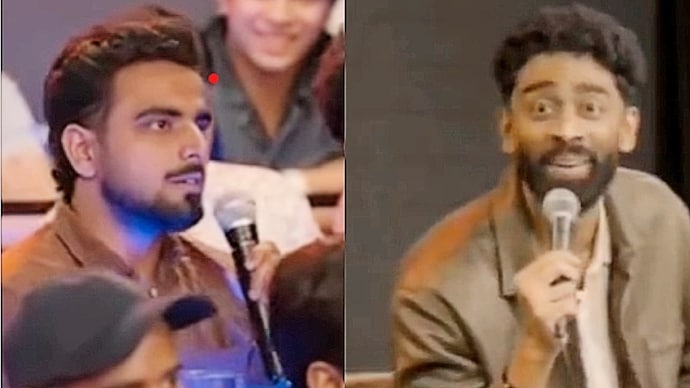
A man spends Rs 370 on biryani for a woman. Later, when she asks him to drop her home, he thinks 'but I didn't recover the money I spent on you.' The audience bursts into laughter. The comedian, Pranit More, calls it 'peak Gurgaon content'.
But what exactly are people laughing at? Because the man was clearly not asking about dividing the biryani bill in half, or asking for his petrol money. He was not saying 'I'll recover my Rs 370' and thinking, 'a UPI refund'.
The implied joke here is: he spent money on her, so now he expects sexual access in return. Because that amount - Rs 370 - may have been spent on biryani, but in his head, that was his money buying her consent. Women have been warned against this mindset for generations: the idea that a man will buy you dinner, take you on a date, buy drinks or gifts to make you feel special and would expect you to end up in his bed. All of this takes us back to the basic problem, one discussed ample times and found in every form of patriarchy: male entitlement.
It's normalised, you see. You take a woman on a date, and you feel entitled to kiss and more. You feel you at least deserve this much. Because you drove her, took care of her food, spent time chatting with her, complimented her on how she looked and, while she must have thought of it as an opportunity to get to know you - for you, it's a simple transaction: you invested your time and your money, and now want the return. And in most cases, that return is of only one kind: sexual.
This is precisely the central problem of the 'joke', 'peak Gurgaon content' and a story on More's stand-up show that begins with 'mujhe badi ladki leni hai [I want to have sex with a big girl]'. This is the same logic that fuels countless conversations around consent - the belief that spending money creates an obligation, that a woman owes a man access to her body because he invested in her.
What makes it worse are the people laughing at it, glorifying the 'joke' and, in fact, amplifying it. The outrage shouldn't be just about the joke alone or the fact that nobody in the audience or on the stage didn't resist laughing, but about the mindset that the 'joke' represents. This is the same mindset that fuels rape culture, which is encouraged every time you:
- treat sexual harassment as a joke or a source of humour.
- suggest that the victims are responsible for what has happened to them because of what they wore or how they behaved.
- assume that men are entitled to sex after spending money on women or doing favours.
- dismiss the incident with a casual 'men will be men' reaction.
No, a joke about biryani is not rape. But the thinking underneath it belongs to the same ecosystem that constantly blurs the line between consent and compensation. All More, who is a popular stand-up artiste now, especially after his participation in Bigg Boss 19, had to do was to shut the person down, ask him to leave, call out the sick mentality that prompted him to think of a woman he wanted to have sex with as just a body. But he ended up treating the man's story - about feeling awkward taking a woman straight to his place and therefore deciding to take her out for food first - as content for his show.ward' by simply taking the woman to his place and therefore, thought of having food first, as a source of content on his show.
The idea behind not shutting him down was also about how cool it would look to have something like a locker room conversation on the show. You enjoy, share a laugh, pull each other's legs over it and move on. Nothing harmful about it? We have bigger problems to deal with after all: the economic crisis, the US-Iran conflict, what the BJP is doing in West Bengal and how a mere actor is now the chief minister of Tamil Nadu. Where does this rape-culture thinking fit into the priority list?
You know what? It doesn't. But it does matter in your home where your wife is busy searching for the best alignment between your family and her work, inside the classrooms your daughters and sisters are attending, and in that park where a young girl is trying to convince a group of young boys to play cricket with her. Male entitlement creeps into your everyday life and shapes the future of women around you.
The normalisation of patriarchy doesn't happen through criminal acts alone. It happens through repetition, jokes and through thousands of small moments where society collectively agrees that a certain way of thinking is funny and not dangerous.
Passing off a deeply entitled, perpetrator-centric mindset as quirky urban dating behaviour is a reflection of something ugly. What are we celebrating here? A man who thinks Rs 370 buys him sex? A culture that immediately gets the joke because the underlying belief is so normalised? Or an audience so comfortable with transactional ideas of women and consent that it hardly thinks it's problematic.
This is how the most dangerous ideas arrive: wrapped in laughter with a pretty bow of 'peak Gurgaon content' tied around them. By the time you stop laughing, they have already become normal and in no time, celebratory.
A man spends Rs 370 on biryani for a woman. Later, when she asks him to drop her home, he thinks 'but I didn't recover the money I spent on you.' The audience bursts into laughter. The comedian, Pranit More, calls it 'peak Gurgaon content'.
But what exactly are people laughing at? Because the man was clearly not asking about dividing the biryani bill in half, or asking for his petrol money. He was not saying 'I'll recover my Rs 370' and thinking, 'a UPI refund'.
The implied joke here is: he spent money on her, so now he expects sexual access in return. Because that amount - Rs 370 - may have been spent on biryani, but in his head, that was his money buying her consent. Women have been warned against this mindset for generations: the idea that a man will buy you dinner, take you on a date, buy drinks or gifts to make you feel special and would expect you to end up in his bed. All of this takes us back to the basic problem, one discussed ample times and found in every form of patriarchy: male entitlement.
It's normalised, you see. You take a woman on a date, and you feel entitled to kiss and more. You feel you at least deserve this much. Because you drove her, took care of her food, spent time chatting with her, complimented her on how she looked and, while she must have thought of it as an opportunity to get to know you - for you, it's a simple transaction: you invested your time and your money, and now want the return. And in most cases, that return is of only one kind: sexual.
This is precisely the central problem of the 'joke', 'peak Gurgaon content' and a story on More's stand-up show that begins with 'mujhe badi ladki leni hai [I want to have sex with a big girl]'. This is the same logic that fuels countless conversations around consent - the belief that spending money creates an obligation, that a woman owes a man access to her body because he invested in her.
What makes it worse are the people laughing at it, glorifying the 'joke' and, in fact, amplifying it. The outrage shouldn't be just about the joke alone or the fact that nobody in the audience or on the stage didn't resist laughing, but about the mindset that the 'joke' represents. This is the same mindset that fuels rape culture, which is encouraged every time you:
- treat sexual harassment as a joke or a source of humour.
- suggest that the victims are responsible for what has happened to them because of what they wore or how they behaved.
- assume that men are entitled to sex after spending money on women or doing favours.
- dismiss the incident with a casual 'men will be men' reaction.
No, a joke about biryani is not rape. But the thinking underneath it belongs to the same ecosystem that constantly blurs the line between consent and compensation. All More, who is a popular stand-up artiste now, especially after his participation in Bigg Boss 19, had to do was to shut the person down, ask him to leave, call out the sick mentality that prompted him to think of a woman he wanted to have sex with as just a body. But he ended up treating the man's story - about feeling awkward taking a woman straight to his place and therefore deciding to take her out for food first - as content for his show.ward' by simply taking the woman to his place and therefore, thought of having food first, as a source of content on his show.
The idea behind not shutting him down was also about how cool it would look to have something like a locker room conversation on the show. You enjoy, share a laugh, pull each other's legs over it and move on. Nothing harmful about it? We have bigger problems to deal with after all: the economic crisis, the US-Iran conflict, what the BJP is doing in West Bengal and how a mere actor is now the chief minister of Tamil Nadu. Where does this rape-culture thinking fit into the priority list?
You know what? It doesn't. But it does matter in your home where your wife is busy searching for the best alignment between your family and her work, inside the classrooms your daughters and sisters are attending, and in that park where a young girl is trying to convince a group of young boys to play cricket with her. Male entitlement creeps into your everyday life and shapes the future of women around you.
The normalisation of patriarchy doesn't happen through criminal acts alone. It happens through repetition, jokes and through thousands of small moments where society collectively agrees that a certain way of thinking is funny and not dangerous.
Passing off a deeply entitled, perpetrator-centric mindset as quirky urban dating behaviour is a reflection of something ugly. What are we celebrating here? A man who thinks Rs 370 buys him sex? A culture that immediately gets the joke because the underlying belief is so normalised? Or an audience so comfortable with transactional ideas of women and consent that it hardly thinks it's problematic.
This is how the most dangerous ideas arrive: wrapped in laughter with a pretty bow of 'peak Gurgaon content' tied around them. By the time you stop laughing, they have already become normal and in no time, celebratory.

