Nasa in final stretch for Artemis-II Moon launch, weather 80% favourable
Weather officials will continue to closely monitor atmospheric conditions in the lead-up to launch, as even minor fluctuations can impact the narrow launch window required for a lunar trajectory.
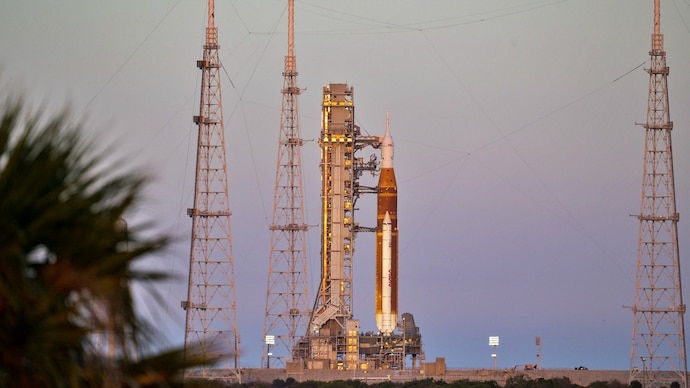
Nasa is entering the final phase of preparations for the much-anticipated Artemis II launch, with countdown activities set to begin at the Kennedy Space Center in Florida.
The mission is currently targeting liftoff as early as Thursday, April 2, marking a major milestone in humanity’s return to the Moon.
Encouragingly, the latest forecast indicates an 80 per cent chance of favourable weather conditions on launch day. While overall conditions look promising, mission teams remain cautious, with cloud cover and the possibility of strong winds identified as the primary concerns.
Weather officials will continue to closely monitor atmospheric conditions in the lead-up to launch, as even minor fluctuations can impact the narrow launch window required for a lunar trajectory.
WHAT IS ARTEMIS-II MISSION?
Artemis-II will be the first crewed mission under Nasa’s Artemis programme, signalling a critical step forward after years of uncrewed testing.
The mission will carry four astronauts, Reid Wiseman, Victor Glover, Christina Koch, and Jeremy Hansen from the Canadian Space Agency, on an approximately 10-day journey around the Moon and back to Earth.
A central objective of Artemis II is to rigorously test the Orion spacecraft’s life support systems with humans onboard for the first time.
These systems are vital for sustaining astronauts during longer and more complex missions planned in the coming years. Engineers will also evaluate navigation, communication, and overall spacecraft performance in deep space conditions.
WHEN WILL ARTEMIS-II MISSION LAUNCH?
The Artemis-II mission is set to launch on April 2, with liftoff scheduled for 3:54 am IST.
The mission is widely seen as a precursor to future lunar landings under the Artemis programme, which aims to establish a sustained human presence on the Moon.
Lessons learned from Artemis II will directly inform the planning and safety protocols of subsequent missions, including those targeting astronaut landings on the lunar surface.
With hardware checks nearing completion and teams rehearsing countdown procedures, anticipation is building for what could become one of the most significant spaceflight events of the decade.
If successful, Artemis II will not only mark humanity’s return to crewed lunar exploration after more than half a century, but also pave the way for deeper space missions, including eventual journeys to Mars.
Nasa is entering the final phase of preparations for the much-anticipated Artemis II launch, with countdown activities set to begin at the Kennedy Space Center in Florida.
The mission is currently targeting liftoff as early as Thursday, April 2, marking a major milestone in humanity’s return to the Moon.
Encouragingly, the latest forecast indicates an 80 per cent chance of favourable weather conditions on launch day. While overall conditions look promising, mission teams remain cautious, with cloud cover and the possibility of strong winds identified as the primary concerns.
Weather officials will continue to closely monitor atmospheric conditions in the lead-up to launch, as even minor fluctuations can impact the narrow launch window required for a lunar trajectory.
WHAT IS ARTEMIS-II MISSION?
Artemis-II will be the first crewed mission under Nasa’s Artemis programme, signalling a critical step forward after years of uncrewed testing.
The mission will carry four astronauts, Reid Wiseman, Victor Glover, Christina Koch, and Jeremy Hansen from the Canadian Space Agency, on an approximately 10-day journey around the Moon and back to Earth.
A central objective of Artemis II is to rigorously test the Orion spacecraft’s life support systems with humans onboard for the first time.
These systems are vital for sustaining astronauts during longer and more complex missions planned in the coming years. Engineers will also evaluate navigation, communication, and overall spacecraft performance in deep space conditions.
WHEN WILL ARTEMIS-II MISSION LAUNCH?
The Artemis-II mission is set to launch on April 2, with liftoff scheduled for 3:54 am IST.
The mission is widely seen as a precursor to future lunar landings under the Artemis programme, which aims to establish a sustained human presence on the Moon.
Lessons learned from Artemis II will directly inform the planning and safety protocols of subsequent missions, including those targeting astronaut landings on the lunar surface.
With hardware checks nearing completion and teams rehearsing countdown procedures, anticipation is building for what could become one of the most significant spaceflight events of the decade.
If successful, Artemis II will not only mark humanity’s return to crewed lunar exploration after more than half a century, but also pave the way for deeper space missions, including eventual journeys to Mars.

