Modules built for Moon station were corroded: Nasa chief on scrapping Lunar Gateway
Nasa Administrator Jared Isaacman has confirmed that both habitable modules of the Lunar Gateway space station are corroded, dealing a severe blow to America's Moon ambitions.
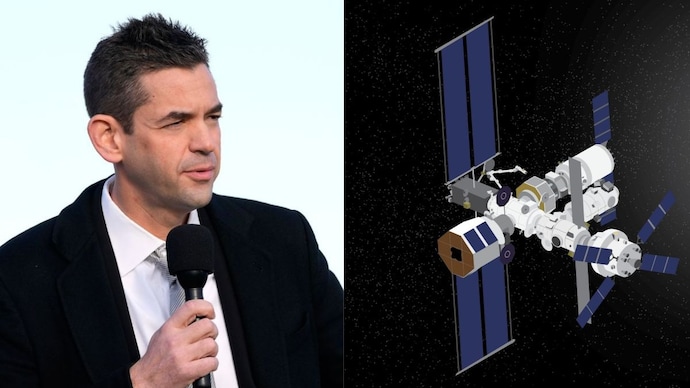
Two of the only habitable modules built for the Lunar Gateway, Nasa's ambitious plan to build a space station orbiting the Moon, have been found to be corroded, Nasa Administrator Jared Isaacman revealed in a sworn testimony before the US Congress on April 22, 2026.
The discovery is a significant blow to a programme that was already running behind schedule and over budget.
WHAT IS THE LUNAR GATEWAY, AND WHY DOES IT MATTER?
The Lunar Gateway is, in simple terms, a space station but instead of orbiting Earth like the International Space Station, it was designed to orbit the Moon.
Think of it as a pit stop in space, where astronauts could rest, resupply, and prepare before descending to the lunar surface.
It was a key part of Nasa's Artemis programme, which aims to return humans to the Moon.
WHICH LUNAR MODULES ARE CORRODED?
The two affected modules are HALO and I-HAB.
HALO, which stands for Habitation and Logistics Outpost, is the primary living and storage module, built by Thales Alenia Space in Turin, Italy, and delivered to the United States in April 2025.
I-HAB, or the International Habitation Module, is a secondary habitat built by the European Space Agency with contributions from Japan's JAXA.
Both were the only pressurised, human-ready volumes in Gateway's design.
Corrosion, simply put, is the gradual destruction of a material, often metal, due to chemical reactions with the environment, similar to how iron rusts.
Space hardware is typically made of aluminium alloys, which are vulnerable to corrosion if not properly protected during storage or assembly on the ground.
WHAT HAPPENS TO THE LUNAR GATEWAY NOW?
Nasa has already paused the Gateway programme in its original form, shifting focus to building infrastructure directly on the lunar surface instead.
Isaacman told Congress that the corrosion would have pushed any operational use of Gateway beyond 2030, and confirmed that Nasa intends to work with international partners to potentially repurpose the hardware for lunar surface applications.
Only the Power and Propulsion Element, Gateway's non-habitable engine and power unit, was spared, and is now being adapted for a nuclear propulsion demonstration mission, a technology that could one day power crewed missions to Mars.
Two of the only habitable modules built for the Lunar Gateway, Nasa's ambitious plan to build a space station orbiting the Moon, have been found to be corroded, Nasa Administrator Jared Isaacman revealed in a sworn testimony before the US Congress on April 22, 2026.
The discovery is a significant blow to a programme that was already running behind schedule and over budget.
WHAT IS THE LUNAR GATEWAY, AND WHY DOES IT MATTER?
The Lunar Gateway is, in simple terms, a space station but instead of orbiting Earth like the International Space Station, it was designed to orbit the Moon.
Think of it as a pit stop in space, where astronauts could rest, resupply, and prepare before descending to the lunar surface.
It was a key part of Nasa's Artemis programme, which aims to return humans to the Moon.
WHICH LUNAR MODULES ARE CORRODED?
The two affected modules are HALO and I-HAB.
HALO, which stands for Habitation and Logistics Outpost, is the primary living and storage module, built by Thales Alenia Space in Turin, Italy, and delivered to the United States in April 2025.
I-HAB, or the International Habitation Module, is a secondary habitat built by the European Space Agency with contributions from Japan's JAXA.
Both were the only pressurised, human-ready volumes in Gateway's design.
Corrosion, simply put, is the gradual destruction of a material, often metal, due to chemical reactions with the environment, similar to how iron rusts.
Space hardware is typically made of aluminium alloys, which are vulnerable to corrosion if not properly protected during storage or assembly on the ground.
WHAT HAPPENS TO THE LUNAR GATEWAY NOW?
Nasa has already paused the Gateway programme in its original form, shifting focus to building infrastructure directly on the lunar surface instead.
Isaacman told Congress that the corrosion would have pushed any operational use of Gateway beyond 2030, and confirmed that Nasa intends to work with international partners to potentially repurpose the hardware for lunar surface applications.
Only the Power and Propulsion Element, Gateway's non-habitable engine and power unit, was spared, and is now being adapted for a nuclear propulsion demonstration mission, a technology that could one day power crewed missions to Mars.

