Authors

Advertisement
Radifah Kabir

Radifah Kabir

Radifah Kabir tries to make the universe slightly less mysterious as Senior Sub-Editor at India Today’s Science Desk. A lifelong lover of physics and mathematics, she has spent four years (and counting) translating complex physics papers into English, chasing scientists for interviews, and writing explainers that don’t put readers to sleep. Off-duty, her heart belongs to Lana Del Rey's melodies, Quentin Tarantino's films, poetry, the Star Wars universe, good English movies, series and books, and one very demanding cat.

...Read More

Follow Radifah Kabir on

BY Radifah Kabir

WEEKEND SPECIAL

Science took over bars for three nights, and an ex-Isro chief stole the show

Pint of Science 2026 ran from May 18 to 20 across bars in Indian cities, mixing cold beer with rocket science, tattoo immunology, and pandemic prediction. Former Isro chief Dr S Somanath, who led Chandrayaan-3 and Aditya-L1, headlined the Delhi edition and nobody in those rooms left early.
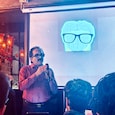

Dr S Somanath, former Isro chief, addresses a packed bar at Pint of Science 2026, Delhi. The man who landed India on the Moon had a lot to say. (Photo: Radifah Kabir/India Today)

SCIENCE

This Indian physicist helped prove the Raman Effect, but never got a Nobel

Indian physicist Kariamanickam Srinivasa Krishnan was tasked with proving that the Raman Effect was real and consistent, not a fluke, contamination, or wishful thinking. CV Raman later acknowledged that if the Nobel Prize had been awarded solely for the 1928 discovery, Krishnan would have rightfully shared it.

KS Krishnan, the physicist who spent months in a darkroom at IACS Kolkata proving the Raman Effect, remains one of the most remarkable and least celebrated figures in Indian scientific history. However, he never got the Nobel Prize.
Load More