

Your next tattoo could vaccinate you, monitor your heart and fade on its own
Tattoos are no longer just body art. From vaccine delivery and self-fading inks to wearable health monitors, the medical future of tattoos was unpacked by researcher Nishtha Bhargava at the Pint of Science India festival in Delhi.
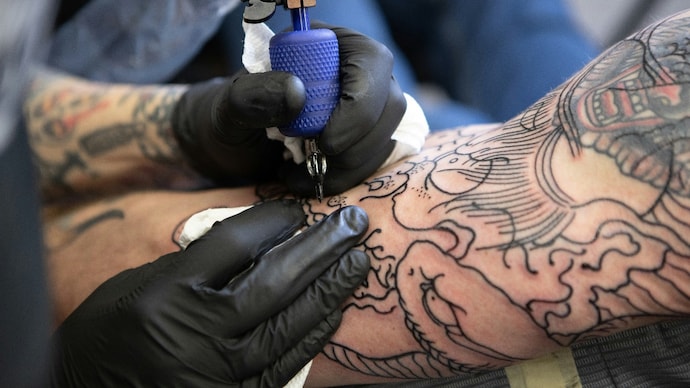
Tattoos are quietly being reinvented as medical tools, from cancer treatment markers to vaccine delivery and wearable health monitors, as researcher Nishtha Bhargava revealed at the Pint of Science India festival in Delhi. (Photo: Unsplash)

New Delhi,UPDATED: May 23, 2026 12:21 IST
Imagine walking into a hospital and receiving your next flu shot not through a needle into your arm, but through a tiny patch of ink deposited just under your skin.
Or wearing a tattoo that quietly reads your heart rate while you sleep. Or getting a beautiful design today and watching it fade away by next year.
This is not science fiction. It is the rapidly emerging medical future of tattoos, and much of it is closer than you think.
That was the most fascinating thread to emerge from a talk by Nishtha Bhargava at the Pint of Science India festival in Delhi this week.
Bhargava conducted her PhD research at CSIR-IGIB in New Delhi and currently works at Plaksha University, Mohali. A life science researcher turned independent science communicator, her work focuses on cell and molecular biology, two fields that converge surprisingly neatly in the science of tattoos.
Her session, “Getting Under the Skin: The In(k)side Story”, traced how an ancient art form is being reinvented as a tool of modern medicine.
WHY YOUR SKIN IS THE PERFECT MEDICAL CANVAS
Our skin has two main layers. The outer one, the epidermis, sheds and renews itself constantly. The deeper one, the dermis, is packed with blood vessels, nerves, collagen and immune cells.
Henna sits on the epidermis and fades as the surface peels away.
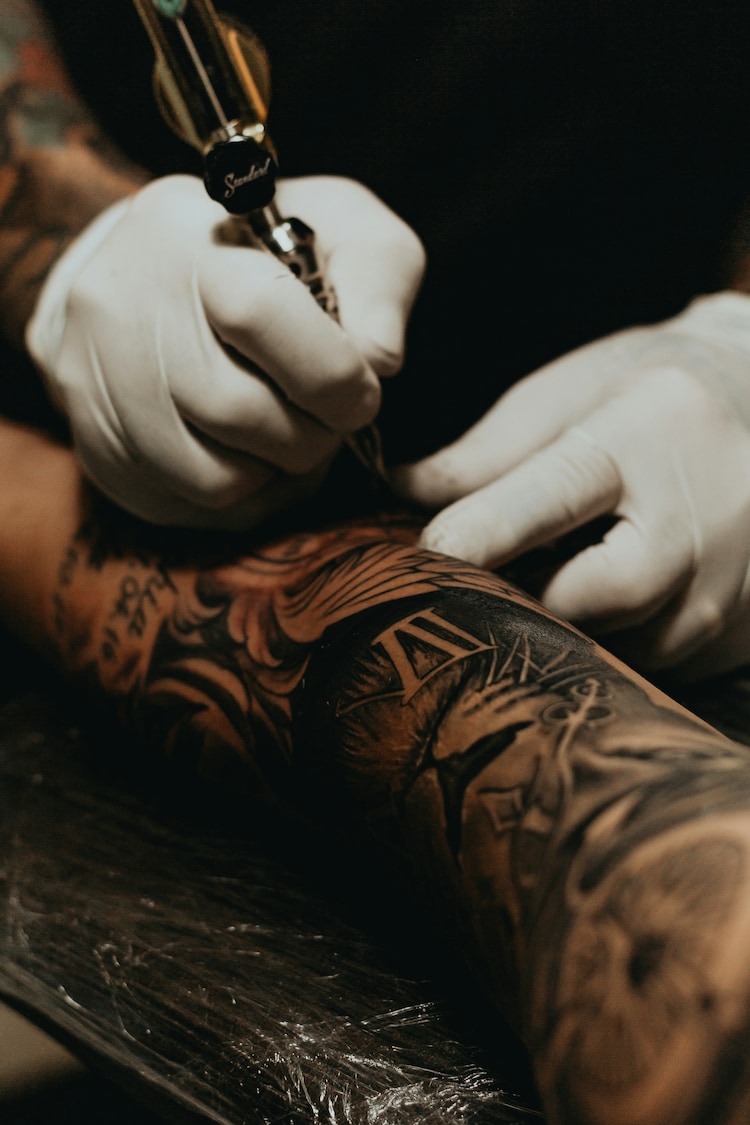
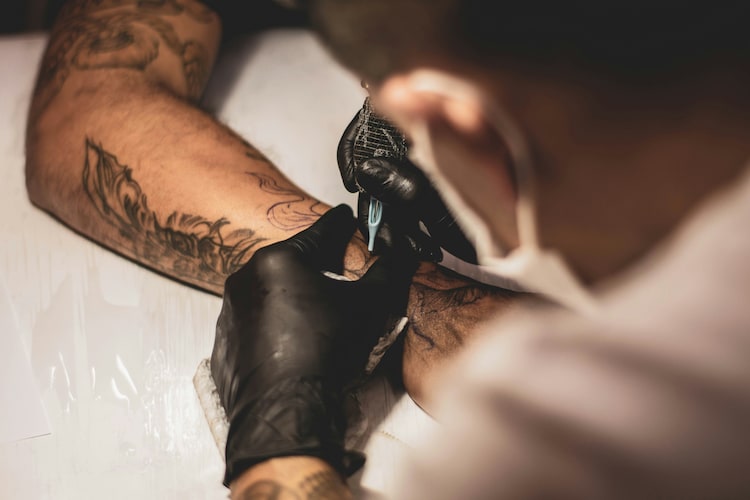
A tattoo, however, is jabbed by the artist's needle into the dermis, where it cannot be shed.
The outer layer of your skin sheds every few weeks, which is why henna fades. A tattoo is jabbed into the deeper dermis, which does not shed.

Even there, immune cells called macrophages try to clear the ink but cannot digest it, so they simply hold it. When they die, the ink is released, and fresh macrophages immediately swallow it up again.
This silent relay never stops. The ink never goes anywhere.
“If tattoos only sat in the epidermis, your body would exfoliate your life choices,” Bhargava told indiatoday.tech. Tattooing, she explained, is a controlled injury, deep enough to last but precise enough not to scar.
THE CELLS THAT REALLY OWN YOUR TATTOO
When ink lands in the dermis, immune cells called macrophages rush in to capture it.
Macrophages are the body's cleanup crew, designed to swallow and destroy anything foreign. But tattoo ink particles are too large to digest, so the macrophages simply hold on to the pigment indefinitely.
A 2023 study in Immunology led by Cheng Lin, Yvonne Marquardt, Jens Malte Baron and Matthias Bartneck at RWTH Aachen University in Germany, together with colleagues from the DWI-Leibniz Institute for Interactive Materials in Aachen, confirmed that only macrophages take up the ink.
Fibroblasts and keratinocytes, two other major skin cells, leave it alone.
"It becomes this partnership between the skin, the ink and the immune system, and it goes on for life. That is why it is permanent," Bhargava said.
The big surprise came in 2018, when Anna Baranska, Sandrine Henri, Bernard Malissen and their team at the Centre d'Immunologie de Marseille-Luminy in France, with collaborators from Institut Curie in Paris, discovered that macrophages do not hold the ink forever.
The findings were published in the Journal of Experimental Medicine.

Every eight to 10 days, they die. When they do, the trapped ink is released, but before it can drift away, fresh macrophages engulf it again. This capture, release and recapture cycle never stops.
To prove how robust the system is, Bhargava described a military veteran who underwent a bone marrow transplant, swapping out his entire immune system. His tattoos stayed put.
THE LYMPH NODE QUESTION
Tattoo ink does not always stay where it was put. Macrophages travel through the lymphatic system, ferrying tiny amounts of pigment.
Bhargava cited a case where a 50-year-old woman with breast cancer had her lymph nodes biopsied, and pigment from her chest tattoo was found inside.
A 2025 PNAS paper led by Arianna Capucetti and Santiago F. Gonzalez at the Institute for Research in Biomedicine, Universit della Svizzera Italiana in Bellinzona, Switzerland, along with collaborators across Italy, Germany, Spain, the Czech Republic and France, found that tattoo ink can inflame draining lymph nodes and alter vaccine responses.

Some small studies have suggested a 19 to 20 per cent higher risk of lymphoma, but Harvard Health Publishing noted last year that the headlines were far more worrisome than warranted.
“There is some correlation, but most immunologists suggest that is not something to worry about,” she said.
TATTOOS ARE ALREADY SAVING LIVES
Walk into any modern radiotherapy unit, and you will find cancer patients carrying small tattoos.
These are precise dots marking the exact spot where radiation is aimed every session.
In animal research, scientists have even tattooed the moving intestinal walls of mice to study gut motility, providing a permanent reference point on a surface that never stays still.
THE TATTOO THAT FADES ON ITS OWN
For all its beauty, permanence is sometimes a burden, especially for cancer survivors carrying radiotherapy markers long after recovery.
“They don't want a permanent reminder of their suffering with cancer. So remove it, they say. But then undergoing laser removal is another hassle,” Bhargava said.
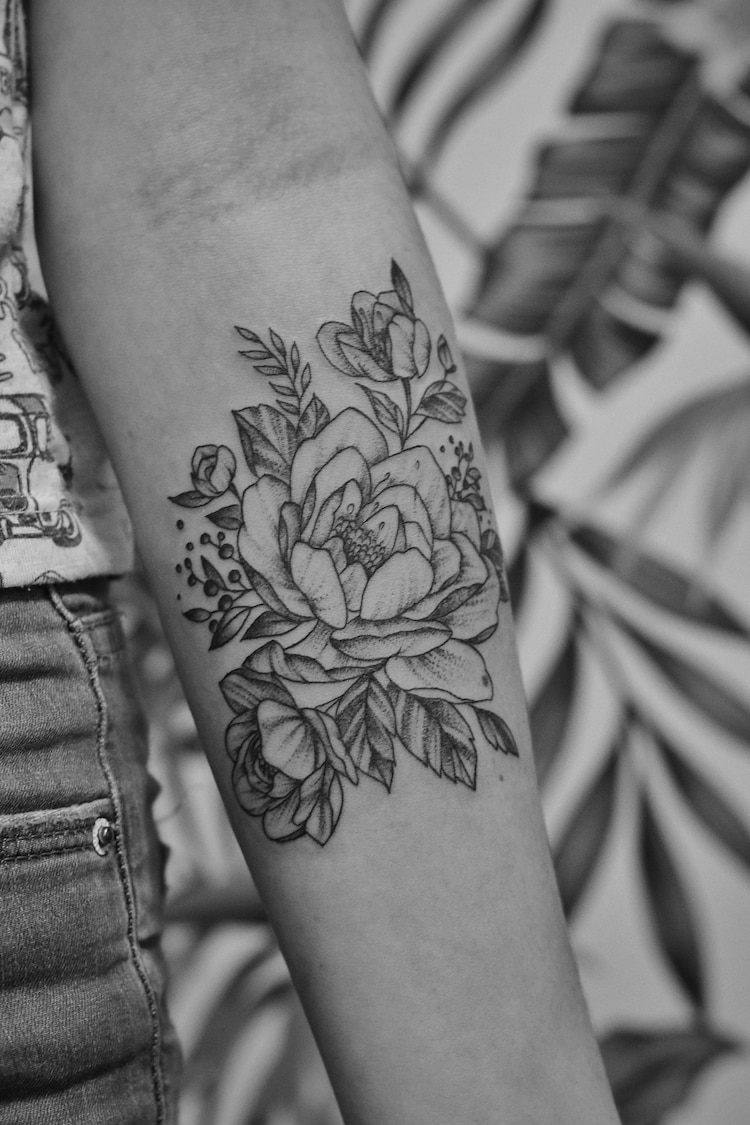
That demand has produced slow-fading tattoo inks made with plant-based, organic and vegan pigments that the immune system can finally break down. The design disappears within about a year.
“The body process will remain the same. The ink has to be different,” she explained. Several Indian tattoo parlours have already adopted the technology.
THE COMING ERA OF ELECTRONIC TATTOOS
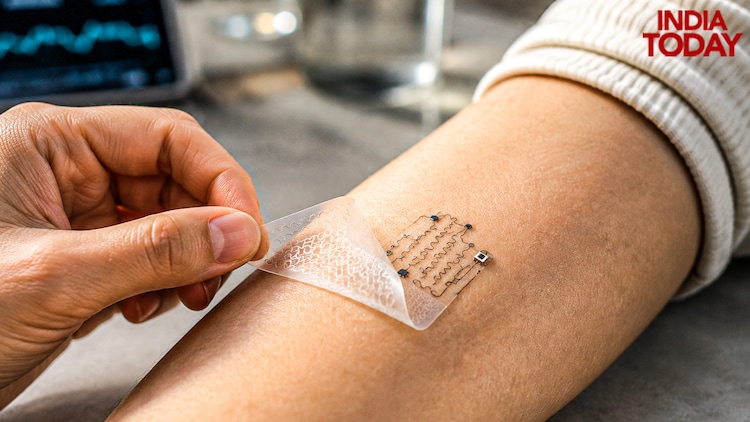
The next frontier is bolder still. Engineers worldwide are developing wearable electronic tattoos that sit on or just under the skin and read vital signs in real time.
Heart rate, blood oxygen and muscle activity could all be monitored continuously, without a watch or strap.

For patients with chronic illnesses like diabetes, implantable versions could even sense and electrically stimulate weakening muscles to keep them functional.
A VACCINE THROUGH A TATTOO
Of all the emerging uses, perhaps the most quietly revolutionary is vaccine delivery.
Most vaccines today are injected into muscle, but muscle is surprisingly poor in immune cells compared with the dermis. This is why current vaccines often need large doses and multiple boosters.
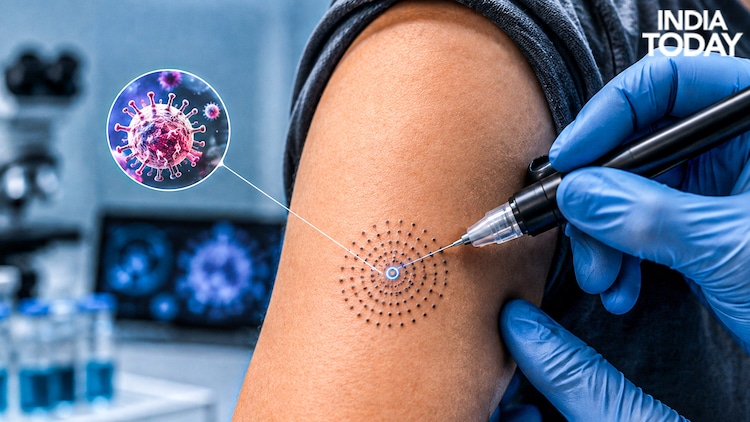
If a vaccine could instead be delivered like a tattoo, depositing the dose into the immune cell-rich dermis, the body's response could be far stronger.
“The number of boosters will decrease, and the dose of each will also have to be small. With a given amount of vaccine production, we can vaccinate more individuals. So not only will it be more effective, it will also be less costly,” Bhargava said.
For a country like India, which runs the world’s largest immunisation programme, the implications could be enormous.
WHY REMOVAL REMAINS DIFFICULT
Laser removal is still the gold standard, but it almost never works in one sitting.
Different colours of ink absorb different colours of laser light, so red ink is targeted with a green laser, green ink with a red one, and so on, while the surrounding skin lets the beam pass through harmlessly.
To avoid scalding the skin with continuous heat, the laser uses a trick called Q switching.
Think of it like a tap with water pressure building up behind a shut valve, then snapping open for a split second to release a powerful burst before closing again.

The laser stores energy behind an optical shutter and fires it in flashes lasting just a picosecond, which is one trillionth of a second.
The bursts are far too quick to burn the skin but powerful enough to shatter the ink into smaller fragments, which the body can then slowly clear, one macrophage at a time.
The catch is that the same macrophages that preserve the tattoo also slow its removal, which is why researchers are developing creams that temporarily knock out these cells to cut the number of sessions needed.
The science of tattoos is still very young. The macrophage discovery is barely seven years old. But what is clear is that the skin is no longer just a surface to decorate.
It is becoming a clinical interface. The next decade may well see tattoos that vaccinate, diagnose, monitor and even treat disease. The art form is unchanged. The purpose is being quietly rewritten.
- Ends