
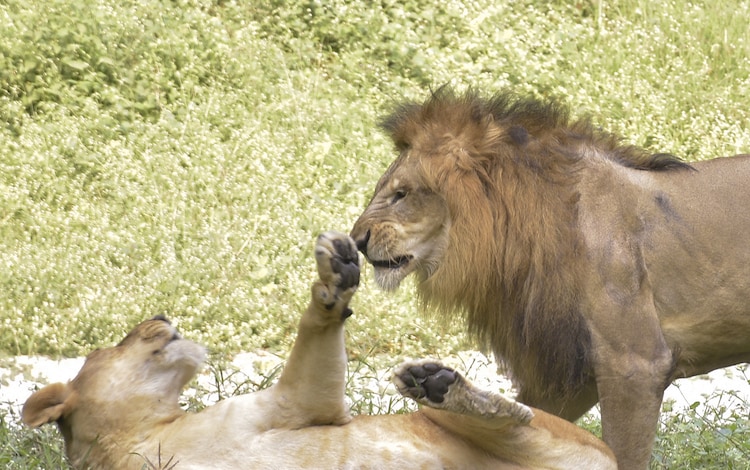
Why India needs Barda Wildlife Sanctuary to save Asiatic lions as Gir fills up
In 2018, a single virus killed 28 Asiatic lions in Gir in weeks, and every wild Asiatic lion on Earth still lives in that one forest. Here is why India is racing to turn Barda Wildlife Sanctuary into an extinction shield before it is too late.
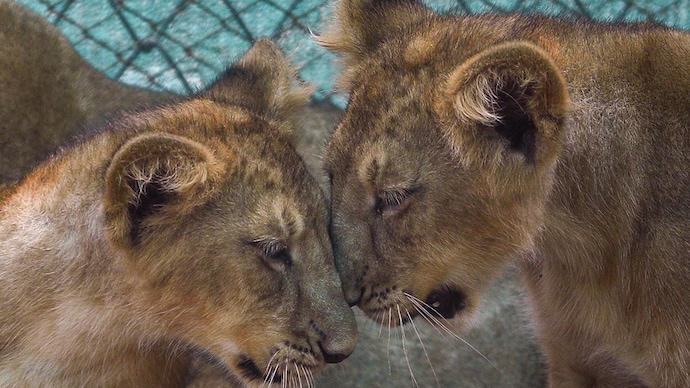
A single virus killed 28 Asiatic lions in Gir in 2018. Every wild Asiatic lion still lives in that one forest. India cannot afford to let history repeat itself. This is why Barda exists. (Photo: PTI)

New Delhi,UPDATED: May 16, 2026 20:02 IST
In the autumn of 2018, lions started dying in Gir. Within weeks, 28 Asiatic lions were dead. The killer was Canine Distemper Virus, a highly contagious pathogen spread by feral dogs living on the forest's edges. It was not the end.
But it was a glimpse of one. Every wild Asiatic lion (Panthera leo persica) on Earth lives in that one forest in Gujarat. Lose Gir, and the species is gone forever. That is exactly why India needs Barda Wildlife Sanctuary.
WHY IS HAVING ALL THE LIONS IN ONE FOREST SO DANGEROUS?
India's 16th Asiatic Lion Census, conducted in May 2025, counted 891 lions in Gujarat, a 32 per cent rise from 674 in 2020.
That is extraordinary. It is also a warning.
Gir covers just 1,412 square kilometres. Over 507 lions now live outside the Gir Protected Area, navigating farmland, open wells, and railway tracks.
In conservation science, concentrating every individual of a species in one place is called a single point of failure. The 2018 virus proved exactly how fast that failure can arrive.
WHY IS BARDA WILDLIFE SANCTUARY THE RIGHT ANSWER?
Barda, 100 kilometres west of Gir in Gujarat's Saurashtra region, is being built into an ecological insurance policy.
Lions had been absent from its rugged, semi-arid terrain since 1879, a silence of 143 years.
After sustained habitat restoration, a male lion walked in on his own in 2023.

Five lionesses were translocated under scientific supervision.
They bred naturally, producing eleven cubs. The 2025 census recorded 17 lions at Barda.
It has since been designated Satellite Population 8 under Project Lion, PM Modi’s Rs 2,927 crore conservation programme, making it the first fully protected satellite lion habitat in Gujarat.
WHY IS FOOD THE FIRST THING SCIENTISTS HAD TO FIX IN BARDA?
A second lion population means nothing without prey. Early surveys found just 119 spotted deer (Axis axis) or chital across Barda's entire 192.31 square kilometres.
Without enough deer and antelope, lions raid livestock, sparking conflict with local communities.
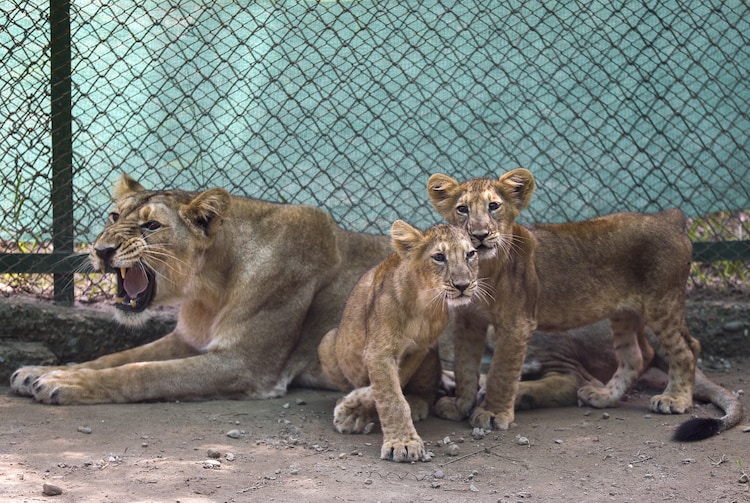
The Gujarat Forest Department turned to the Boma technique, an African method of herding animals gently into funnel-shaped canvas enclosures, to relocate spotted deer from Gir, where they exceed 90,000.
This is far gentler than chemical tranquilisers or nets, which can cause fatal muscle damage called capture myopathy.
WHY ARE GENETICS JUST AS WORRYING AS DISEASE?
Research confirms that Asiatic lions have endured severe population bottlenecks, with hunting shrinking the population to fewer than 50 individuals in the early 20th century.
That left them with dangerously low genetic diversity, raising their vulnerability to disease and reproductive failure.
Scientists are now using satellite telemetry and targeted relocations to maximise genetic mixing within Barda's growing pride, building a population with stronger long-term immunity.
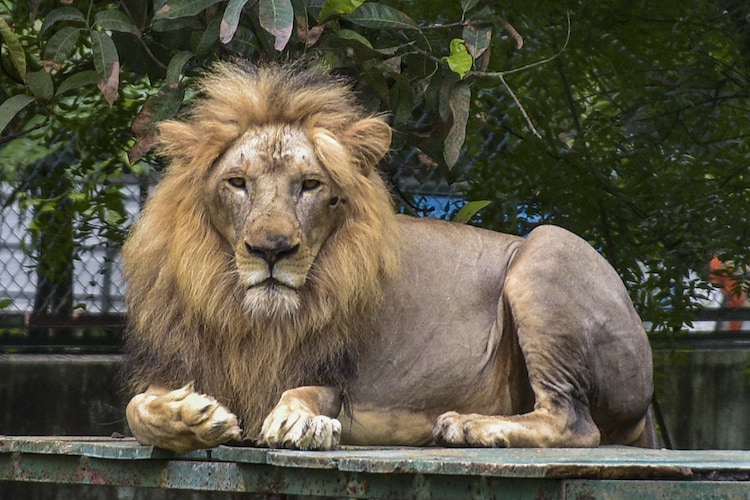
On World Lion Day 2025, Gujarat announced Rs 180 crore for Barda, including a Rs 75 crore safari park.
On May 14, 2026, days before India hosts the first-ever IBCA Summit in New Delhi on June 1 and 2, Union Environment Minister Bhupender Yadav was at Sasan Gir making the same point India's scientists have been making for years. One forest is not enough. It never was.
- Ends