India unveils coal gasification push: How black coal can be turned into clean fuel
India's Union Cabinet approved a Rs 37,500 crore scheme to convert coal into syngas, a versatile gas that can replace imported LNG, urea, and ammonia. Here is the science behind it.
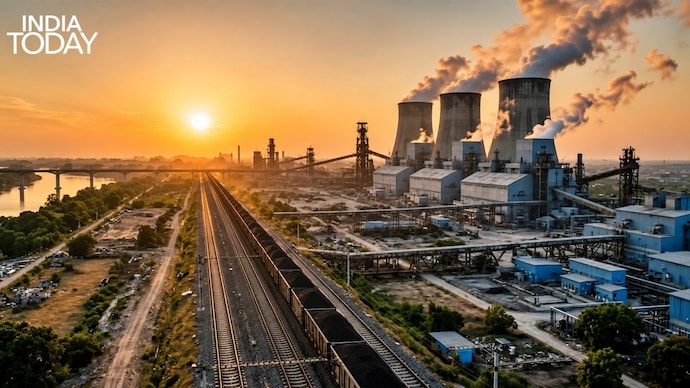
On May 13, 2026, Prime Minister Narendra Modi's Union Cabinet approved a Rs 37,500 crore scheme to do something that sounds almost alchemical: take coal, and turn it into gas.
The scheme aims to gasify approximately 75 million tonnes of coal and lignite every year, with a national target of 100 million tonnes by 2030.
The country has the reserves to back that ambition: 401 billion tonnes of coal and 47 billion tonnes of lignite, enough to last centuries. Lignite is simply a younger, softer, lower-rank form of coal, with less carbon and more moisture than the hard black variety.
The gasification scheme does not intend to burn coal, but convert it, atom by atom, into a clean, invisible gas that can power a city, fertilise a field, or fuel a factory, and most importantly, replace the LNG and PNG that India currently spends billions importing every year.
This is coal gasification, a technology that has been quietly industrialising the world since the 1800s, and India has just decided to bet big on it.
HOW DOES COAL GASIFICATION WORK?
Burning coal in open air is destructive and wasteful. You get heat, yes, but also a choking cocktail of ash, sulphur dioxide, and soot.
Gasification is a fundamentally different idea. Coal is first crushed and sieved into a manageable size, then fed into a tightly sealed reactor called a gasifier.
Inside, it meets two things: a carefully controlled trickle of oxygen and a blast of steam or water vapour.
The temperature climbs to between 1,000 and 1,600 degrees Celsius.
The pressure builds to 20 to 70 bar, which is roughly the equivalent of 20 to 70 times the weight of the atmosphere pressing down on every square centimetre.
At this point, something remarkable happens. Because the oxygen supply is deliberately restricted, there is not enough for the coal to combust, which means it never actually catches fire.
Instead, the carbon atoms in the coal break free from each other and bond with the oxygen and hydrogen available from the steam. The coal effectively dissolves into gas.
What comes out is called syngas, short for synthesis gas: a mixture primarily of carbon monoxide (CO) and hydrogen (H2).
Engineers can then run the syngas through a second reaction called the water-gas shift, where carbon monoxide reacts with more steam to produce additional hydrogen and carbon dioxide.
By controlling how much of this shift reaction takes place, they can dial up or dial down the hydrogen content. In other words, they are programming the syngas for whatever end use they need.
A 2023 peer-reviewed study in Processes by Dai et al. maps out this chemistry in rigorous detail. The syngas that emerges is astonishingly versatile.
Feed it into a power turbine and it generates electricity. Run it through a methanation reactor, where CO and H2 combine over a catalyst to form methane, and it becomes synthetic natural gas (SNG), a direct substitute for LNG piped into your kitchen.
Process it further, and it yields ammonia, urea, methanol, or liquid fuels via a well-established industrial route called Fischer-Tropsch synthesis, where CO and H2 are catalytically assembled into longer carbon chains.
WHY IS INDIA'S COAL PARTICULARLY TRICKY?
India’s coal presents a specific engineering headache. It is notoriously high in ash, sometimes 30 to 45 per cent ash content by weight, far above the global average. Ash is the non-combustible mineral residue left after coal is burnt.
Conventional gasifier designs, built for cleaner coals, struggle with this. The ash melts, fuses, and clogs the reactor.
The solution being developed domestically is the fluidised-bed gasifier, a design where coal particles are not packed in a fixed pile but are instead suspended in a rising stream of hot gas.
This keeps the particles moving, mixing, and reacting more evenly, which also keeps temperatures just low enough to prevent the ash from melting and blocking the reactor.
Researchers at IIT Kanpur have run pilot-scale experiments on exactly this kind of gasifier, tuned specifically for high-ash Indian coal.
WHY DOES THIS MATTER FOR INDIA?
The economics are stark. India's import bill for products that syngas could replace, including LNG, urea, ammonia, methanol, and coking coal, stood at approximately Rs 2.77 lakh crore in FY2025.
Nearly 100 per cent of India's ammonia is imported. So is 80 to 90 per cent of India's methanol.
More than 50 per cent of its LNG needs are met from abroad, leaving it exposed to the kind of price shocks and supply disruptions that geopolitical tensions, particularly in West Asia, routinely trigger.
The NITI Aayog has flagged gasification as a strategic priority for energy security. The National Coal Gasification Mission, launched in 2021, established the 100-million-tonne-by-2030 target.
This new scheme, which builds on a Rs 8,500 crore scheme approved in January 2024 already producing results across eight active projects, adds dramatically more firepower: 50,000 new jobs across 25 projects in coal-bearing regions and an expected Rs 2.5 to 3 lakh crore in private investment.
The scheme welcomes the proven gasification method, though indigenous technologies are actively encouraged.
It is not a clean technology in the conventional sense. Coal, however it is processed, produces carbon dioxide.
But it is a pragmatic one, built for a country that cannot yet afford to leave its coalfields behind.
On May 13, 2026, Prime Minister Narendra Modi's Union Cabinet approved a Rs 37,500 crore scheme to do something that sounds almost alchemical: take coal, and turn it into gas.
The scheme aims to gasify approximately 75 million tonnes of coal and lignite every year, with a national target of 100 million tonnes by 2030.
The country has the reserves to back that ambition: 401 billion tonnes of coal and 47 billion tonnes of lignite, enough to last centuries. Lignite is simply a younger, softer, lower-rank form of coal, with less carbon and more moisture than the hard black variety.
The gasification scheme does not intend to burn coal, but convert it, atom by atom, into a clean, invisible gas that can power a city, fertilise a field, or fuel a factory, and most importantly, replace the LNG and PNG that India currently spends billions importing every year.
This is coal gasification, a technology that has been quietly industrialising the world since the 1800s, and India has just decided to bet big on it.
HOW DOES COAL GASIFICATION WORK?
Burning coal in open air is destructive and wasteful. You get heat, yes, but also a choking cocktail of ash, sulphur dioxide, and soot.
Gasification is a fundamentally different idea. Coal is first crushed and sieved into a manageable size, then fed into a tightly sealed reactor called a gasifier.
Inside, it meets two things: a carefully controlled trickle of oxygen and a blast of steam or water vapour.
The temperature climbs to between 1,000 and 1,600 degrees Celsius.
The pressure builds to 20 to 70 bar, which is roughly the equivalent of 20 to 70 times the weight of the atmosphere pressing down on every square centimetre.
At this point, something remarkable happens. Because the oxygen supply is deliberately restricted, there is not enough for the coal to combust, which means it never actually catches fire.
Instead, the carbon atoms in the coal break free from each other and bond with the oxygen and hydrogen available from the steam. The coal effectively dissolves into gas.
What comes out is called syngas, short for synthesis gas: a mixture primarily of carbon monoxide (CO) and hydrogen (H2).
Engineers can then run the syngas through a second reaction called the water-gas shift, where carbon monoxide reacts with more steam to produce additional hydrogen and carbon dioxide.
By controlling how much of this shift reaction takes place, they can dial up or dial down the hydrogen content. In other words, they are programming the syngas for whatever end use they need.
A 2023 peer-reviewed study in Processes by Dai et al. maps out this chemistry in rigorous detail. The syngas that emerges is astonishingly versatile.
Feed it into a power turbine and it generates electricity. Run it through a methanation reactor, where CO and H2 combine over a catalyst to form methane, and it becomes synthetic natural gas (SNG), a direct substitute for LNG piped into your kitchen.
Process it further, and it yields ammonia, urea, methanol, or liquid fuels via a well-established industrial route called Fischer-Tropsch synthesis, where CO and H2 are catalytically assembled into longer carbon chains.
WHY IS INDIA'S COAL PARTICULARLY TRICKY?
India’s coal presents a specific engineering headache. It is notoriously high in ash, sometimes 30 to 45 per cent ash content by weight, far above the global average. Ash is the non-combustible mineral residue left after coal is burnt.
Conventional gasifier designs, built for cleaner coals, struggle with this. The ash melts, fuses, and clogs the reactor.
The solution being developed domestically is the fluidised-bed gasifier, a design where coal particles are not packed in a fixed pile but are instead suspended in a rising stream of hot gas.
This keeps the particles moving, mixing, and reacting more evenly, which also keeps temperatures just low enough to prevent the ash from melting and blocking the reactor.
Researchers at IIT Kanpur have run pilot-scale experiments on exactly this kind of gasifier, tuned specifically for high-ash Indian coal.
WHY DOES THIS MATTER FOR INDIA?
The economics are stark. India's import bill for products that syngas could replace, including LNG, urea, ammonia, methanol, and coking coal, stood at approximately Rs 2.77 lakh crore in FY2025.
Nearly 100 per cent of India's ammonia is imported. So is 80 to 90 per cent of India's methanol.
More than 50 per cent of its LNG needs are met from abroad, leaving it exposed to the kind of price shocks and supply disruptions that geopolitical tensions, particularly in West Asia, routinely trigger.
The NITI Aayog has flagged gasification as a strategic priority for energy security. The National Coal Gasification Mission, launched in 2021, established the 100-million-tonne-by-2030 target.
This new scheme, which builds on a Rs 8,500 crore scheme approved in January 2024 already producing results across eight active projects, adds dramatically more firepower: 50,000 new jobs across 25 projects in coal-bearing regions and an expected Rs 2.5 to 3 lakh crore in private investment.
The scheme welcomes the proven gasification method, though indigenous technologies are actively encouraged.
It is not a clean technology in the conventional sense. Coal, however it is processed, produces carbon dioxide.
But it is a pragmatic one, built for a country that cannot yet afford to leave its coalfields behind.

