45°C unending heat and no water: India faces brutal summer survival crisis
As temperatures surge across India, a second indiscriminating crisis is emerging across rural regions, towns, and metropolitan cities, turning survival into a daily struggle for millions.
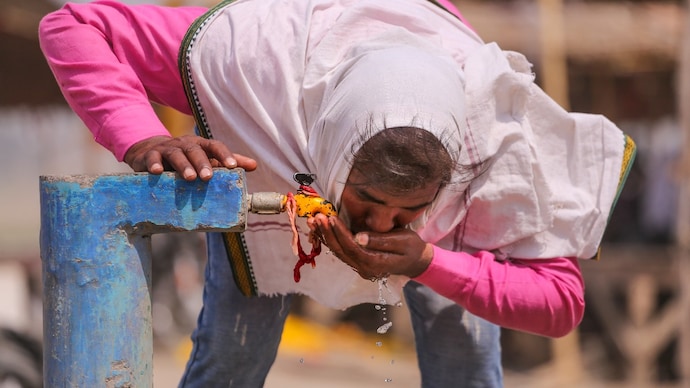
India is no stranger to punishing summers, but the heat in 2026 has pushed conditions to a new extreme.
A dangerous combination is tightening its grip across the country as record-breaking heat across numerous regions teams up with a worsening water crisis, making days and nights harder for millions of people.
From the deserts of Rajasthan to the residential towers of cities like Delhi and Lucknow, millions of Indians are discovering that surviving the heat is only half the battle, while finding water to do so is the other.
WHEN THE HEAT REFUSES TO EASE
The numbers alone tell a worrying story about the kind of extreme heat India is facing in 2026.
Rajasthan has recorded temperatures of 48.3°C this season, with daily highs consistently above 40°C.
Meanwhile, Delhi is facing high temperatures around the clock, hovering above 40°C. Uttar Pradesh is seeing high temperatures across its various districts, including its capital, Lucknow.
Another factor that has emerged is the rise in nighttime temperatures, which is making relief into a myth.
The situation so far had seemed like it had hit rock bottom, but it hasn't. The reason why the heat crisis is getting worse is that something basic that helps counteract high temperatures has become a scarce resource.
India's water scarcity has teamed up with the unforgiving summer heat.
TAPS RUNNING DRY
Heat is survivable, but heat without water is not.
Across Rajasthan, summer heat and the water crisis have joined hands to wreak havoc on locals.
In Barmer district, a lift canal that supplied roughly 31 villages has been shut for over a month, leaving communities with little more than a single hand pump. More than ten cows have died of thirst in Derasar village, their carcasses lying near homes.
Water tankers arrived only after video footage of the dead animals went public.
In Jaipur, residents of localities like Vidyadhar Nagar and Jhotwara are receiving water that is visibly dirty and contaminated, prompting thousands to take to the streets, marching to the city's water authority to demand clean supply.
"If the government does not ensure proper water supply, we will cut the water connection of the ministers and the Chief Minister himself," former cabinet minister Pratap Singh Khachariyawas told the crowd.
In rural Bharatpur and Deeg, women wake before dawn, walk kilometres to wells, carry earthen pots, and wait in queues, and all of that during a season when stepping outdoors is itself a health risk.
The situation in major cities is worse.
Delhi's primary water source, the Yamuna river, continues to flow low and heavily polluted, pushing the Delhi Jal Board's treatment plants below their target output of 900 million gallons per day, even as residential demand surges.
Hundreds of unauthorised colonies remain entirely without piped connections, leaving them dependent on tankers that arrive irregularly.
In Bhiwandi, near Mumbai, a city of 1.2 million people needs 180 million litres of water a day but is receiving only 115 million litres. A pollution-related ban on drawing from its local lake, combined with supply cuts from regional authorities, has pushed entire housing societies onto full tanker dependency.
"Children and senior citizens are having skin and health issues from this water. Property rates have decreased, and many residents are migrating," said one society treasurer.
Perhaps the most telling detail of how far this crisis has spread comes from Lucknow's upscale residential societies.
Many residents have gone without water from early morning to late evening. Some went to bed without eating, while others resorted to ordering packaged mineral water. In other places, guests at social gatherings were sent home early, as water supply ran out.
Power outages have worsened the problem too. The outages across Uttar Pradesh have disabled the pumps that fill overhead tanks, creating water shortages even where supply lines exist, making clear that this is not a problem of poverty alone.
DO SOLUTIONS EXIST?
To address the worrying situation, administrations across the country are working to respond with swift steps.
Delhi's Chief Minister, Rekha Gupta, has deployed nearly 1,000 GPS-tracked water tankers, established 28 water emergency centres, and announced a 50-year water plan that includes de-silting the Wazirabad Barrage and replacing ageing pipelines.
Similarly, Bhiwandi's municipal corporation is running seven tankers around the clock and has secured approval for a new 100-million-litre-per-day supply line.
In Uttar Pradesh, Chief Minister Yogi Adityanath has held back-to-back review meetings with the energy department, issuing directives to stabilise power supply.
And yet, despite the efforts by the administration, there exists a yawning gap between government announcements and on-ground reality. Long queues, inconsistent tanker schedules, and dry taps are still the daily reality for millions, highlighting once again that preparation will always fare better than responding after the crisis has struck.
India's water infrastructure was already under pressure before the heat arrived. What this summer has done is make that pressure impossible to look away from.
India is no stranger to punishing summers, but the heat in 2026 has pushed conditions to a new extreme.
A dangerous combination is tightening its grip across the country as record-breaking heat across numerous regions teams up with a worsening water crisis, making days and nights harder for millions of people.
From the deserts of Rajasthan to the residential towers of cities like Delhi and Lucknow, millions of Indians are discovering that surviving the heat is only half the battle, while finding water to do so is the other.
WHEN THE HEAT REFUSES TO EASE
The numbers alone tell a worrying story about the kind of extreme heat India is facing in 2026.
Rajasthan has recorded temperatures of 48.3°C this season, with daily highs consistently above 40°C.
Meanwhile, Delhi is facing high temperatures around the clock, hovering above 40°C. Uttar Pradesh is seeing high temperatures across its various districts, including its capital, Lucknow.
Another factor that has emerged is the rise in nighttime temperatures, which is making relief into a myth.
The situation so far had seemed like it had hit rock bottom, but it hasn't. The reason why the heat crisis is getting worse is that something basic that helps counteract high temperatures has become a scarce resource.
India's water scarcity has teamed up with the unforgiving summer heat.
TAPS RUNNING DRY
Heat is survivable, but heat without water is not.
Across Rajasthan, summer heat and the water crisis have joined hands to wreak havoc on locals.
In Barmer district, a lift canal that supplied roughly 31 villages has been shut for over a month, leaving communities with little more than a single hand pump. More than ten cows have died of thirst in Derasar village, their carcasses lying near homes.
Water tankers arrived only after video footage of the dead animals went public.
In Jaipur, residents of localities like Vidyadhar Nagar and Jhotwara are receiving water that is visibly dirty and contaminated, prompting thousands to take to the streets, marching to the city's water authority to demand clean supply.
"If the government does not ensure proper water supply, we will cut the water connection of the ministers and the Chief Minister himself," former cabinet minister Pratap Singh Khachariyawas told the crowd.
In rural Bharatpur and Deeg, women wake before dawn, walk kilometres to wells, carry earthen pots, and wait in queues, and all of that during a season when stepping outdoors is itself a health risk.
The situation in major cities is worse.
Delhi's primary water source, the Yamuna river, continues to flow low and heavily polluted, pushing the Delhi Jal Board's treatment plants below their target output of 900 million gallons per day, even as residential demand surges.
Hundreds of unauthorised colonies remain entirely without piped connections, leaving them dependent on tankers that arrive irregularly.
In Bhiwandi, near Mumbai, a city of 1.2 million people needs 180 million litres of water a day but is receiving only 115 million litres. A pollution-related ban on drawing from its local lake, combined with supply cuts from regional authorities, has pushed entire housing societies onto full tanker dependency.
"Children and senior citizens are having skin and health issues from this water. Property rates have decreased, and many residents are migrating," said one society treasurer.
Perhaps the most telling detail of how far this crisis has spread comes from Lucknow's upscale residential societies.
Many residents have gone without water from early morning to late evening. Some went to bed without eating, while others resorted to ordering packaged mineral water. In other places, guests at social gatherings were sent home early, as water supply ran out.
Power outages have worsened the problem too. The outages across Uttar Pradesh have disabled the pumps that fill overhead tanks, creating water shortages even where supply lines exist, making clear that this is not a problem of poverty alone.
DO SOLUTIONS EXIST?
To address the worrying situation, administrations across the country are working to respond with swift steps.
Delhi's Chief Minister, Rekha Gupta, has deployed nearly 1,000 GPS-tracked water tankers, established 28 water emergency centres, and announced a 50-year water plan that includes de-silting the Wazirabad Barrage and replacing ageing pipelines.
Similarly, Bhiwandi's municipal corporation is running seven tankers around the clock and has secured approval for a new 100-million-litre-per-day supply line.
In Uttar Pradesh, Chief Minister Yogi Adityanath has held back-to-back review meetings with the energy department, issuing directives to stabilise power supply.
And yet, despite the efforts by the administration, there exists a yawning gap between government announcements and on-ground reality. Long queues, inconsistent tanker schedules, and dry taps are still the daily reality for millions, highlighting once again that preparation will always fare better than responding after the crisis has struck.
India's water infrastructure was already under pressure before the heat arrived. What this summer has done is make that pressure impossible to look away from.

