From Delhi to Ahmedabad, why minimum temperature is not dipping below 30°C
Cities from Delhi to Ahmedabad are recording minimum temperatures near or above 30°C amid an intense heatwave. Experts say prolonged daytime heating and atmospheric moisture are trapping heat and driving oppressive warm nights.
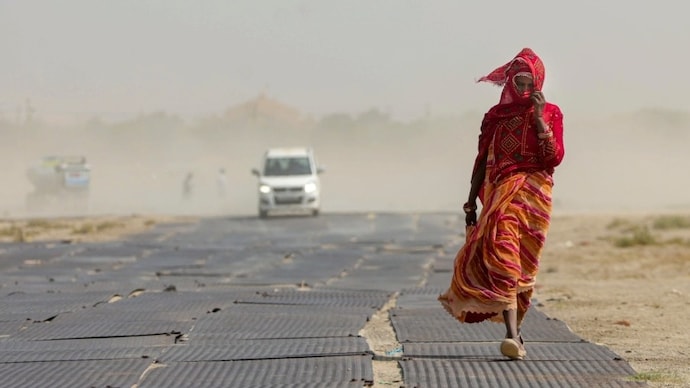
Large parts of India are witnessing unusually hot nights, with minimum temperatures refusing to fall below 30 degrees Celsius even after sunset as an intense heatwave continues to grip the country.
According to data from the India Meteorological Department (IMD), over 35 cities are currently recording night temperatures above the 30°C mark, highlighting how extreme daytime heat is now spilling deep into the night.
Major cities, including Delhi, Ahmedabad, Kolkata, Mumbai, Chennai, and Hyderabad, are reporting minimum temperatures hovering near or above 30°C, even during late-night and early-morning hours.
The minimum temperature in Delhi at 11:00 pm IST on Saturday was 33°C.
WHY MIN TEMPERATURE IS NOT FALLING BELOW 30°C
Weather expert Devendra Tripathi explained that the primary reason behind the persistently high night temperatures is the prolonged period of extreme daytime heating across several states.
“When temperatures remain continuously between 40°C and 45°C for many days, the outgoing long-wave radiation at night is unable to escape efficiently into the atmosphere,” he explained.
“As a result, heat remains trapped both on the land surface and in the air, which keeps the minimum temperature elevated.”
Devendra Tripathi, founder of Mausam Tak, said the current conditions are most severe across Rajasthan, Gujarat, Maharashtra, Madhya Pradesh and Uttar Pradesh, where daytime temperatures have repeatedly crossed 45°C. Regions including Punjab, Haryana, Delhi, Chhattisgarh, Odisha, Bihar and Jharkhand are also experiencing intense heat stress.
Another major factor preventing nighttime cooling is moisture in the atmosphere. According to Tripathi, humid air acts like a thermal blanket over cities and plains.
“Moisture creates a layer in the atmosphere that blocks heat from escaping easily,” he said. “Where dry winds prevail, and skies remain clear, temperatures cool faster at night and may fall to 25°C or 27°C. But in humid regions, the heat gets trapped.”
This means that after daytime highs touching 45°C, temperatures may drop by only 12°C to 15°C overnight instead of cooling substantially.
The result is oppressive “warm nights,” a growing feature of India’s worsening heatwave conditions.
WHAT TO EXPECT IN THE COMING DAYS?
According to the India Meteorological Department, severe heatwave conditions are likely to persist across Central India over the next seven days, while Northwest India is expected to experience similar extreme heat between May 24 and May 29.
The weather agency has also forecast a gradual rise of 2°C to 4°C in daytime temperatures across the plains of Northwest India in the coming days.
In Delhi and the National Capital Region, isolated heatwave conditions are expected to begin from Sunday, with maximum temperatures predicted to climb between 43°C and 45°C.
Large parts of India are witnessing unusually hot nights, with minimum temperatures refusing to fall below 30 degrees Celsius even after sunset as an intense heatwave continues to grip the country.
According to data from the India Meteorological Department (IMD), over 35 cities are currently recording night temperatures above the 30°C mark, highlighting how extreme daytime heat is now spilling deep into the night.
Major cities, including Delhi, Ahmedabad, Kolkata, Mumbai, Chennai, and Hyderabad, are reporting minimum temperatures hovering near or above 30°C, even during late-night and early-morning hours.
The minimum temperature in Delhi at 11:00 pm IST on Saturday was 33°C.
WHY MIN TEMPERATURE IS NOT FALLING BELOW 30°C
Weather expert Devendra Tripathi explained that the primary reason behind the persistently high night temperatures is the prolonged period of extreme daytime heating across several states.
“When temperatures remain continuously between 40°C and 45°C for many days, the outgoing long-wave radiation at night is unable to escape efficiently into the atmosphere,” he explained.
“As a result, heat remains trapped both on the land surface and in the air, which keeps the minimum temperature elevated.”
Devendra Tripathi, founder of Mausam Tak, said the current conditions are most severe across Rajasthan, Gujarat, Maharashtra, Madhya Pradesh and Uttar Pradesh, where daytime temperatures have repeatedly crossed 45°C. Regions including Punjab, Haryana, Delhi, Chhattisgarh, Odisha, Bihar and Jharkhand are also experiencing intense heat stress.
Another major factor preventing nighttime cooling is moisture in the atmosphere. According to Tripathi, humid air acts like a thermal blanket over cities and plains.
“Moisture creates a layer in the atmosphere that blocks heat from escaping easily,” he said. “Where dry winds prevail, and skies remain clear, temperatures cool faster at night and may fall to 25°C or 27°C. But in humid regions, the heat gets trapped.”
This means that after daytime highs touching 45°C, temperatures may drop by only 12°C to 15°C overnight instead of cooling substantially.
The result is oppressive “warm nights,” a growing feature of India’s worsening heatwave conditions.
WHAT TO EXPECT IN THE COMING DAYS?
According to the India Meteorological Department, severe heatwave conditions are likely to persist across Central India over the next seven days, while Northwest India is expected to experience similar extreme heat between May 24 and May 29.
The weather agency has also forecast a gradual rise of 2°C to 4°C in daytime temperatures across the plains of Northwest India in the coming days.
In Delhi and the National Capital Region, isolated heatwave conditions are expected to begin from Sunday, with maximum temperatures predicted to climb between 43°C and 45°C.

