IPL teams not getting it right vs left-handers? Orange Cap standings tell a story
Indian Premier League 2026 numbers highlight a clear trend in batting dominance. Left-handers are thriving at the top, while teams continue to struggle with tactics and trust issues in handling matchups against them.
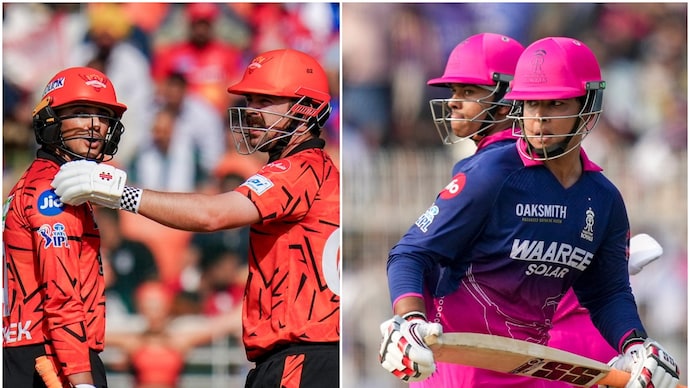
Indian Premier League (IPL) 2026 is beginning to tell a clear story. Teams are still struggling to handle left-handers, and the numbers at the top of the run charts are starting to reflect that.
It is not just about the quality of batting. It is also about how bowling sides are reacting. Captains are increasingly hesitant to use their main spinners against left-handers, often turning to part-time options or safer angles instead of backing their best bowlers.
That hesitation was visible in the game between Delhi Capitals and Sunrisers Hyderabad. DC had Axar Patel and Kuldeep Yadav available, but both bowled just two overs each. Instead, Nitish Rana was used as a primary option against left-handers like Abhishek Sharma, and the plan did not hold.
SRH vs DC, IPL 2026: HIGHLIGHTS | SCORECARD
Former India spinner Ravichandran Ashwin believes this is becoming a wider issue across teams.
“By not bowling your main options, you are not showing trust in your bowling unit,” Ashwin said, questioning the thinking behind avoiding certain matchups.
He added that the fear of left-handers is pushing teams away from their strengths.
“You have to back your bowlers. If they go for runs, that’s part of the game. But not giving them the ball at all is a bigger problem.”
This approach is also showing in how bowlers are operating. Against left-handers, many right-arm bowlers are going wide of off stump and trying to stay away from the hitting arc. Without bringing the ball back in, the threat of lbw or bowled reduces, making it easier for batters to settle.
ARE LEFT-HANDERS DOMINATING IPL 2026?
Among the top 10 run-scorers this season, six are left-handers. Abhishek Sharma leads the chart with 323 runs, striking at 215.33 and averaging 53.83.
Vaibhav Sooryavanshi has scored 246 runs at a strike rate of 236.53 and averages 41.00, while Priyansh Arya has 211 runs at a striking rate of 248.23 with an average of 42.20.
Yashasvi Jaiswal and Cooper Connolly both have 223 runs each and average 55.75, with strike rates of 152.73 and 163.97 respectively. Ishan Kishan has added 238 runs, striking at 188.88 with an average of 34.00.
Another detail stands out. Four of the top 10 are openers. They face more balls, use the powerplay, and naturally accumulate more runs over the course of a tournament.
The left-hander factor adds another layer. Most attacks are still built around right-arm bowlers, which allows left-handers to change angles and force constant adjustments in line and field.
The gap becomes clearer when looking at teams near the bottom. Chennai Super Kings and Kolkata Knight Riders have relied on right-handed opening pairs like Sanju Samson and Ruturaj Gaikwad, or Ajinkya Rahane and Finn Allen. They have not been able to generate the same volume at the top.
The pattern is straightforward. Left-handers, especially at the top of the order, are getting more runs and dictating matchups. Teams, on the other hand, are still trying to find the right way to respond.
IPL 2026 | IPL Schedule | IPL Points Table | IPL Player Stats | Purple Cap | Orange Cap | IPL Videos | Cricket News | Live Score
Indian Premier League (IPL) 2026 is beginning to tell a clear story. Teams are still struggling to handle left-handers, and the numbers at the top of the run charts are starting to reflect that.
It is not just about the quality of batting. It is also about how bowling sides are reacting. Captains are increasingly hesitant to use their main spinners against left-handers, often turning to part-time options or safer angles instead of backing their best bowlers.
That hesitation was visible in the game between Delhi Capitals and Sunrisers Hyderabad. DC had Axar Patel and Kuldeep Yadav available, but both bowled just two overs each. Instead, Nitish Rana was used as a primary option against left-handers like Abhishek Sharma, and the plan did not hold.
SRH vs DC, IPL 2026: HIGHLIGHTS | SCORECARD
Former India spinner Ravichandran Ashwin believes this is becoming a wider issue across teams.
“By not bowling your main options, you are not showing trust in your bowling unit,” Ashwin said, questioning the thinking behind avoiding certain matchups.
He added that the fear of left-handers is pushing teams away from their strengths.
“You have to back your bowlers. If they go for runs, that’s part of the game. But not giving them the ball at all is a bigger problem.”
This approach is also showing in how bowlers are operating. Against left-handers, many right-arm bowlers are going wide of off stump and trying to stay away from the hitting arc. Without bringing the ball back in, the threat of lbw or bowled reduces, making it easier for batters to settle.
ARE LEFT-HANDERS DOMINATING IPL 2026?
Among the top 10 run-scorers this season, six are left-handers. Abhishek Sharma leads the chart with 323 runs, striking at 215.33 and averaging 53.83.
Vaibhav Sooryavanshi has scored 246 runs at a strike rate of 236.53 and averages 41.00, while Priyansh Arya has 211 runs at a striking rate of 248.23 with an average of 42.20.
Yashasvi Jaiswal and Cooper Connolly both have 223 runs each and average 55.75, with strike rates of 152.73 and 163.97 respectively. Ishan Kishan has added 238 runs, striking at 188.88 with an average of 34.00.
Another detail stands out. Four of the top 10 are openers. They face more balls, use the powerplay, and naturally accumulate more runs over the course of a tournament.
The left-hander factor adds another layer. Most attacks are still built around right-arm bowlers, which allows left-handers to change angles and force constant adjustments in line and field.
The gap becomes clearer when looking at teams near the bottom. Chennai Super Kings and Kolkata Knight Riders have relied on right-handed opening pairs like Sanju Samson and Ruturaj Gaikwad, or Ajinkya Rahane and Finn Allen. They have not been able to generate the same volume at the top.
The pattern is straightforward. Left-handers, especially at the top of the order, are getting more runs and dictating matchups. Teams, on the other hand, are still trying to find the right way to respond.
IPL 2026 | IPL Schedule | IPL Points Table | IPL Player Stats | Purple Cap | Orange Cap | IPL Videos | Cricket News | Live Score

