Apple at 50: Brace yourself, your iPhone is about to change, for better or worse
Fifty years in, Apple still knows how to make the world stop and watch.
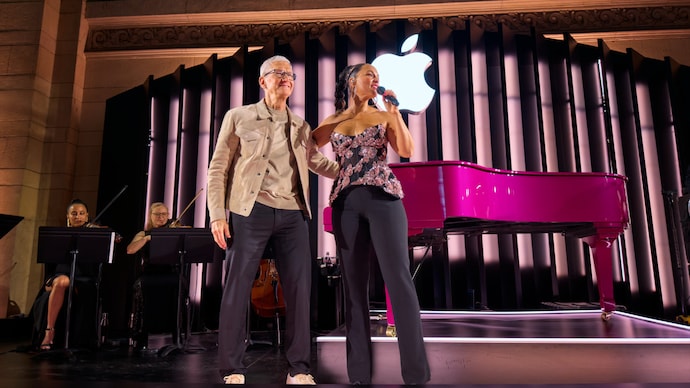
Contrary to popular perception, the late great Steve Jobs wanted to put great technology in the hands of as many people as possible. The Apple 1 wasn’t the first computer, but it laid the groundwork for computers to eventually become more personal. That was in 1976. In 2007, Apple would do the same thing for phones with the iPhone. Fifty years after being found inside Jobs’ family garage, the song remains the same.
Fifty years is a long time for a consumer tech company to stay alive, let alone thrive. Yet, Apple continues to buck the trend. CEO Tim Cook attributed the success to “focus” in an interview recently. If anything, that focus seems to have grown only stronger in 2026. Earlier this month, Apple launched its most affordable laptop, the MacBook Neo, at a starting price of $599 (Rs 69,990 in India). Interestingly, it is powered by an iPhone chip. If reports are anything to go by, Apple might be warming up for something even bigger. Brace yourself, your iPhone is about to change.
One of the ways your iPhone experience is about to change is through software. Software has always been Apple’s trump card. It is what separates an iPhone from every other smartphone on planet earth. But as conversations pivoted to artificial intelligence, Apple was caught short-changed. When you enter those chats today, you feel every other company is winning the AI race.
In 2024, Apple tried to push the narrative that it had some sort of plan. It called it Apple Intelligence. Though, as time passed by, it became increasingly clear that a handful of writing and photo editing tools were not going to be enough to fend off competition. People expected more from their iPhone and Apple was just not giving it to them, not yet anyway.
Apple read the room and decided to make some changes. It rang into 2026 announcing a multi-year collaboration with Google. Granular details of the agreement were not shared, except that Gemini will help “power future Apple Intelligence features, including a more personalised Siri coming this year.” Read between the lines and it is clear that Apple hit a roadblock with fashioning its own AI, murmurs of which started in 2025 itself after the sudden exit of John Giannandrea who had been the company’s AI chief since 2018. He has since been replaced by Amar Subramanya who previously worked at Google.
Following the exec reshuffle, and after careful evaluation, Apple realised that “Google's AI technology provides the most capable foundation for Apple Foundation Models.” We’re expecting to hear more about this partnership and “the innovative new experiences it will unlock for Apple users” at the Worldwide Developers Conference which kicks off June 8. While not explicitly confirmed, all this and more should be part of the next big iPhone update, aka iOS 27.
Of course, most people will be able to use these innovative new experiences not before September. It is around this time that the iPhone is rumoured to get its biggest change since, well, forever. Not that the iPhone X switch wasn’t glorious, but in 2026, as Apple completes its fifty years, we might be in store for something even more revolutionary: a foldable iPhone. Once again, Apple won’t be the first to make it, but even rumours of the iPhone Fold have got analysts and trade pundits salivating at the thought of how it might jumpstart the market and make foldables finally go mainstream.
When the iPhone Fold does arrive, it won't just be a phone that gets bigger. It will be something that replaces the iPad Mini, creating a new “Pro” category – possibly even “Ultra” – that could push prices toward the $2,000 mark. In other words, as Apple moves into its sixth decade, the gap between the entry-level user and this new Ultra user is bound to widen. With the MacBook Neo at $599 and a potential iPhone Fold at $1,999, you are either in the ecosystem at the ground floor, or you are paying a luxury tax to see the future.
There is more to this than meets the eye. The folding screen with its widely speculated “self-healing” tech for a nearly crease-free foldable experience already sounds like a winner. But the true soul of this iPhone will be its intelligence or the lack thereof. Apple has spent a decade marketing itself as the anti-Google, the company that doesn't sell your data. By inviting Gemini into the iPhone, Apple is doing something it has never done before. Only time will tell how it uses Google’s LLM (Large Language Model) horsepower without compromising its “Privacy. That’s iPhone” billboard promise.
The iPhone is indeed about to change. It is set to become more flexible, more intelligent, and arguably, more complicated. For the better, we are looking at a device that finally fulfills the promise of a truly smart assistant and a shape-shifting form factor. For the worse, we face a future of escalating prices and an even deeper reliance on a single ecosystem that knows our moves and habits better than we know ourselves. No wonder, CEO Tim Cook wants you to put down your iPhone already and go out for crying out loud.
Be that as it may, one thing is certain: fifty years in, Apple still knows how to make the world stop and watch.
Contrary to popular perception, the late great Steve Jobs wanted to put great technology in the hands of as many people as possible. The Apple 1 wasn’t the first computer, but it laid the groundwork for computers to eventually become more personal. That was in 1976. In 2007, Apple would do the same thing for phones with the iPhone. Fifty years after being found inside Jobs’ family garage, the song remains the same.
Fifty years is a long time for a consumer tech company to stay alive, let alone thrive. Yet, Apple continues to buck the trend. CEO Tim Cook attributed the success to “focus” in an interview recently. If anything, that focus seems to have grown only stronger in 2026. Earlier this month, Apple launched its most affordable laptop, the MacBook Neo, at a starting price of $599 (Rs 69,990 in India). Interestingly, it is powered by an iPhone chip. If reports are anything to go by, Apple might be warming up for something even bigger. Brace yourself, your iPhone is about to change.
One of the ways your iPhone experience is about to change is through software. Software has always been Apple’s trump card. It is what separates an iPhone from every other smartphone on planet earth. But as conversations pivoted to artificial intelligence, Apple was caught short-changed. When you enter those chats today, you feel every other company is winning the AI race.
In 2024, Apple tried to push the narrative that it had some sort of plan. It called it Apple Intelligence. Though, as time passed by, it became increasingly clear that a handful of writing and photo editing tools were not going to be enough to fend off competition. People expected more from their iPhone and Apple was just not giving it to them, not yet anyway.
Apple read the room and decided to make some changes. It rang into 2026 announcing a multi-year collaboration with Google. Granular details of the agreement were not shared, except that Gemini will help “power future Apple Intelligence features, including a more personalised Siri coming this year.” Read between the lines and it is clear that Apple hit a roadblock with fashioning its own AI, murmurs of which started in 2025 itself after the sudden exit of John Giannandrea who had been the company’s AI chief since 2018. He has since been replaced by Amar Subramanya who previously worked at Google.
Following the exec reshuffle, and after careful evaluation, Apple realised that “Google's AI technology provides the most capable foundation for Apple Foundation Models.” We’re expecting to hear more about this partnership and “the innovative new experiences it will unlock for Apple users” at the Worldwide Developers Conference which kicks off June 8. While not explicitly confirmed, all this and more should be part of the next big iPhone update, aka iOS 27.
Of course, most people will be able to use these innovative new experiences not before September. It is around this time that the iPhone is rumoured to get its biggest change since, well, forever. Not that the iPhone X switch wasn’t glorious, but in 2026, as Apple completes its fifty years, we might be in store for something even more revolutionary: a foldable iPhone. Once again, Apple won’t be the first to make it, but even rumours of the iPhone Fold have got analysts and trade pundits salivating at the thought of how it might jumpstart the market and make foldables finally go mainstream.
When the iPhone Fold does arrive, it won't just be a phone that gets bigger. It will be something that replaces the iPad Mini, creating a new “Pro” category – possibly even “Ultra” – that could push prices toward the $2,000 mark. In other words, as Apple moves into its sixth decade, the gap between the entry-level user and this new Ultra user is bound to widen. With the MacBook Neo at $599 and a potential iPhone Fold at $1,999, you are either in the ecosystem at the ground floor, or you are paying a luxury tax to see the future.
There is more to this than meets the eye. The folding screen with its widely speculated “self-healing” tech for a nearly crease-free foldable experience already sounds like a winner. But the true soul of this iPhone will be its intelligence or the lack thereof. Apple has spent a decade marketing itself as the anti-Google, the company that doesn't sell your data. By inviting Gemini into the iPhone, Apple is doing something it has never done before. Only time will tell how it uses Google’s LLM (Large Language Model) horsepower without compromising its “Privacy. That’s iPhone” billboard promise.
The iPhone is indeed about to change. It is set to become more flexible, more intelligent, and arguably, more complicated. For the better, we are looking at a device that finally fulfills the promise of a truly smart assistant and a shape-shifting form factor. For the worse, we face a future of escalating prices and an even deeper reliance on a single ecosystem that knows our moves and habits better than we know ourselves. No wonder, CEO Tim Cook wants you to put down your iPhone already and go out for crying out loud.
Be that as it may, one thing is certain: fifty years in, Apple still knows how to make the world stop and watch.

