Ferrari just launched its first EV, ex-Apple design guru is behind it and so is Samsung
Ferrari has unveiled its first electric car, the Ferrari Luce. The car features a futuristic layered OLED cockpit powered by Samsung and designed with inputs from former Apple designer Jony Ive.
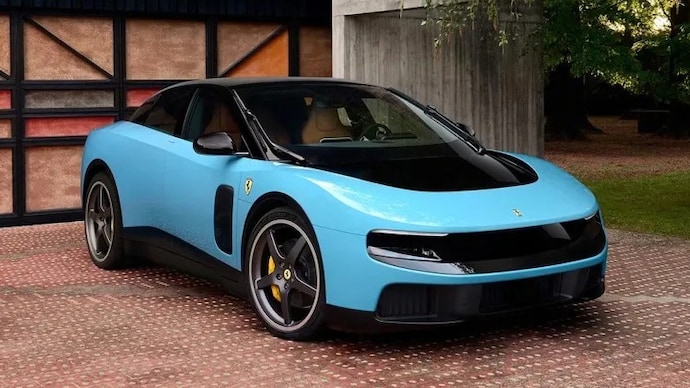
Ferrari has officially unveiled its first electric car — the Ferrari Luce. With the new EV, the supercar maker has also moved beyond its traditional two- or four-seat layouts by introducing a five-seat configuration for the first time. The Italian luxury carmaker has built the new car by bringing together multiple industry giants. The car has been designed in collaboration with former Apple chief designer Jony Ive and renowned designer Marc Newson. For its futuristic cockpit, Ferrari has also adopted Samsung’s advanced OLED display technology. So, apart from Ferrari’s traditional legacy of luxury and performance, the Luce also carries the DNA of these three most design-forward names in the world.
The Ferrari Luce was revealed during Ferrari’s World Premiere event in Italy on May 25. Ferrari says the new car, Luce, was designed to balance the brand’s traditional driving experience with futuristic technology.
Ferrari Luce gets layered OLED dashboard with mechanical controls
One of the biggest highlights of the Ferrari Luce is its cockpit setup. Samsung confirmed that it exclusively supplied four OLED displays for the car, including a 12.9-inch driver binnacle, a 12-inch lower OLED layer, a 10.1-inch centre control display, and a 6.3-inch rear passenger screen.
The standout feature is the layered instrument cluster placed in front of the driver. Unlike conventional flat digital dashboards, Ferrari and Samsung have combined two OLED panels on top of each other with physical mechanical hands moving between them. The setup is designed to create a more analogue-like interaction while still retaining the flexibility of a digital display.
Samsung says the system uses its proprietary HIAA (Hole in Active Area) technology — the same display technology previously used in Samsung Galaxy smartphones for punch-hole selfie cameras. However, instead of a tiny camera cutout, the Ferrari Luce features openings measuring nearly 100mm, roughly 20 times larger than typical smartphone display holes.
The lower OLED layer displays background graphics and gauge information, while the upper layer features circular cutouts and overlays for real-time vehicle data, torque indicators, alerts, and pop-ups. Physical mechanical hands rotate between the two display layers, creating a three-dimensional cockpit effect.
Ferrari’s Chief Research & Development Officer Ernesto Lasalandra said the cockpit was designed to deliver “an unprecedented experience” where Ferrari’s heritage and future-oriented technology coexist together.
Ferrari has officially unveiled its first electric car — the Ferrari Luce. With the new EV, the supercar maker has also moved beyond its traditional two- or four-seat layouts by introducing a five-seat configuration for the first time. The Italian luxury carmaker has built the new car by bringing together multiple industry giants. The car has been designed in collaboration with former Apple chief designer Jony Ive and renowned designer Marc Newson. For its futuristic cockpit, Ferrari has also adopted Samsung’s advanced OLED display technology. So, apart from Ferrari’s traditional legacy of luxury and performance, the Luce also carries the DNA of these three most design-forward names in the world.
The Ferrari Luce was revealed during Ferrari’s World Premiere event in Italy on May 25. Ferrari says the new car, Luce, was designed to balance the brand’s traditional driving experience with futuristic technology.
Ferrari Luce gets layered OLED dashboard with mechanical controls
One of the biggest highlights of the Ferrari Luce is its cockpit setup. Samsung confirmed that it exclusively supplied four OLED displays for the car, including a 12.9-inch driver binnacle, a 12-inch lower OLED layer, a 10.1-inch centre control display, and a 6.3-inch rear passenger screen.
The standout feature is the layered instrument cluster placed in front of the driver. Unlike conventional flat digital dashboards, Ferrari and Samsung have combined two OLED panels on top of each other with physical mechanical hands moving between them. The setup is designed to create a more analogue-like interaction while still retaining the flexibility of a digital display.
Samsung says the system uses its proprietary HIAA (Hole in Active Area) technology — the same display technology previously used in Samsung Galaxy smartphones for punch-hole selfie cameras. However, instead of a tiny camera cutout, the Ferrari Luce features openings measuring nearly 100mm, roughly 20 times larger than typical smartphone display holes.
The lower OLED layer displays background graphics and gauge information, while the upper layer features circular cutouts and overlays for real-time vehicle data, torque indicators, alerts, and pop-ups. Physical mechanical hands rotate between the two display layers, creating a three-dimensional cockpit effect.
Ferrari’s Chief Research & Development Officer Ernesto Lasalandra said the cockpit was designed to deliver “an unprecedented experience” where Ferrari’s heritage and future-oriented technology coexist together.

