Uber COO bursts AI tokenmaxxing bubble, says it is getting hard to justify the cost
Uber COO Andrew Macdonald says it is becoming harder to justify massive AI spending as productivity gains and business results fail to keep pace with rising costs. The remarks underline wider industry concerns that AI costs are rising faster than measurable returns.
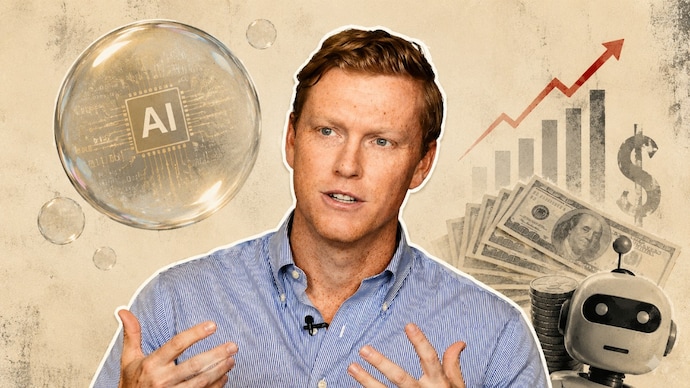
The tech industry has sold AI as the ultimate productivity machine, something that would help companies move faster, build more products, and perhaps even reduce costs in the long run. But now, some companies are beginning to openly question whether the money being poured into AI is actually delivering results quickly enough. After reports recently suggested that Microsoft was removing Claude Code licenses as an easy way to reduce operating expenses before the new financial year begins in July, Uber is also raising concerns about the growing cost of AI.
According to Uber’s chief operating officer, the company is struggling to see a direct connection between its massive AI spending and meaningful business outcomes.
Uber burned through its AI budget early
In a Rapid Response interview released on Saturday, Uber COO Andrew Macdonald referred to comments made earlier by Uber CTO Praveen Neppalli Naga, who had told The Information in an April interview that the company had already blown through its Claude Code budget for 2026.
Macdonald said the remark led to what he described as a “head-exploding moment” inside the company, sparking discussions around rising AI token consumption and the trade-offs that come with it, including questions around headcount.
The bigger concern, however, was not just the cost. It was whether all that AI usage was actually leading to better products and useful features for users.
More AI usage not translating into new features
Speaking about conversations with Uber’s engineering leaders, the executive explained that higher AI usage was not translating into a proportional increase in useful consumer features.
“You talk to your senior engineering leaders, and you’re saying, ‘Okay, how many projects that were on the cutting room floor got moved above the line because of the productivity gains, because 25 per cent of our code commits were via Claude Code last quarter,’ that link is not there yet,” he said.
In simple terms, Uber may be using AI tools heavily, but the company is still struggling to clearly show how that spending is resulting in noticeably better apps, features, or services for customers.
He added that this makes the trade-off harder to justify.
“If you’re not actually able to draw a direct line to how much useful features and functionality you’re shipping to your users, that trade becomes harder to justify,” he said.
AI may feel free, but companies pay the bill
The executive also pointed out that AI can appear cheap or even free from a user’s perspective, especially when they are simply experimenting with interesting use cases. But behind the scenes, companies are paying enormous bills for those tools.
Earlier this month, Uber CEO Dara Khosrowshahi said during an earnings call that the company was slowing hiring as it continued investing heavily in AI.
The comments reflect a growing reality across the tech industry. AI companies have promised that today’s heavy spending and sacrifices would eventually pay off through huge productivity gains and new business opportunities. But for many firms, that payoff does not appear to be arriving as quickly as expected.
AI’s biggest promises are still waiting
Uber also revealed that it has been working closely with many major AI model companies as they attempt to bring commerce experiences into AI chatbots. But so far, the results have not matched earlier expectations.
“We’re working with pretty much all of the large model companies as they roll out commerce, and there hasn’t really been anything that’s taken off yet,” the executive said.
He added that, a year ago, Uber’s board worried that AI chatbots could completely reshape online commerce by now. Instead, that disruption has not happened yet.
“It doesn’t mean it won’t happen,” he said, “but that just hasn’t played out yet.”
The tech industry has sold AI as the ultimate productivity machine, something that would help companies move faster, build more products, and perhaps even reduce costs in the long run. But now, some companies are beginning to openly question whether the money being poured into AI is actually delivering results quickly enough. After reports recently suggested that Microsoft was removing Claude Code licenses as an easy way to reduce operating expenses before the new financial year begins in July, Uber is also raising concerns about the growing cost of AI.
According to Uber’s chief operating officer, the company is struggling to see a direct connection between its massive AI spending and meaningful business outcomes.
Uber burned through its AI budget early
In a Rapid Response interview released on Saturday, Uber COO Andrew Macdonald referred to comments made earlier by Uber CTO Praveen Neppalli Naga, who had told The Information in an April interview that the company had already blown through its Claude Code budget for 2026.
Macdonald said the remark led to what he described as a “head-exploding moment” inside the company, sparking discussions around rising AI token consumption and the trade-offs that come with it, including questions around headcount.
The bigger concern, however, was not just the cost. It was whether all that AI usage was actually leading to better products and useful features for users.
More AI usage not translating into new features
Speaking about conversations with Uber’s engineering leaders, the executive explained that higher AI usage was not translating into a proportional increase in useful consumer features.
“You talk to your senior engineering leaders, and you’re saying, ‘Okay, how many projects that were on the cutting room floor got moved above the line because of the productivity gains, because 25 per cent of our code commits were via Claude Code last quarter,’ that link is not there yet,” he said.
In simple terms, Uber may be using AI tools heavily, but the company is still struggling to clearly show how that spending is resulting in noticeably better apps, features, or services for customers.
He added that this makes the trade-off harder to justify.
“If you’re not actually able to draw a direct line to how much useful features and functionality you’re shipping to your users, that trade becomes harder to justify,” he said.
AI may feel free, but companies pay the bill
The executive also pointed out that AI can appear cheap or even free from a user’s perspective, especially when they are simply experimenting with interesting use cases. But behind the scenes, companies are paying enormous bills for those tools.
Earlier this month, Uber CEO Dara Khosrowshahi said during an earnings call that the company was slowing hiring as it continued investing heavily in AI.
The comments reflect a growing reality across the tech industry. AI companies have promised that today’s heavy spending and sacrifices would eventually pay off through huge productivity gains and new business opportunities. But for many firms, that payoff does not appear to be arriving as quickly as expected.
AI’s biggest promises are still waiting
Uber also revealed that it has been working closely with many major AI model companies as they attempt to bring commerce experiences into AI chatbots. But so far, the results have not matched earlier expectations.
“We’re working with pretty much all of the large model companies as they roll out commerce, and there hasn’t really been anything that’s taken off yet,” the executive said.
He added that, a year ago, Uber’s board worried that AI chatbots could completely reshape online commerce by now. Instead, that disruption has not happened yet.
“It doesn’t mean it won’t happen,” he said, “but that just hasn’t played out yet.”

