US won't help you: Trump's oil message to UK, other countries amid Hormuz blockade
As the Strait of Hormuz remains blocked and allies refuse to join the war, Trump urged nations facing a fuel crunch to fend for themselves as tensions with Iran continue to spiral.
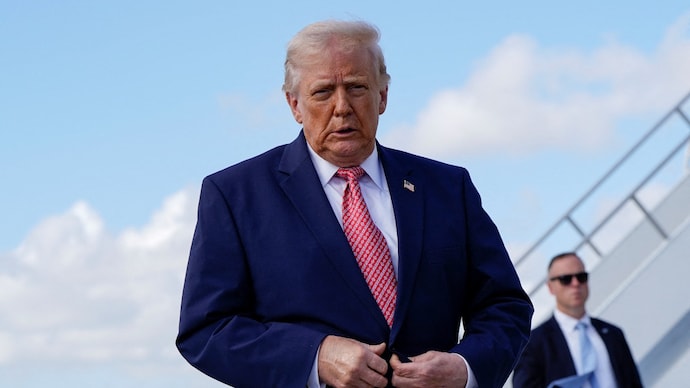
Countries facing fuel shortages amid the escalating Middle East conflict have just two choices – buy from the United States or secure supplies themselves via the Iran-blocked Strait of Hormuz, US President Donald Trump said on Tuesday. Slamming allies who snubbed his call to join the war, the US President said countries must learn to fight for themselves, saying the US will not be there to help them always.
"All of those countries that can’t get jet fuel because of the Strait of Hormuz, like the United Kingdom, which refused to get involved in the decapitation of Iran, I have a suggestion for you: Number 1, buy from the US, we have plenty, and Number 2, build up some delayed courage, go to the Strait, and just TAKE IT," he said in a social media post.
Iran blocked the Strait of Hormuz, a key artery that handles nearly 20 per cent of global oil supply, soon after the US launched a limited military campaign on February 28, triggering a sharp fuel crisis and pushing crude prices above USD100 a barrel, up from around USD75 earlier.
Trump has so far been unable to reopen the strait, despite sharp warnings to Iran of consequences, while also urging allies to deploy warships to secure the route. However, none of the major allies have responded positively.
Escalating his rhetoric, Trump now said affected countries would need to fend for themselves. "You’ll have to start learning how to fight for yourself" and "the USA won’t be there to help you any more, just like you weren’t there for us".
Claiming that Iran had been “essentially decimated,” Trump asserted that “the hard part is done,” urging countries to “go get your own oil”.
Trump’s latest remarks also come amid reports that a key committee in Iran’s parliament has approved a proposal to levy a toll on vessels passing through the Strait of Hormuz, to be paid in Iran’s national currency. The plan is also expected to tighten restrictions on ships linked to the US and Israel, while barring access to vessels from countries that have joined unilateral sanctions against Tehran.
On Monday, the US President said that American forces will obliterate Iran's energy plants if Tehran does not agree to a peace deal and open the Strait of Hormuz. He also said that the US would again target Iran's Kharg Island, from where Iran exports much of its oil.
Earlier, the White House said that Trump wanted a deal with Iran before an April 6 deadline for Iran to open the Strait of Hormuz. However, the Wall Street Journal reported Trump had told aides he is willing to end the military campaign on Iran even if the strait remains largely closed and leave a complex operation to reopen it for a later date.
Iran, meanwhile, has rejected US proposals, describing Washington’s demands as “excessive, unrealistic and irrational,” and has continued to target Israel as well as US bases and interests in the Gulf with missiles and drones. Tehran has also warned of further escalation, threatening to launch ground operations against Gulf Arab states and to mine the Persian Gulf if US troops enter its territory.
Countries facing fuel shortages amid the escalating Middle East conflict have just two choices – buy from the United States or secure supplies themselves via the Iran-blocked Strait of Hormuz, US President Donald Trump said on Tuesday. Slamming allies who snubbed his call to join the war, the US President said countries must learn to fight for themselves, saying the US will not be there to help them always.
"All of those countries that can’t get jet fuel because of the Strait of Hormuz, like the United Kingdom, which refused to get involved in the decapitation of Iran, I have a suggestion for you: Number 1, buy from the US, we have plenty, and Number 2, build up some delayed courage, go to the Strait, and just TAKE IT," he said in a social media post.
Iran blocked the Strait of Hormuz, a key artery that handles nearly 20 per cent of global oil supply, soon after the US launched a limited military campaign on February 28, triggering a sharp fuel crisis and pushing crude prices above USD100 a barrel, up from around USD75 earlier.
Trump has so far been unable to reopen the strait, despite sharp warnings to Iran of consequences, while also urging allies to deploy warships to secure the route. However, none of the major allies have responded positively.
Escalating his rhetoric, Trump now said affected countries would need to fend for themselves. "You’ll have to start learning how to fight for yourself" and "the USA won’t be there to help you any more, just like you weren’t there for us".
Claiming that Iran had been “essentially decimated,” Trump asserted that “the hard part is done,” urging countries to “go get your own oil”.
Trump’s latest remarks also come amid reports that a key committee in Iran’s parliament has approved a proposal to levy a toll on vessels passing through the Strait of Hormuz, to be paid in Iran’s national currency. The plan is also expected to tighten restrictions on ships linked to the US and Israel, while barring access to vessels from countries that have joined unilateral sanctions against Tehran.
On Monday, the US President said that American forces will obliterate Iran's energy plants if Tehran does not agree to a peace deal and open the Strait of Hormuz. He also said that the US would again target Iran's Kharg Island, from where Iran exports much of its oil.
Earlier, the White House said that Trump wanted a deal with Iran before an April 6 deadline for Iran to open the Strait of Hormuz. However, the Wall Street Journal reported Trump had told aides he is willing to end the military campaign on Iran even if the strait remains largely closed and leave a complex operation to reopen it for a later date.
Iran, meanwhile, has rejected US proposals, describing Washington’s demands as “excessive, unrealistic and irrational,” and has continued to target Israel as well as US bases and interests in the Gulf with missiles and drones. Tehran has also warned of further escalation, threatening to launch ground operations against Gulf Arab states and to mine the Persian Gulf if US troops enter its territory.

