What is Iran's 'toll booth' plan to cement control over Strait of Hormuz?
Iran is asserting control over the Strait of Hormuz, introducing vessel checks and potential transit fees, disrupting shipping flows and raising global oil supply concerns.
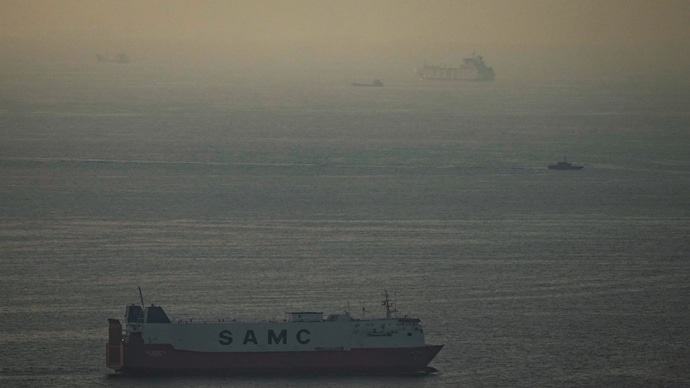
Iran is signalling a sharper assertion of control over the Strait of Hormuz, positioning itself as the effective gatekeeper of the world’s most critical oil transit route, even as tensions linked to the ongoing Middle East conflict continued to escalate.
The strategic waterway, through which roughly a fifth of global oil and liquefied natural gas supplies typically pass, is increasingly being leveraged by Tehran as both an economic tool and a geopolitical pressure point.
Iranian officials now appear intent on converting that leverage into a structured system of control and revenue, something akin to a "toll booth" regime.
In a notable shift, an Iranian official outlining conditions to end the conflict involving the United States and Israel recently included a fresh demand which is formal recognition of Iran's sovereignty over the Strait of Hormuz, news agency Associated Press reported.
The addition marked an expansion of Tehran's negotiating position and underlines its growing confidence in controlling the passage.
Shipping patterns and Iranian communications to the United Nations' maritime body point to the emergence of what analysts describe as a "toll-like" system. Vessels are increasingly required to enter Iranian territorial waters, where they are subject to checks by the Islamic Revolutionary Guard Corps (IRGC). Reports indicated that at least two ships have already paid for safe transit.
The impact on global shipping has been immediate and severe. Traffic through the strait has plunged by nearly 90 per cent since the US-Israel-Iran war began, triggering a spike in global oil prices and raising concerns of supply shortages, particularly across Asian economies dependent on Gulf energy exports.
Traditionally, vessels used a central two-lane shipping corridor. However, a growing number are now diverting northwards around Larak Island, bringing them closer to Iran's coastline and firmly within its territorial jurisdiction.
Tehran has defended its actions as lawful.
In a communication to the International Maritime Organization (IMO), Iran said it had introduced "precautionary measures" to ensure maritime safety and security, maintaining that these steps are consistent with international law.
Meanwhile, efforts are underway within Iran to formalise this evolving framework. According to reports in local media, the Iranian Parliament is working on legislation to institutionalise the collection of transit fees.
Lawmaker Mohammadreza Rezaei Kouchi was quoted by agencies close to the Revolutionary Guard as saying the proposed law would codify Iran's control, oversight and sovereignty over the strait while establishing a new revenue stream.
Taken together, the developments point to a calibrated strategy by Iran to transform its geographic advantage into sustained economic and political leverage, with far-reaching implications for global energy markets and maritime security.
Iran is signalling a sharper assertion of control over the Strait of Hormuz, positioning itself as the effective gatekeeper of the world’s most critical oil transit route, even as tensions linked to the ongoing Middle East conflict continued to escalate.
The strategic waterway, through which roughly a fifth of global oil and liquefied natural gas supplies typically pass, is increasingly being leveraged by Tehran as both an economic tool and a geopolitical pressure point.
Iranian officials now appear intent on converting that leverage into a structured system of control and revenue, something akin to a "toll booth" regime.
In a notable shift, an Iranian official outlining conditions to end the conflict involving the United States and Israel recently included a fresh demand which is formal recognition of Iran's sovereignty over the Strait of Hormuz, news agency Associated Press reported.
The addition marked an expansion of Tehran's negotiating position and underlines its growing confidence in controlling the passage.
Shipping patterns and Iranian communications to the United Nations' maritime body point to the emergence of what analysts describe as a "toll-like" system. Vessels are increasingly required to enter Iranian territorial waters, where they are subject to checks by the Islamic Revolutionary Guard Corps (IRGC). Reports indicated that at least two ships have already paid for safe transit.
The impact on global shipping has been immediate and severe. Traffic through the strait has plunged by nearly 90 per cent since the US-Israel-Iran war began, triggering a spike in global oil prices and raising concerns of supply shortages, particularly across Asian economies dependent on Gulf energy exports.
Traditionally, vessels used a central two-lane shipping corridor. However, a growing number are now diverting northwards around Larak Island, bringing them closer to Iran's coastline and firmly within its territorial jurisdiction.
Tehran has defended its actions as lawful.
In a communication to the International Maritime Organization (IMO), Iran said it had introduced "precautionary measures" to ensure maritime safety and security, maintaining that these steps are consistent with international law.
Meanwhile, efforts are underway within Iran to formalise this evolving framework. According to reports in local media, the Iranian Parliament is working on legislation to institutionalise the collection of transit fees.
Lawmaker Mohammadreza Rezaei Kouchi was quoted by agencies close to the Revolutionary Guard as saying the proposed law would codify Iran's control, oversight and sovereignty over the strait while establishing a new revenue stream.
Taken together, the developments point to a calibrated strategy by Iran to transform its geographic advantage into sustained economic and political leverage, with far-reaching implications for global energy markets and maritime security.

