Will Putin be up for meeting Zelenskyy? Here's what he told India Today at SPIEF
Responding to a question from India Today's Geeta Mohan at the St. Petersburg International Economic Forum (SPIEF), Putin said he was not opposed to meeting Zelenskyy in principle but insisted that any summit must produce meaningful results rather than serve as a symbolic diplomatic exercise.
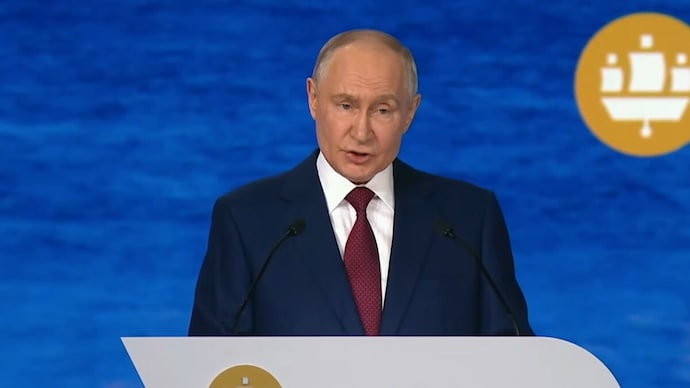
A day after Ukrainian President Volodymyr Zelenskyy published an open letter proposing a direct meeting with his Russian counterpart to discuss an end to the war, Vladimir Putin on Friday said he sees little value in holding such a meeting, arguing that previous Western-mediated negotiations allowed Kyiv time to strengthen its military position.
Responding to a question from India Today's Geeta Mohan at the St. Petersburg International Economic Forum (SPIEF), Putin said he was not opposed to meeting Zelenskyy in principle, but stressed that any summit should produce substantive outcomes rather than serve as a symbolic diplomatic exercise.
"Zelenskyy asked for a meeting. I never refuse to meet. But meeting just for the sake of meeting, well, I've seen that," Putin said.
His remarks came hours after he reiterated his hardline position on the war, saying Russian forces were making gains on the battlefield every day.
RUSSIA'S MINSK PACT EXPERIENCE
At the same time, he suggested that peace proposals put forward by US President Donald Trump could help end the conflict if Kyiv was willing to compromise.
The Russian leader indicated that Moscow's reluctance to engage in leader-level talks stems from past experiences where agreements failed to deliver lasting results.
As an example, Putin cited the now-defunct Minsk agreements, which were designed to end the conflict in eastern Ukraine's Donbas region between Ukrainian government forces and Russian-backed separatists following the outbreak of hostilities in 2014.
"We had been forging, hammering out those Minsk agreements throughout the night," Putin said in reference to the failed 2014 agreement.
Putin has consistently asserted that Ukraine violated the deal by refusing to implement the political provisions, such as constitutional reforms and granting special status to Donbas.
RUSSIAN NATIONALISTS SLAM ZELENSKYY
Earlier in the day, Russian nationalist commentators and pro-war bloggers dismissed Zelenskyy's open letter as a public relations exercise aimed at fuelling discontent within Russia rather than advancing peace efforts.
Several influential voices in Russia's nationalist camp criticised the message, arguing that it lacked any serious diplomatic intent. Rybar, a prominent war blogger with more than 1.5 million followers, described the letter as a bluff and said it showed little evidence of genuine diplomacy.
Oleg Tsaryov, a former Ukrainian lawmaker aligned with pro-Russian interests, claimed the move reflected a broader strategy by Ukraine and its Western allies to shift attention towards Russia's domestic situation and weaken public support for the war.
Nationalist businessman Konstantin Malofeyev also rejected the initiative, arguing that Moscow should focus on achieving its military objectives rather than responding to the letter. He said that if Zelenskyy genuinely wanted to communicate with Putin, he could have done so through private diplomatic channels.
ZELENSKYY'S OPEN LETTER TO PUTIN
The Ukrainian President on Thursday published an open letter addressed to Putin, proposing a direct meeting between the two leaders to negotiate an end to the war, which has now lasted more than four years. He warned that Ukraine was prepared to continue fighting if diplomatic efforts failed.
The letter, which Zelenskyy's office said was also shared with several countries, including the United States, argued that many Russians had grown weary of the conflict amid continued Ukrainian drone and missile strikes, rising inflation and fuel shortages.
Calling for immediate steps toward negotiations, Zelenskyy said the peace process must begin on the battlefield, describing it as "the line from which diplomacy must begin."
"Ukraine supports a full ceasefire for the duration of the negotiations. This is standard practice," Zelenskyy said, adding that the United States "has the capability to monitor a ceasefire along the line where hostilities stop".
The Ukrainian leader also proposed setting a specific date for talks and suggested that the meeting could be hosted by countries with a history of facilitating peace negotiations, including Switzerland, Turkey and several Arab nations.
A day after Ukrainian President Volodymyr Zelenskyy published an open letter proposing a direct meeting with his Russian counterpart to discuss an end to the war, Vladimir Putin on Friday said he sees little value in holding such a meeting, arguing that previous Western-mediated negotiations allowed Kyiv time to strengthen its military position.
Responding to a question from India Today's Geeta Mohan at the St. Petersburg International Economic Forum (SPIEF), Putin said he was not opposed to meeting Zelenskyy in principle, but stressed that any summit should produce substantive outcomes rather than serve as a symbolic diplomatic exercise.
"Zelenskyy asked for a meeting. I never refuse to meet. But meeting just for the sake of meeting, well, I've seen that," Putin said.
His remarks came hours after he reiterated his hardline position on the war, saying Russian forces were making gains on the battlefield every day.
RUSSIA'S MINSK PACT EXPERIENCE
At the same time, he suggested that peace proposals put forward by US President Donald Trump could help end the conflict if Kyiv was willing to compromise.
The Russian leader indicated that Moscow's reluctance to engage in leader-level talks stems from past experiences where agreements failed to deliver lasting results.
As an example, Putin cited the now-defunct Minsk agreements, which were designed to end the conflict in eastern Ukraine's Donbas region between Ukrainian government forces and Russian-backed separatists following the outbreak of hostilities in 2014.
"We had been forging, hammering out those Minsk agreements throughout the night," Putin said in reference to the failed 2014 agreement.
Putin has consistently asserted that Ukraine violated the deal by refusing to implement the political provisions, such as constitutional reforms and granting special status to Donbas.
RUSSIAN NATIONALISTS SLAM ZELENSKYY
Earlier in the day, Russian nationalist commentators and pro-war bloggers dismissed Zelenskyy's open letter as a public relations exercise aimed at fuelling discontent within Russia rather than advancing peace efforts.
Several influential voices in Russia's nationalist camp criticised the message, arguing that it lacked any serious diplomatic intent. Rybar, a prominent war blogger with more than 1.5 million followers, described the letter as a bluff and said it showed little evidence of genuine diplomacy.
Oleg Tsaryov, a former Ukrainian lawmaker aligned with pro-Russian interests, claimed the move reflected a broader strategy by Ukraine and its Western allies to shift attention towards Russia's domestic situation and weaken public support for the war.
Nationalist businessman Konstantin Malofeyev also rejected the initiative, arguing that Moscow should focus on achieving its military objectives rather than responding to the letter. He said that if Zelenskyy genuinely wanted to communicate with Putin, he could have done so through private diplomatic channels.
ZELENSKYY'S OPEN LETTER TO PUTIN
The Ukrainian President on Thursday published an open letter addressed to Putin, proposing a direct meeting between the two leaders to negotiate an end to the war, which has now lasted more than four years. He warned that Ukraine was prepared to continue fighting if diplomatic efforts failed.
The letter, which Zelenskyy's office said was also shared with several countries, including the United States, argued that many Russians had grown weary of the conflict amid continued Ukrainian drone and missile strikes, rising inflation and fuel shortages.
Calling for immediate steps toward negotiations, Zelenskyy said the peace process must begin on the battlefield, describing it as "the line from which diplomacy must begin."
"Ukraine supports a full ceasefire for the duration of the negotiations. This is standard practice," Zelenskyy said, adding that the United States "has the capability to monitor a ceasefire along the line where hostilities stop".
The Ukrainian leader also proposed setting a specific date for talks and suggested that the meeting could be hosted by countries with a history of facilitating peace negotiations, including Switzerland, Turkey and several Arab nations.

