
Hero's flex-fuel Splendor+ and HF Deluxe are here, but what will happen to older bikes?
Hero MotoCorp's new flex-fuel Splendor+ and HF Deluxe promise a cleaner future, but their arrival raises an important question: what happens to millions of existing Hero motorcycles already on Indian roads? There is a solution.
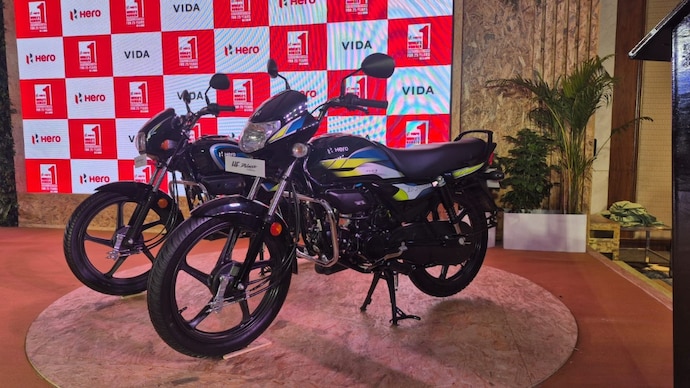

Hero MotoCorp's launch of the flex-fuel versions of the Splendor+ and HF Deluxe marks a significant step in India's ethanol mobility journey. However, the launch also raises an important question for millions of existing Splendor and HF Deluxe owners, will their motorcycles be able to use higher ethanol blends in the future?
Retrofit kits could provide a solution
Hero MotoCorp has indicated that it could offer retrofit kits for older motorcycles if required, allowing existing owners to upgrade their vehicles for compatibility with higher ethanol blends.
Such a move could prove crucial given the enormous population of Hero commuter motorcycles already on Indian roads. Rather than requiring customers to purchase entirely new motorcycles, retrofit kits could provide a more affordable pathway to adopt flex-fuel technology once higher ethanol blends become widely available.
Why retrofit kits are important
Ethanol behaves differently from petrol and requires several modifications to ensure long-term reliability. Flex-fuel motorcycles such as the new Splendor+ and HF Deluxe feature upgraded fuel-system components, a dedicated fuel pump, secondary fuel filter and revised ECU calibration specifically designed to handle ethanol concentrations of up to 85 percent.
These changes are necessary because ethanol can be more corrosive than petrol, attracts moisture more readily and requires different fuel-mapping strategies for efficient combustion.
Without the required hardware and software upgrades, motorcycles designed only for lower ethanol blends may face operational and durability concerns when exposed to significantly higher ethanol concentrations.
What happens if E85 is used in an E20-compliant motorcycle?
India's current generation of motorcycles is largely designed to operate on E20 fuel, which contains up to 20 percent ethanol.
Using E85 fuel in an E20-compliant motorcycle is not recommended. The engine management system, fuel lines, seals, injectors and other fuel-system components are not calibrated or validated for such high ethanol content.
In the short term, riders could experience poor starting performance, rough running, incorrect air-fuel mixtures and reduced drivability. Over longer periods, the higher ethanol content could accelerate wear of fuel-system components and potentially affect engine reliability.
This is precisely why manufacturers developing flex-fuel vehicles introduce dedicated hardware changes and recalibrated engine management systems rather than simply approving higher ethanol blends for existing models.
Availability remains a question
While Hero's flex-fuel motorcycles can operate on E85 fuel, one significant challenge remains, fuel availability.
At present, it remains uncertain when E85 fuel will become widely available across India. The government has aggressively expanded ethanol production and blending programmes, but retail infrastructure for E85 fuel is still at a nascent stage.
The new motorcycles will initially be sold in Delhi and selected regions of Maharashtra, partly reflecting the limited availability of higher ethanol-blend fuel in the country.
Until a widespread E85 distribution network is established, many owners will continue using lower ethanol blends despite owning flex-fuel-capable motorcycles.
Expect lower mileage, but fuel prices could offset the impact
One of the trade-offs associated with ethanol is its lower energy density compared to petrol.
As a result, the flex-fuel Splendor+ and HF Deluxe are expected to deliver around 20 percent lower fuel efficiency when running on E85 compared to conventional petrol or E20 fuel.
However, that reduction in mileage may not necessarily translate into higher running costs. If E85 is priced substantially lower than E20 petrol, the lower fuel price could compensate for the increased fuel consumption, potentially allowing riders to achieve comparable or even lower cost-per-kilometre figures.
The eventual economics will depend on government policy, taxation and retail pricing once E85 becomes more widely available.
Importantly, buying a flex-fuel motorcycle is not a necessity at the moment. Hero will continue to sell the E20-compliant versions of the Splendor+ and HF Deluxe alongside the new flex-fuel models. Given that E85 fuel availability remains limited and the existing E20 motorcycles can continue operating normally on currently available fuel, buyers can choose a flex-fuel model as a future-ready option rather than out of immediate necessity.
Subscribe to Auto Today Magazine