
Can Hyundai's two new SUVs help it reclaim the second spot in India?
Hyundai is preparing two new SUVs for India, including an ICE model and a locally developed electric SUV, as the carmaker looks to strengthen its market position and regain lost ground.
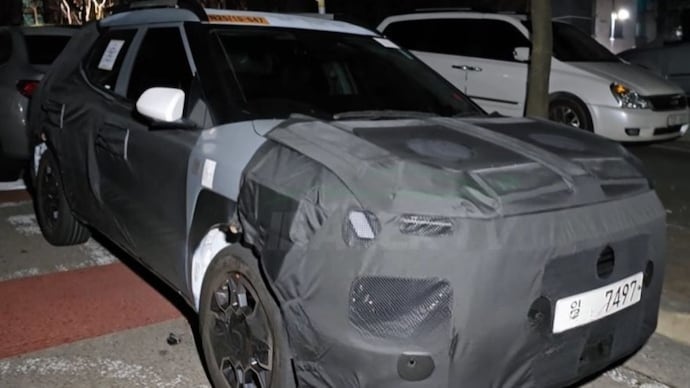

Hyundai Motor India is preparing a major expansion of its SUV portfolio with two all-new models lined up for the Indian market by FY27. The upcoming launches will include a new internal combustion-powered mid-size SUV positioned alongside the popular Hyundai Creta, as well as a localised electric compact SUV aimed at the growing EV segment.
New Hyundai SUV to slot below Creta
Hyundai’s upcoming ICE-powered SUV will likely be based on the global Hyundai Bayon crossover sold in Europe. The new model is expected to measure around 4 metres in length, placing it slightly below the Creta in Hyundai’s SUV hierarchy while still targeting the highly competitive mid-size SUV space.
The SUV is expected to focus heavily on practicality, fuel efficiency and urban usability. Hyundai is likely to offer the model with a naturally aspirated petrol engine along with a factory-fitted CNG option featuring a dual-cylinder setup. If launched, this would become Hyundai’s first CNG-powered SUV in the above-4-metre category.
Unlike performance-oriented offerings, the emphasis here is expected to be on lower running costs and broader mass-market appeal. Hyundai is also likely to equip the SUV with a feature-rich cabin, connected technology and advanced driver assistance systems, areas where the brand already enjoys a strong reputation.
The strategy mirrors the growing trend among manufacturers to offer multiple SUVs within similar price bands but with distinct styling, positioning and powertrain choices. Hyundai appears keen to widen its reach around the Creta badge rather than relying on a single product in the segment.
Hyundai’s new EV to rival Nexon EV
Alongside the ICE SUV, Hyundai is also gearing up to introduce a new electric compact SUV developed specifically for India. The EV is expected to rival the likes of the Tata Nexon EV.
The new EV will reportedly use the E-GMP (K) architecture, which also underpins the internationally sold Hyundai Inster. Production is expected to take place at Hyundai’s Sriperumbudur manufacturing facility in Tamil Nadu, with battery packs sourced locally through Exide Industries.
Hyundai is likely to offer both standard-range and long-range versions of the SUV. Internationally, the Inster comes with 42kWh and 49kWh battery pack options offering WLTP-certified ranges of up to 355km, and similar configurations could influence the India-spec model as well.
While Hyundai continues to remain one of India’s strongest passenger vehicle brands, reclaiming the second spot will not be easy. Both Tata Motors and Mahindra currently offer a much broader and more diverse SUV portfolio spanning multiple price points, body styles and fuel options, including strong EV offerings. Models such as the Mahindra Scorpio-N, Mahindra XUV7XO, Tata Nexon and Tata Punch continue to perform strongly in the market, giving both Indian carmakers significant momentum. Hyundai’s upcoming SUVs could help strengthen its position, but catching up will require sustained success across several high-volume segments.
Subscribe to Auto Today Magazine