
E20, E30 fuel uncertainty could delay vehicle purchases for 43% of buyers: Survey
Uncertainty surrounding India's ethanol-blending roadmap is beginning to influence vehicle-buying decisions, with a new survey revealing that concerns over E20 and potential E30 fuel adoption are causing hesitation among buyers.
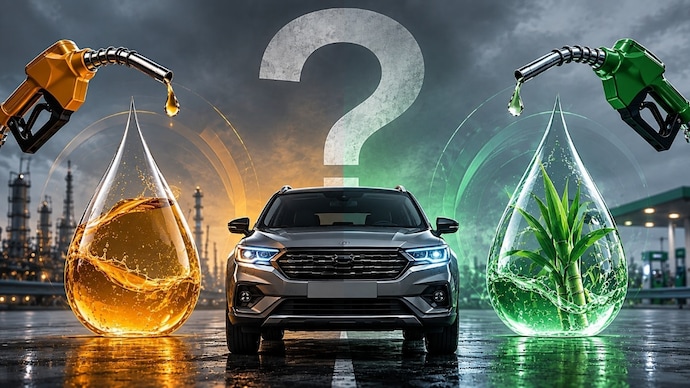

India's ethanol-blending push is beginning to shape consumer behaviour beyond the fuel pump, with a growing number of prospective vehicle buyers expressing hesitation about future purchases amid uncertainty over higher ethanol fuel adoption.
A survey conducted by LocalCircles indicates that 43 percent of individuals planning to buy a vehicle may postpone or reconsider their purchase over the next year due to concerns surrounding E20 petrol and the possibility of a future transition to E30 fuel. The study collected responses from over 28,000 prospective buyers across 311 districts nationwide.
Fuel roadmap worries influence purchase decisions
While India's automotive market continues to post strong sales numbers, consumer apprehension regarding fuel compatibility appears to be emerging as a new challenge. Respondents cited concerns about fuel economy, long-term engine durability and potential maintenance expenses as key reasons for delaying purchase decisions.
The findings come at a time when the government is advancing its ethanol-blending programme. E20 petrol, containing 20 percent ethanol, has already been rolled out nationwide, while fuel standards for blends such as E22, E25, E27 and E30 have been notified as part of India's broader energy security and emissions reduction strategy.
To support the transition, the Ministry of Petroleum and Natural Gas has mandated a minimum Research Octane Number (RON) of 95 for E20 petrol from April 2026. Simultaneously, the Automotive Research Association of India (ARAI) has been tasked with evaluating the long-term effects of higher ethanol blends, including E25, on engine performance and fuel efficiency.
Interest in EVs and hybrids rises
The survey suggests that uncertainty around future fuel blends is also influencing powertrain preferences.
Only 6 percent of respondents said they intend to purchase a new petrol vehicle within the next 12 months. In comparison, electric vehicles attracted interest from 7 percent of prospective buyers, while another 7 percent indicated a preference for hybrid vehicles.
Combined, EVs and hybrids accounted for 14 percent of intended purchases, more than double the share recorded for conventional petrol-powered vehicles.
Another 30 percent of respondents said they currently have no plans to purchase a vehicle, while 12 percent remain undecided about their next purchase.
Market growth remains strong despite concerns
The survey findings stand in contrast to the overall strength of the Indian automobile market.
According to data from the Federation of Automobile Dealers Associations (FADA), vehicle retail sales crossed 25 lakh units in May 2026, marking the highest monthly volume on record. Passenger vehicle registrations also exceeded the four-lakh-unit mark for the first time.
Despite this momentum, the survey indicates that fuel-policy uncertainty is increasingly becoming a factor in consumer decision-making, particularly among buyers evaluating long-term ownership costs.
Existing owners report efficiency and maintenance issues
Consumer concerns appear to be influenced by the experiences of current vehicle owners.
In a separate LocalCircles survey involving more than 50,000 respondents, half of petrol vehicle owners reported a drop of over 10 percent in fuel efficiency since the beginning of 2025. Additionally, nearly three in ten respondents claimed to have experienced higher maintenance requirements or increased wear in components such as fuel pumps, injectors and engine systems.
Owners of vehicles purchased before 2023 reported additional expenses ranging from Rs 5,000 to Rs 25,000, which they attributed to reduced mileage and higher maintenance costs. Many respondents also expressed a preference for continued availability of lower-ethanol fuel options such as E0 or E10.
Calls for greater clarity on E30 implementation
LocalCircles noted that consumer concerns have evolved from questions about vehicle ownership to questions about vehicle purchase decisions.
The community platform has urged policymakers to release detailed testing data related to higher ethanol blends, provide a clearer implementation timeline for E30 fuel and ensure ethanol blend information is prominently displayed at fuel stations. It has also recommended that automobile manufacturers certify future models for E30 compatibility to improve consumer confidence.
With India's ethanol programme expected to advance further in the coming years, the survey suggests that greater transparency regarding vehicle compatibility and long-term fuel strategy may play a crucial role in sustaining consumer confidence in the passenger vehicle market.
Understanding E20 and E30 fuels
E20 petrol consists of 20 percent ethanol blended with 80 percent petrol and has already become the standard fuel across the country. The blend forms a key part of India's strategy to reduce dependence on imported crude oil and cut carbon emissions.
E30 fuel, which contains 30 percent ethanol and 70 percent petrol, is being evaluated as a potential next step in the country's ethanol-blending roadmap, aimed at further improving energy security and supporting cleaner mobility.
Subscribe to Auto Today Magazine