
In Glyph, Ali Smith turns family stories into a powerful act of defiance
Set against a fractured world, the novel threads together personal memory and global crisis with Smith's signature linguistic skills, producing a narrative that feels both intimate and politically charged.
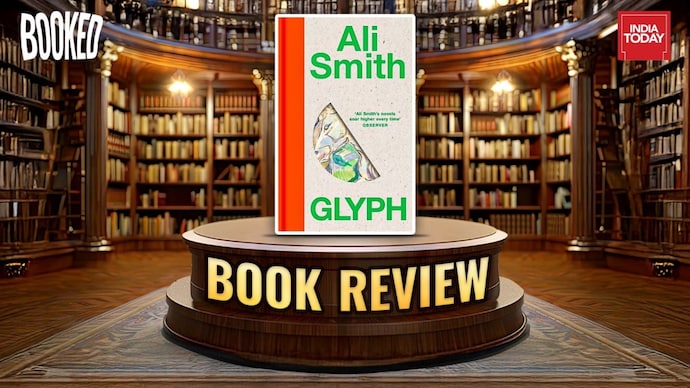

Ali Smith’s Glyph arrives as a companion to her earlier dystopian work Gliff, yet it stands confidently on its own, restless, inventive, and deeply attuned to the anxieties of the present.
Set against a fractured world, the novel threads together personal memory and global crisis with Smith’s signature linguistic skills, producing a narrative that feels both intimate and politically charged.
At its core, Glyph follows sisters Petra and Patricia, known as Patch, whose childhood is shaped by eerie, half-remembered family stories rooted in the World Wars. These tales, ranging from a deserter rescuing a blinded horse to a shadowy female spy and a strangely “flattened” body, linger like ghosts in their adult lives.
Smith uses these fragments not merely as backstory but as living echoes, suggesting that history is never truly past; it mutates and resurfaces in new, unsettling forms.
As the sisters grow older, their bond frays under the weight of contemporary pressures: economic precarity, job losses driven by artificial intelligence, and the broader disintegration of social and political stability.
Into this tense landscape steps Billie, Patch’s daughter, whose fierce activism injects urgency and moral clarity into the narrative. Through her, Smith channels a younger generation’s refusal to accept inherited injustices, evoking real-world climate and human rights movements without reducing Billie to a simple symbol.
What makes Glyph particularly striking is its thematic preoccupation with “flattening,” a concept Smith explores both literally and metaphorically. Truths are compressed, histories erased, and human experiences simplified in a world increasingly mediated by technology and power structures. Yet Smith resists despair. Recurring motifs, horses, ghosts, acts of care, serve as counterpoints, gestures toward empathy and remembrance in an age of numbness.
Stylistically, the novel is unmistakably Smith. Her prose dances between wit and gravity, often within a single sentence. She toys with metafiction, at times acknowledging her characters as “flat literary devices,” only to imbue them with startling emotional depth moments later.
Critically, Glyph has been praised for its vitality and radical energy, and rightly so. It is not an easy read, nor does it aim to comfort.
Instead, it provokes, nudges, and occasionally unsettles, urging readers to interrogate the narratives, personal, historical, and political, that shape their understanding of the world.
In the end, Glyph is less a conventional novel than an act of resistance: against forgetting, against simplification, and against the quiet erosion of truth.