
Are India's stock investors overtaxed? Vijay Kedia thinks so, and offers 3 solutions
Veteran investor Vijay Kedia has urged the Finance Ministry that the country's tax policy should reward long-term wealth creation instead of burdening those who provide patient capital to businesses.
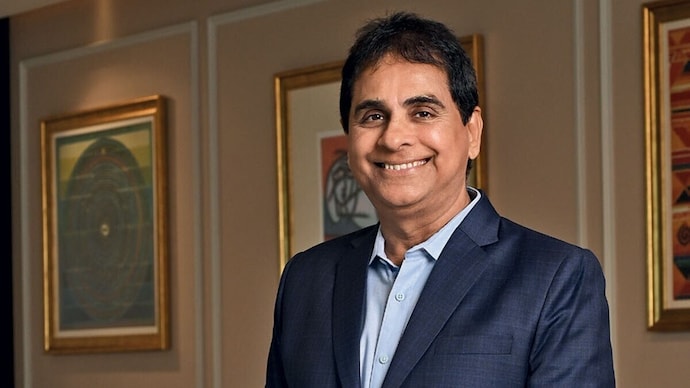

Veteran investor Vijay Kedia has sparked a fresh debate on how India taxes stock market investors, arguing that the country's tax policy should reward long-term wealth creation instead of burdening those who provide patient capital to businesses.
In a series of posts addressed to Finance Minister Nirmala Sitharaman and the Finance Ministry, Kedia shared what he called three suggestions for strengthening India's capital markets. His proposals include abolishing long-term capital gains (LTCG) tax on listed equities, ending what he describes as double taxation on dividend income and scrapping the Securities Transaction Tax (STT).
The comments come at a time when India is witnessing record retail participation in stock markets, with millions of investors entering equities through direct investing and mutual funds.
Kedia's central argument is that investors who stay invested for years should not be treated in the same manner as short-term traders.
"A long-term shareholder is not a speculator but a provider of patient risk capital," Kedia wrote.
By investing in businesses and remaining invested through market cycles, shareholders help companies expand, create jobs, innovate and contribute to economic growth, he argued.
SHOULD LTCG TAX ON SHARES BE ABOLISHED?
Kedia's first suggestion is the most significant and potentially the most controversial.
He has called for the abolition of long-term capital gains tax on listed equities.
According to Kedia, India needs enormous amounts of long-term domestic capital to build world-class companies, infrastructure and global champions.
He argued that tax policy should encourage households to move savings away from passive assets such as gold and towards productive businesses that create jobs and generate tax revenues.
Kedia also pointed out that a company's growth journey already generates multiple forms of taxation through corporate tax, GST, income tax from employees, customs duties, stamp duties and other levies.
"The appreciation in a company's value is not created in isolation," he wrote.
"Most importantly, tax policy should clearly distinguish between investment and speculation. A long-term shareholder is a partner in wealth creation, not merely a participant in market transactions."
According to him, long-term ownership of productive businesses should be rewarded rather than taxed in the same way as short-term market activity.
The debate around LTCG tax has continued ever since it was reintroduced in 2018. Supporters argue that capital gains represent income and should therefore be taxed. Critics, however, believe that taxing long-term investments discourages wealth creation and reduces incentives for patient capital.
KEDIA'S CASE AGAINST DIVIDEND TAXATION
His second proposal relates to dividend income.
Kedia argues that dividends on listed equities should not be subjected to what he calls double taxation.
He pointed out that when a company raises money through debt, the interest paid to lenders is treated as a business expense and deducted before tax. The lender then pays tax on the interest received.
Equity investors, however, face a different situation.
According to Kedia, dividends are distributed from profits that have already been subjected to corporate tax. When shareholders pay tax again on dividend income, the same stream of earnings is effectively taxed twice.
He also noted that equity investors take significantly higher risks than lenders.
"A lender has a contractual right to interest and principal repayment. A shareholder has no such guarantee," Kedia wrote.
"Dividends are discretionary, capital is fully at risk, and the shareholder stands last in line if a business fails."
He argued that if debt providers receive tax-deductible compensation despite bearing lower risk, there is a strong case for more favourable treatment of equity investors who provide permanent risk capital to businesses.
WHY KEDIA WANTS STT SCRAPPED
The third proposal focusses on the Securities Transaction Tax, or STT.
Kedia said STT was originally introduced as a simplified transaction tax to make tax collection easier. However, he believes it has gradually become an additional layer of taxation on market participants.
He pointed out that investors already pay brokerage charges, exchange transaction charges, GST on transaction-related charges, SEBI turnover fees, stamp duty and STT.
Unlike income tax, STT is payable regardless of whether an investor makes a profit or suffers a loss.
"The investor pays the tax simply for participating in the market," Kedia wrote.
According to him, transaction costs and multiple layers of taxation discourage participation, particularly among long-term retail investors.
Kedia also argued that India's capital markets have matured significantly since STT was introduced and that it may be time to reconsider its relevance.
"Abolishing STT would simplify market taxation, improve capital market efficiency and encourage greater participation in India's growth story," he said.
A BIGGER DEBATE ON INVESTOR TAXATION
While Kedia's proposals are unlikely to be adopted immediately, they touch on a larger debate about how India should balance tax collection with encouraging long-term investing.
India's stock market has become increasingly dependent on domestic investors over the past few years. Retail investors and mutual funds have often acted as a counterweight when foreign institutional investors pulled money out of Indian equities.
Supporters of lower taxes on investments argue that encouraging long-term equity ownership can help channel household savings into productive sectors of the economy.
On the other hand, policymakers must also weigh the revenue implications of any tax changes.
For now, Kedia's three-point proposal has reopened a discussion that many investors have long debated: whether India's tax system is encouraging equity investing or making it more expensive than it needs to be.