
Under-construction or ready-to-move home: Which saves me more money in the long run?
Buying a home is exciting, but one question often leaves buyers confused: should you go for a cheaper under-construction property or pay more for a ready-to-move home? Let's have a look.
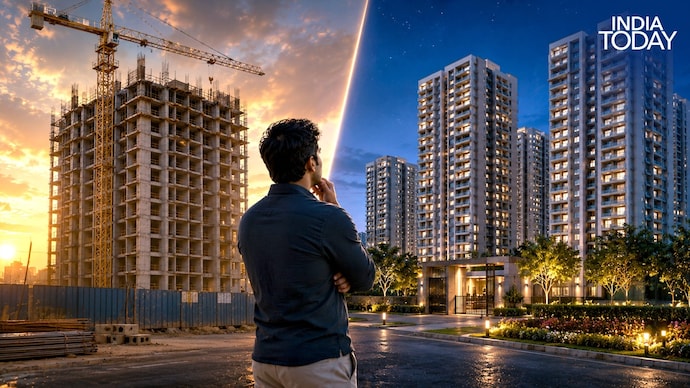

We have all heard this line at some point: “Buying a house is the biggest investment of your life.” Fair enough. But what people rarely tell you is that buying a house can also become one of life’s biggest financial dilemmas.
I found myself thinking about this recently. If I were buying a home today, would I go for an under-construction property because it looks cheaper on paper? Or would I stretch my budget a little and pick a ready-to-move home that offers certainty from day one?
At first glance, the answer feels simple. A lower price tag sounds tempting. But the deeper I looked, i.e., rent, GST, EMIs, tax benefits, delays and even legal headaches, the more complicated the maths became.
So, when it comes to your money, which option truly makes more sense?
THE LOWER PRICE TRAP: IS CHEAPER ALWAYS BETTER?
Let us begin with what draws most buyers towards under-construction homes: affordability.
The entry price is usually lower, payment schedules are more flexible and there is often hope that by the time the project is complete, the property value would have risen.
It sounds like a smart financial move.
But there is another side to the story.
Akash Pharande, Managing Director, Pharande Spaces, says the decision largely depends on what a buyer values more — immediate certainty or long-term gains.
“Properties that are still under construction usually come with lower entry prices, more flexible instalment arrangements, and often better appreciation prospects by the time the whole project gets finished,” he says.
At the same time, he points out that ready-to-move homes offer something equally valuable: predictability.
“Ready-to-move homes give immediate possession, zero construction worries, and in many cases GST is not applied, so your overall budgeting feels a bit more stable and predictable.”
That made me think.
Perhaps paying more upfront is not always about spending extra. Sometimes, it is simply the price of avoiding uncertainty.
THE HIDDEN COST NOBODY MENTIONS: RENT PLUS EMI
Here is where the real financial stress often begins.
Imagine booking an under-construction flat while continuing to live in a rented apartment.
For several months, or in some cases, years, you may end up juggling rent along with pre-EMIs or home loan repayments.
Suddenly, the “budget-friendly” home no longer feels so affordable.
Pharande admits this can become a genuine challenge for salaried buyers.
“For lots of salaried buyers there can be this short-term double financial load, especially when buying a home that is still under construction. They end up paying rent alongside dealing with pre-EMI or EMI responsibilities during the building period,” he explains.
While staggered payment plans offered by developers and banks can reduce some pressure, he says buyers still need to examine their cash flow carefully before committing.
Tax expert and CA Nishant Shankar puts it even more bluntly.
“A buyer may continue paying rent while simultaneously servicing pre-EMI interest or EMIs on the home loan, creating a temporary double cash-flow burden. This can significantly strain finances, especially if possession gets delayed,” he says.
His advice is straightforward: be realistic about how long you can sustain both expenses without disrupting other financial goals.
TAXES CAN QUIETLY CHANGE THE ENTIRE EQUATION
One thing I realised while speaking to experts is that many buyers focus heavily on the purchase price but ignore tax implications.
That can be an expensive mistake.
According to Shankar, ready-to-move homes enjoy a clear edge when it comes to immediate tax relief.
“In a ready-to-move property, tax benefits on both principal repayment and home loan interest generally begin immediately,” he says.
Under-construction properties work differently.
“Principal repayment benefits typically begin only after possession, and interest paid during construction can be claimed in instalments after possession,” Shankar explains.
And then comes GST — a factor many buyers underestimate.
Under-construction homes generally attract GST, typically 5% for non-affordable housing and 1% for qualifying affordable housing. Ready-to-move properties with a completion certificate, however, do not attract GST.
That difference alone can noticeably alter the total cost of ownership.
ARE BUYERS PAYING MORE FOR PEACE OF MIND?
Sometimes I wonder if people buying ready homes are not really paying more for property — they are paying for peace of mind.
You know exactly what you are getting. You can physically inspect the house, understand the neighbourhood, assess connectivity and even check practical things like sunlight and ventilation.
Mohit Gawri, Vice President, Rise Infraventures Limited, believes buyers need to stop looking only at headline prices.
“Under-construction homes may appear more affordable upfront. Issues such as time delays, increased costs, and continuous expenditure on rent and EMIs cut down their economic benefit considerably,” he says.
For first-time buyers with limited savings, he believes certainty matters more than discounts.
“A ready-to-move home offers something equally valuable: financial predictability. You know exactly what you are paying, when you are moving in, and what you are moving into,” Gawri says.
And honestly, predictability feels ordinary — until uncertainty arrives.
BUYING AN UNDER-CONSTRUCTION HOME MEANS BUYING A PROMISE
That said, under-construction homes are not necessarily a bad bet.
In fact, for financially disciplined buyers with a longer investment horizon, they can still work well.
Pharande believes tighter regulations and improved project monitoring have reduced risks compared to earlier years.
“This worry is way less now than it used to be, mostly because there is tougher regulatory supervision under RERA and also better project lending practices,” he says.
Still, Shankar offers a reminder worth paying attention to:
“In under-construction purchases, you are effectively buying a promise, not a completed asset.”
And promises, especially expensive ones, deserve scrutiny.
Experts suggest checking the developer’s track record, RERA compliance, delivery history, legal approvals and customer reviews before signing anything.
Repeated delays, unclear approvals and overly aggressive discounts should immediately raise red flags.
DELAYED POSSESSION? BUYERS HAVE LEGAL RIGHTS
Many homebuyers assume delays are simply part of the property business.
But legally, buyers are not helpless.
Under the Real Estate (Regulation and Development) Act, 2016 (RERA), homebuyers can seek compensation, interest for delays or even refunds if possession timelines become unreasonable.
A major Supreme Court ruling in Pioneer Urban Land & Infrastructure Ltd. v. Govindan Raghavan reinforced that buyers cannot be forced to wait endlessly for possession, mentioned Shankar.
Still, he adds an important caveat: compensation does not automatically mean recovery of every financial cost, especially separate home loan interest burdens.
SO, WHICH ONE WOULD I CHOOSE?
If my budget was fixed and the goal was simple self-use, I would probably lean towards a ready-to-move home. There is comfort in certainty.
But if I had financial flexibility, patience and confidence in a reputed developer, I would not dismiss an under-construction property either. The lower entry price and future appreciation potential can still make financial sense.
Because at the end of the day, buying a home is not just a financial transaction.
It is a life decision.
And perhaps the smartest home is not the cheapest one or even the most luxurious, but the one that lets you sleep peacefully without turning your finances into a constant source of stress.