
Melody, Cockroach Janta Party: What Indians are Googling this week
Google Trends data between May 15 and May 22 shows a sharp rise in search interest for "Cockroach Janta Party".


What began as a satirical social media movement quickly turned into one of India’s biggest internet trends this week. The “Cockroach Janta Party” became one of the country’s most searched terms on Google alongside cricket matches and exam results.
The Cockroach Janta Party was founded on May 16 by former Aam Aadmi Party political strategist Abhijeet Dipke in response to Chief Justice Surya Kant’s comment describing young, unemployed Indians as “cockroaches”; notably, the CJI claims he was misquoted.
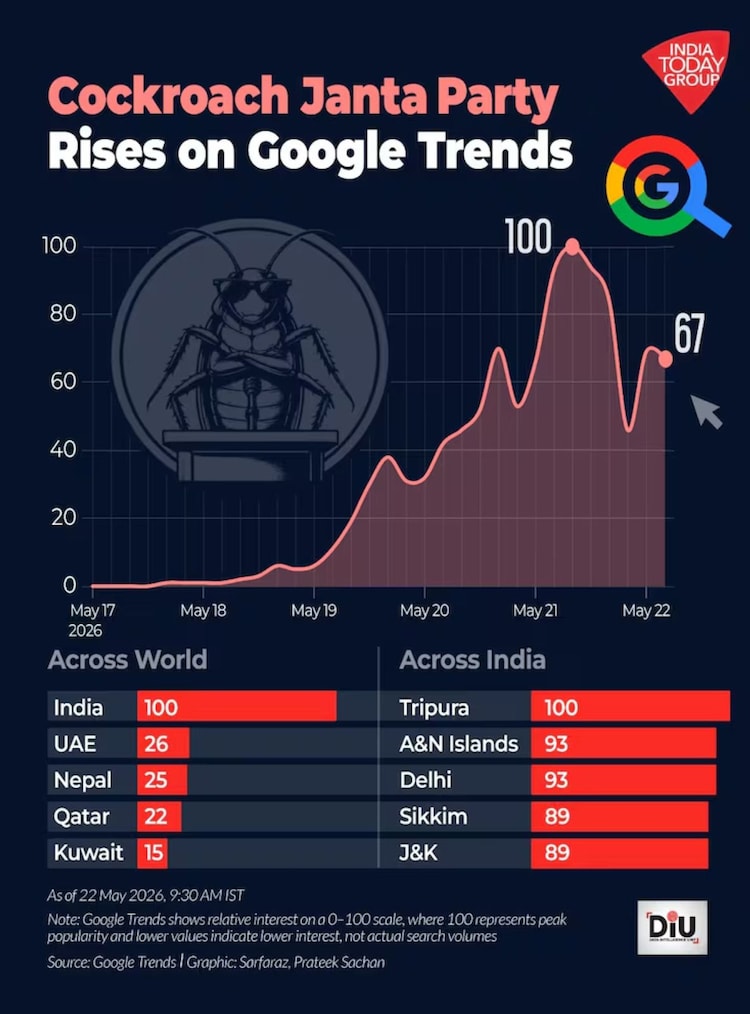
Google Trends data between May 15 and May 22 shows a sharp rise in search interest for “Cockroach Janta Party”. Search activity remained relatively low in the initial days, then spiked and peaked on May 21.
India recorded the highest search interest for the term globally. Within the country, Tripura emerged as the top-searching state, followed by the Andaman and Nicobar Islands and Delhi. The trend also crossed borders, with notable search activity recorded in the United Arab Emirates, Nepal, Qatar and Kuwait.
At the same time, another viral moment pushed “Melody” into trending searches. The spike came after Prime Minister Narendra Modi gifted Melody toffees to Italian Prime Minister Giorgia Meloni during a recent interaction on the final leg of his five-nation official tour, triggering a flood of memes and reactions online.
Google Trends data showed that searches for “Melody” surged sharply around May 20 before reaching peak popularity soon after. Within India, Mizoram recorded the highest search interest for the term, followed by Nagaland and Manipur.
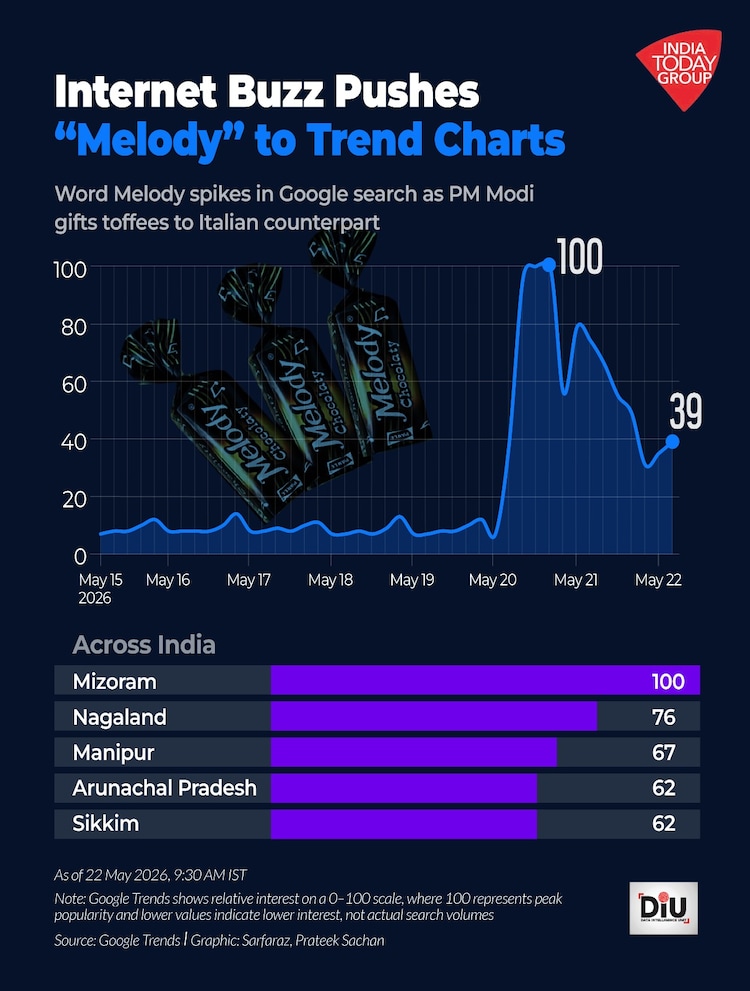
Globally, Tanzania registered the highest search interest score for “Melody.” However, the spike there could also be linked to Tanzanian singer Jay Melody. Myanmar, Slovakia and Kenya also recorded notable search activity for the term during the same period.
Google Trends measures search interest on a scale from 1 to 100, where 100 represents the highest popularity level for a term during the selected period, while lower values indicate comparatively lower search activity.