
Heatwaves are a menace we cannot afford to ignore
Heatwaves do not just affect crops; they also hit the working-class, especially those in construction, agriculture, and manufacturing.


Several parts of India recorded maximum temperatures in the 40–45°C range on Wednesday. In parts of Himachal Pradesh and Jammu and Kashmir, temperatures rose by more than 5°C above normal, according to the latest updates from the India Meteorological Department. Warm night conditions were reported in parts of Haryana.
The long-term average maximum temperature for April in India is close to 34°C, according to the IMD. So, what we have witnessed in recent days, therefore, is a concerning aberration.
More very warm days and nights
This trend is not confined to this year alone. Research shows that temperatures exceeding long-term averages for several days have become the norm rather than the exception.
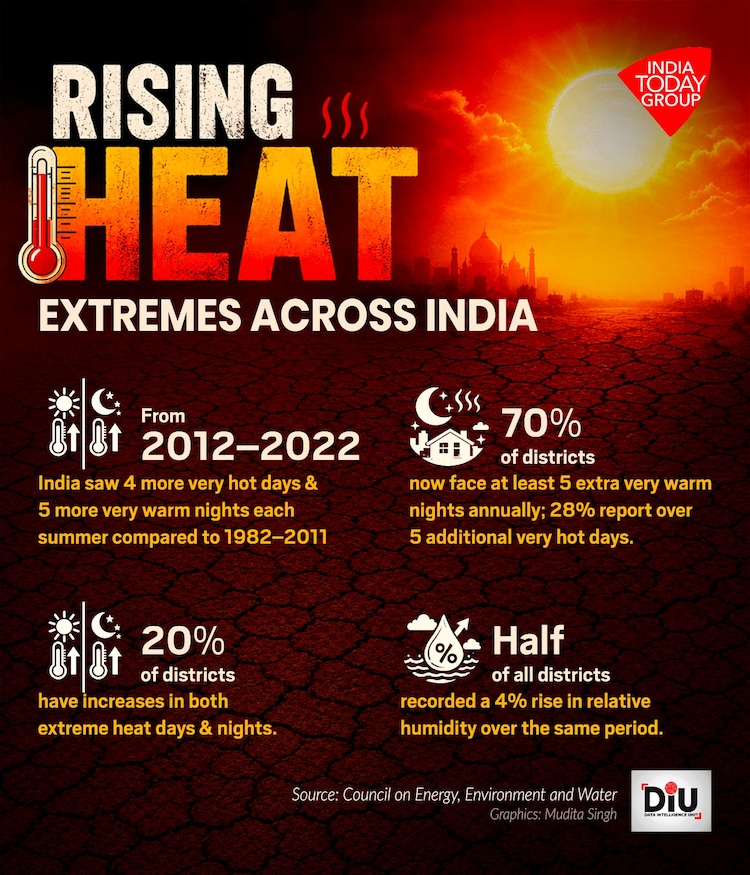
A recent study by the Council on Energy, Environment and Water, a New Delhi-based policy research institution, found that between 2012 and 2022, India experienced four more very hot days and five more very warm nights each summer compared to 1982–2011. It also notes that more than two-thirds of districts faced at least five additional warm days, while 28 per cent reported five extra very hot days. Twenty per cent of districts have seen increases in both extreme heat days and nights.
According to a new report from the Food and Agriculture Organisation of the United Nations and the World Meteorological Organisation released on Wednesday, “The frequency, intensity and duration of extreme heat events have risen sharply over the past half century, and the risks to agri-food systems and ecosystems are set to soar in the future.”
The report says that yields of certain crops begin to decline in areas with temperatures above 30 °C. And for certain crops like potatoes and barley, the threshold is even lower.
Loss of working hours
Heatwaves do not just affect crops; they also hit the working-class, especially those in construction, agriculture, and manufacturing. They reduce labour productivity and slow economic growth. According to the International Labour Organisation, “by 2030, the equivalent of more than two per cent of total working hours worldwide is projected to be lost every year, either because it is too hot to work or because workers have to work at a slower pace.”
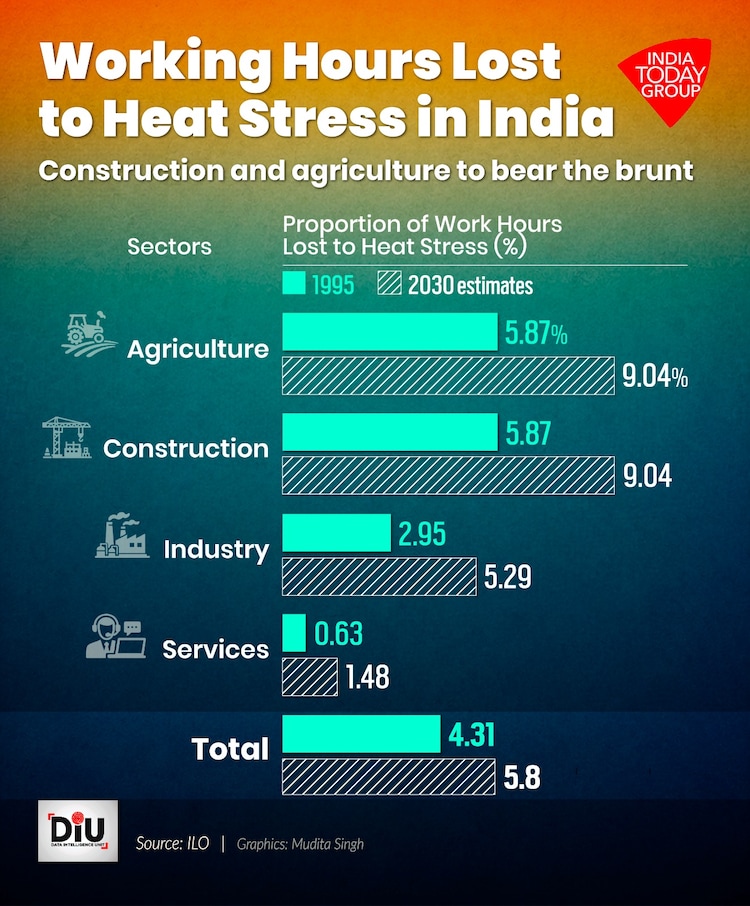
The ILO estimates that the impact on India will be even greater due to persistently high temperatures across much of the year. It notes that working hours lost to heat stress in India in 1995 were equivalent to 1.5 crore full-time jobs.
This loss is projected to rise to the equivalent of 3.4 crore full-time jobs by 2030. The bulk of these losses is expected to occur in agriculture and construction, where exposure to extreme heatwaves is significantly higher.
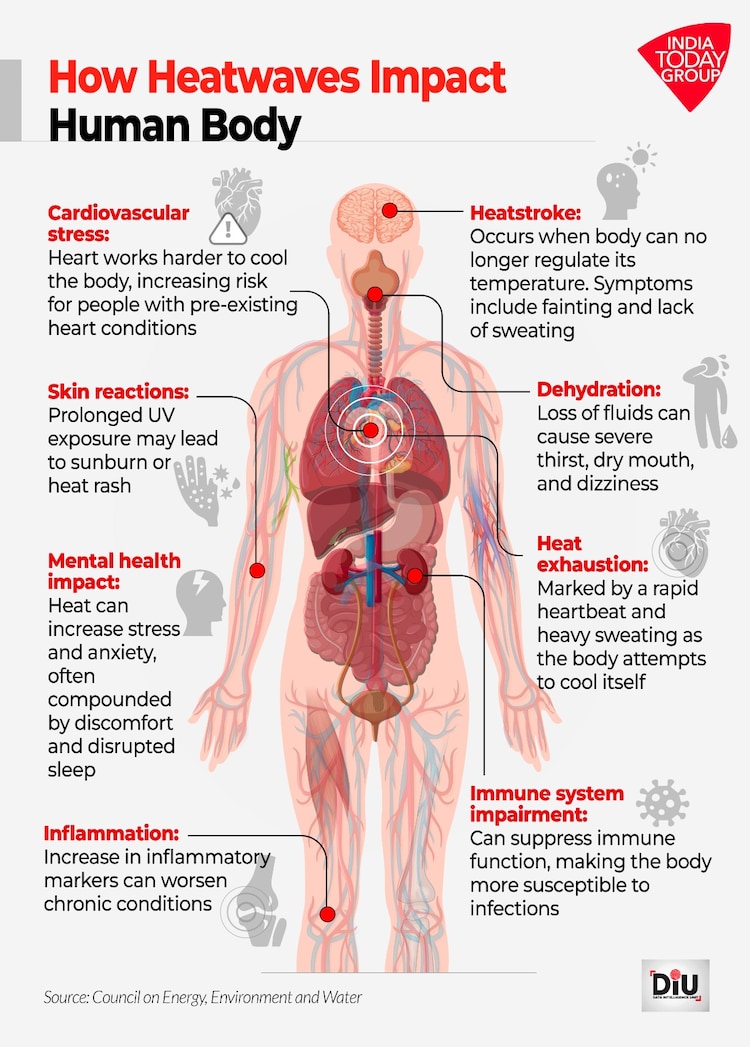
Such conditions are also very bad for health. As per the World Health Organisation, nearly 4.9 lakh heat-related deaths take place every year, with Asia accounting for 45 per cent of them, followed by Europe at 36 per cent. The year 2022 proved to be disastrous for Europe when an estimated 61,672 heat-related excess deaths occurred, according to the WHO.