
In numbers: India's nights are getting warmer
A century of IMD data shows nights across India are steadily getting warmer, and the country is paying the price in rising power demand and growing heat stress.

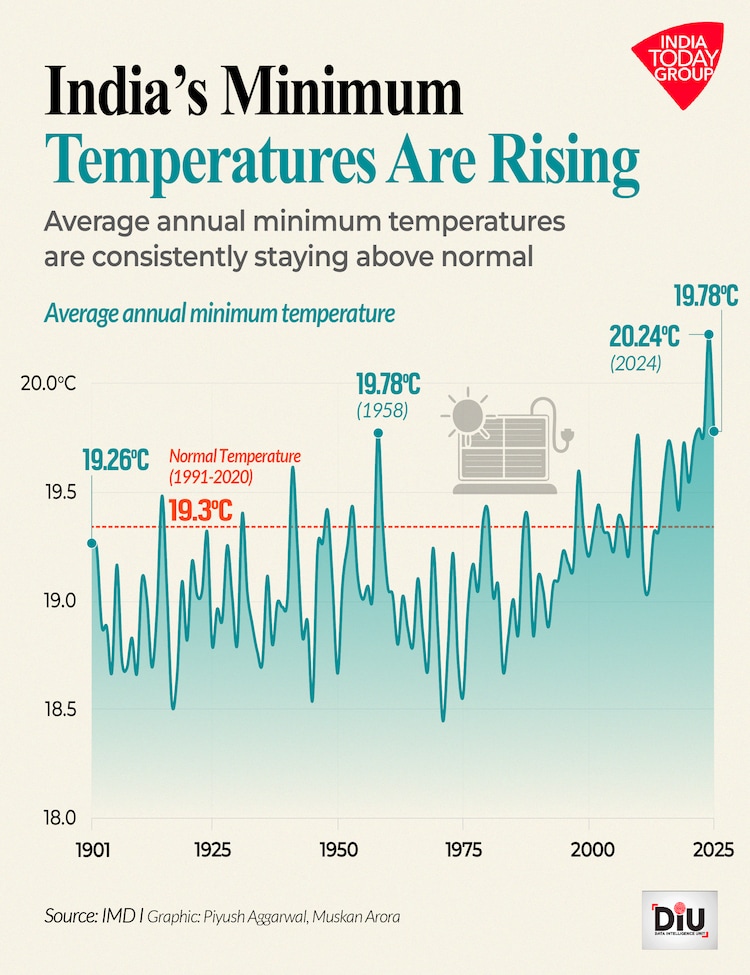
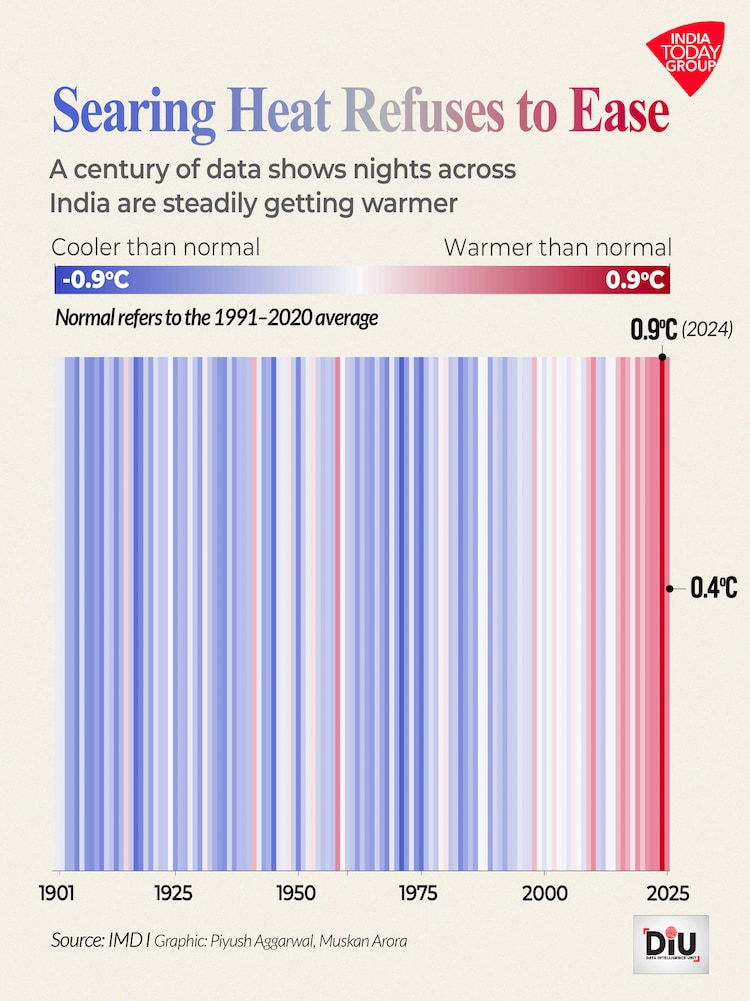
Across India, nights are becoming warmer, especially in northern and central India. An analysis of India Meteorological Department data from 1901 to 2025 by India Today’s Data Intelligence Unit shows a clear rise in India’s minimum temperatures, with the sharpest increase visible after 2000. In 2024, India recorded the highest annual average minimum temperature in the dataset at 20.24 degrees Celsius, nearly 0.9 degrees above the 1991–2020 normal.
The rise may appear small, but warmer nights are changing how people live through summer. Nights are when the body recovers from daytime heat. When temperatures remain high after sunset, the body struggles to cool itself down. Over several days, this can disrupt sleep, worsen dehydration and increase heat stress. The impact is felt most by elderly people, children, outdoor workers, and families living in cramped homes without proper ventilation or cooling.
A recent study by the Council on Energy, Environment and Water found that very warm nights are rising faster in India than very hot days. More than 70 per cent of Indian districts experienced at least five additional very warm nights every summer between 2012 and 2022, while only 28 per cent saw a similar rise on extremely hot days.
Heat after dark
India’s summers are no longer ending at sunset. The heat stays through the night, keeping air conditioners and coolers running longer and pushing up electricity demand even after dark. Last week, India’s peak power demand crossed 270 gigawatts for the first time as an intense heatwave swept across large parts of the country. Several regions reported power cuts and outages as cooling demand surged.
Delhi is already seeing the effects of rising nighttime heat. The city recorded two “warm nights” in May, the first such instances in 14 years. On May 25, the minimum temperature was 32.4 degrees Celsius, around 5.7 degrees above normal. Earlier, on May 21, the minimum temperature stayed high at 31.9 degrees Celsius.
According to the IMD, a “warm night” is declared when the maximum temperature remains above 40 degrees Celsius and the minimum temperature is 4.5–6.4 degrees above normal. If the departure exceeds 6.4 degrees, it is classified as a “very warm night”.
The last time Delhi recorded hotter nights in May was in 2012. On May 27 of that year, the city recorded its hottest night in the available IMD dataset, when the minimum temperature was 34.2 degrees Celsius, more than seven degrees above normal, qualifying as a “very warm night”.
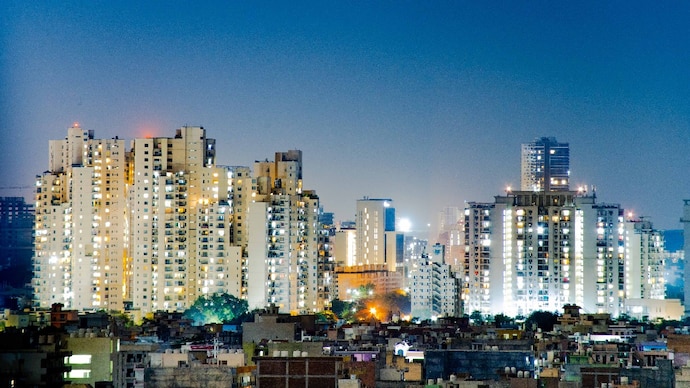
Scientists say this is part of a larger climate shift driven by urbanisation, concrete-heavy cities, humidity and climate change. Buildings and roads absorb heat through the day and slowly release it after sunset, reducing the cooling effect night once provided.
What makes nighttime warming especially worrying is that it often goes unnoticed as daytime heatwaves make headlines. Warm nights rarely do.