
West Bengal polls: Manifestos spotlight women, job market leaves them behind
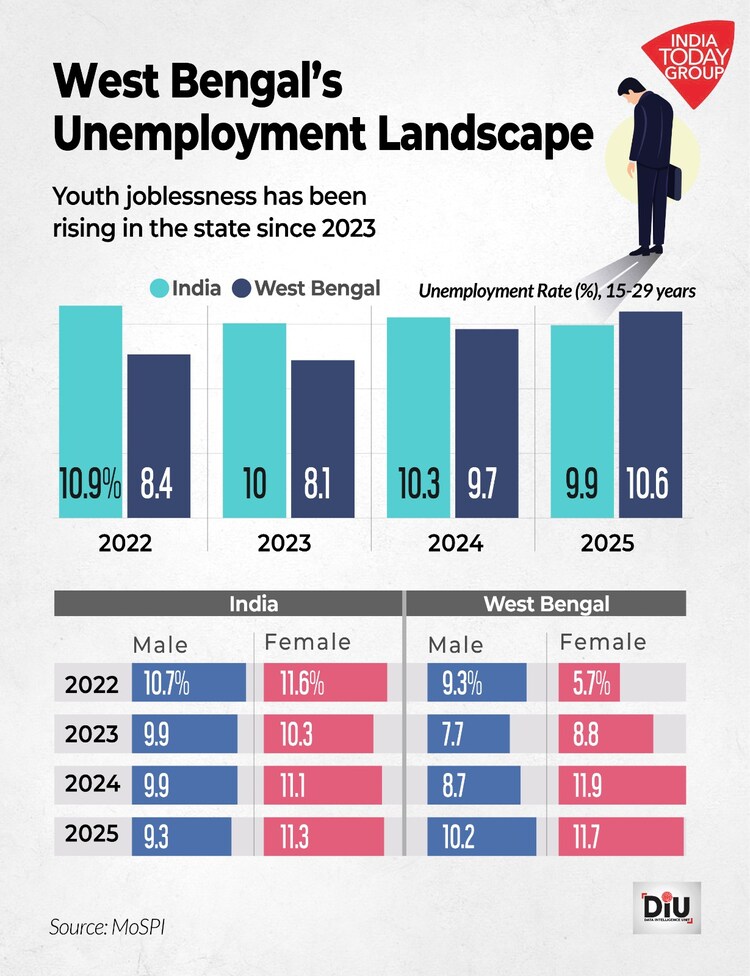
Among young women, unemployment rose sharply—from 5.7 per cent to 11.9 per cent in 2024—before dipping marginally by 0.2 percentage points in 2025.
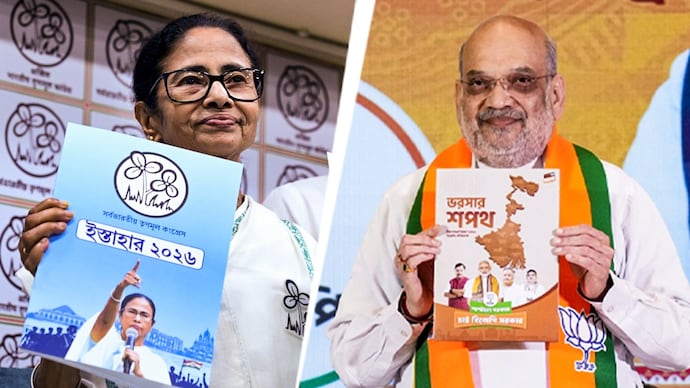
The first phase of the West Bengal election is scheduled for April 23.

New Delhi,UPDATED: Apr 21, 2026 11:50 IST
West Bengal will go to the polls in two phases on April 23 and 29, with results scheduled for May 4. The ruling Trinamool Congress and its rival, the Bharatiya Janata Party (BJP), have placed women-centric sops at the centre of their manifestos.
Data, however, show that beyond these assurances, the outlook for female unemployment is far from rosy in the state. In fact, the situation has worsened since 2022.
According to data from the Ministry of Statistics and Programme Implementation (MoSPI), West Bengal’s unemployment scenario has shifted markedly in recent years. In 2023, the state outperformed the national average, with an unemployment rate of 8.1 per cent compared with 10 per cent nationally. By 2025, however, the trend had reversed. The state’s unemployment rate rose to 10.6 per cent, while the national average stood slightly lower at 9.9 per cent.
The trend is not uniform across all groups. The rate of unemployment among young men in the state stood at 9.3 per cent in 2022, dipped to 7.7 per cent in 2023, and then climbed to 10.2 per cent in 2025. Among young women, the increase has been sharper, rising from 5.7 per cent to a high of 11.9 per cent in 2024 before witnessing a marginal dip of 0.2 percentage points in 2025.
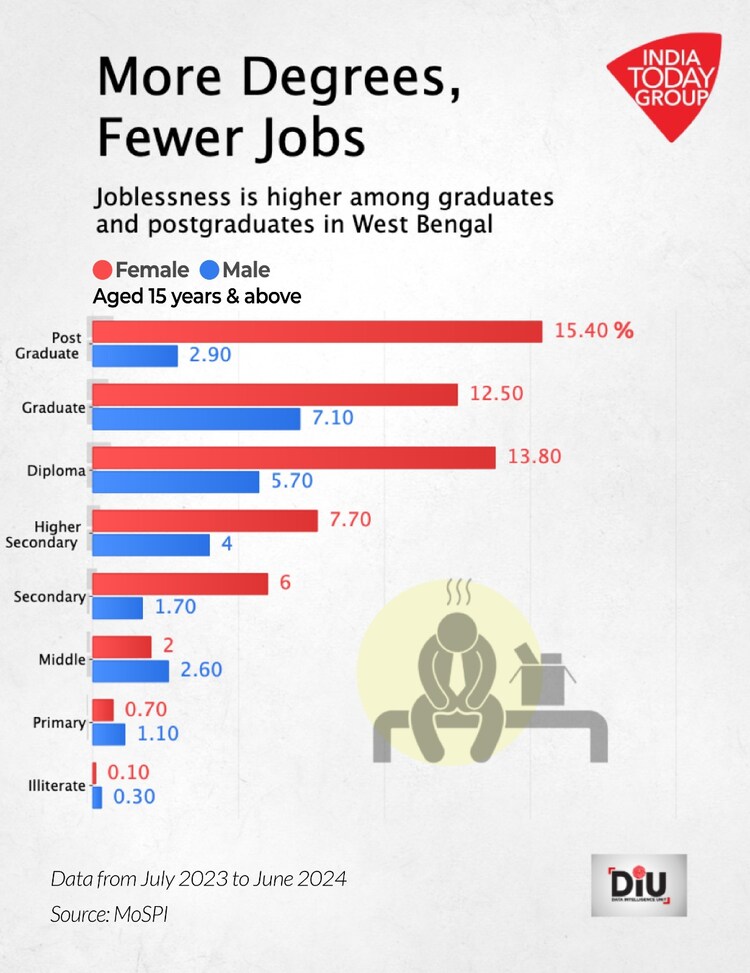
Data show that it is not the uneducated who are most affected by unemployment. But it hits the educated, particularly women, hard. Those with little or no education report relatively low joblessness. But it rises with higher levels of education. The gap is especially pronounced among postgraduates, where the rate of unemployment stands at 2.9 per cent for men and 15.4 per cent for women. A similar disparity exists among graduates. While the unemployment rate for men in the category was at 7.1, the same for women stood at 12.5 per cent in 2023-24.
Despite the launch of skill development programmes such as the Pradhan Mantri Kaushal Vikas Yojana, Jan Shikshan Sansthan, and the National Apprenticeship Promotion Scheme, aimed at helping young people acquire skills and access training opportunities, the gap between education and employment remains wide.
- Ends