
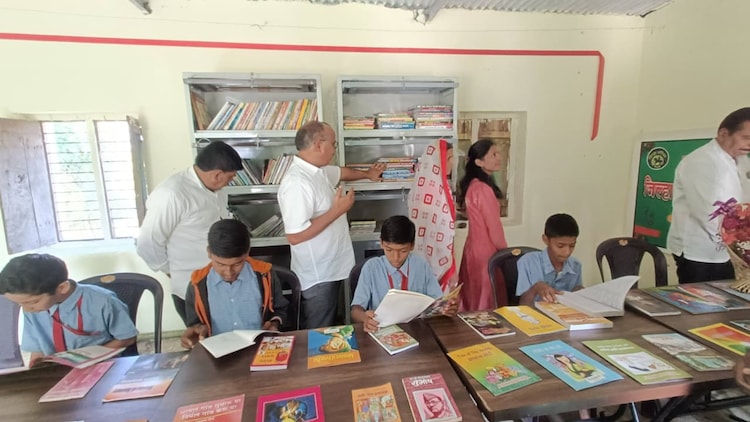
This Maharashtra village library is helping kids crack exams and win scholarships
A library in Maharashtra's Beed district is doing much more than lending books. What started as a small reading space in 2017 has grown into a learning hub for over 130 children, offering study materials, scholarships, guidance, and a supportive environment to help them learn and grow.
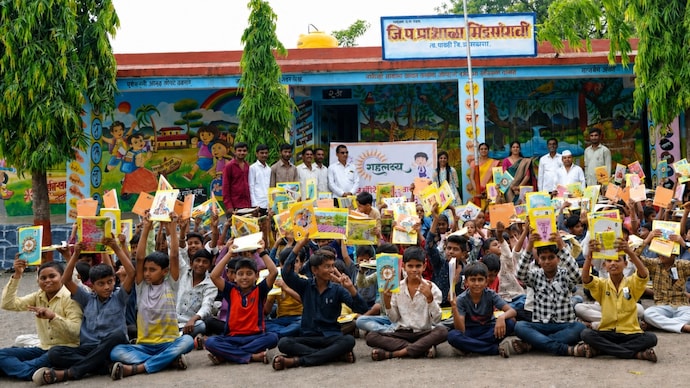
How one Maharashtra village library became a lifeline for rural students

New Delhi,UPDATED: Jun 4, 2026 10:00 IST
“Education is not just about going to school," says Ashwini Laxman Shelke.
In a small village in Maharashtra's Beed district, the former SBI Youth for India Fellow and founder of The Shahalakshya Charitable Trust noticed a reality familiar to many rural communities. Children were attending school, but many had no access to books at home, few quiet places to study, and limited academic guidance outside the classroom.
To bridge that gap, Shelke started a small reading corner in 2017. What began as a modest effort to support village students has since grown into the Savitribai Phule Vachanaly Library.
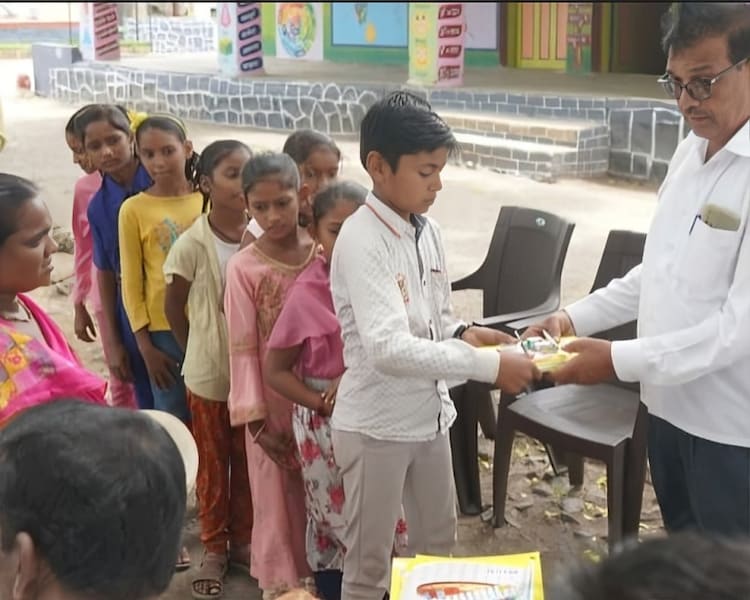
It is now a community learning space that now supports more than 130 children, with 70 to 80 students visiting daily to read, study, receive guidance, and explore opportunities that once seemed out of reach.
What makes this library truly unique is that it offers much more than just books. From career guidance and exam preparation support to scholarship assistance and a range of learning and sports activities, it serves as a comprehensive resource centre for students.
WHY A LIBRARY MATTERS HERE
The gap Ashwini saw is one many rural families know well. In first-generation homes, parents may work hard to keep children in school, but they often cannot help with homework, reading or career guidance.
Ashwini says many children in rural areas face the same set of problems outside the classroom: limited academic support at home, financial pressure, lack of exposure and low confidence. “Even talented children often struggle simply because they do not have the right environment or encouragement to continue learning consistently,” she says.
That is where this library has made a difference. It does not replace school. It supports it.
The space offers books, reading materials, academic guidance, scholarships, study supplies, sports activities, drawing competitions and awareness drives on education, health, hygiene and government schemes. Older students often help younger ones, turning the library into a place where peer learning happens naturally.
WHAT THE LIBRARY REALLY GIVES
Beyond academics, the library provides something less measurable but equally important: confidence.
As Ashwini Shelke explains, the space offers books, study materials, academic guidance, mentorship, scholarships, activities, sports, competitions and awareness sessions. But the real impact is in how children behave and grow within the space.
“They have become more confident, expressive, and actively involved in learning,” she says.
Older students help younger ones. Children ask more questions. They participate more freely. Learning becomes shared, not individual.
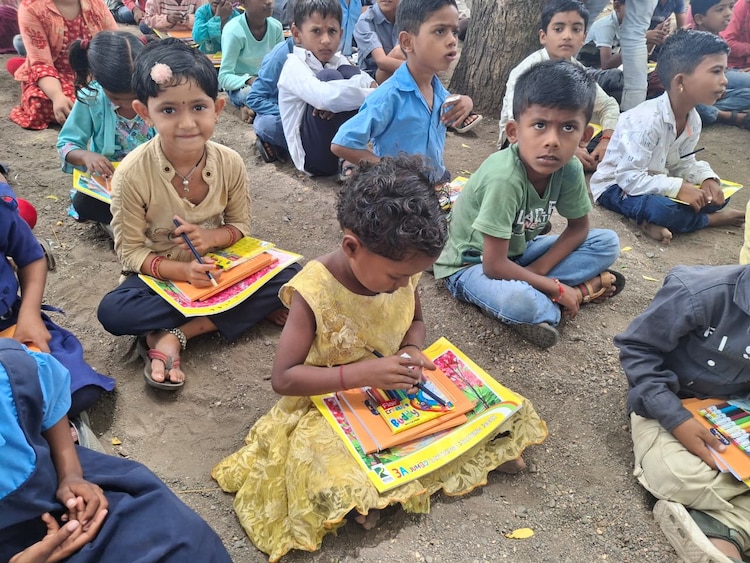
WHEN BOOKS CAME CLOSER TO HOME
For many children, the biggest change is simple: access.
As Shivani Deepak Chemet (Class 7, ZP Primary School, Ukirda) puts it, “This library is wonderful for us; since it is located near our school, books have effectively come right to our doorstep. We visit the library specifically to read.”
She adds that reading has also become enjoyable. “Among the books we have read are The White Crow and The Magic Wand—stories that we really enjoyed.”
Ginche Pankaja Parmeshwar (Class 7, ZP Primary School, Ukirda) says, “I have started reading much faster. My overall capacity has increased. I have gained knowledge about various things.”
Her experience reflects a wider pattern: children are not just reading more, they are reading better.
WHAT THE NUMBERS SAY
The story from Beed sits inside a bigger national education picture.
The Annual Status of Education Report (ASER) 2024 surveyed 649,491 children in 17,997 villages across 605 rural districts and found that while school enrolment remains high, learning gaps still persist. Among children in Class 3 in government schools, only 23.4% could read a Class 2-level text. In Class 5 government schools, the figure was 44.8%.
ASER also found that in the 14–16 age group, nearly 90% of children reported having a smartphone at home, but only 57% of those who used one said they had used it for an educational activity in the previous week.
It shows the gap is not just about access to school. It is also about access to learning support, reading habits and guidance outside school hours.
The government’s UDISE+ 2024–25 report also shows progress in school infrastructure, with 64.7% of schools having computer access and 63.5% having internet connectivity.
Those numbers also underline why community learning spaces still matter: even as digital access improves nationally, many children continue to need a local, human support system to actually use that access well.
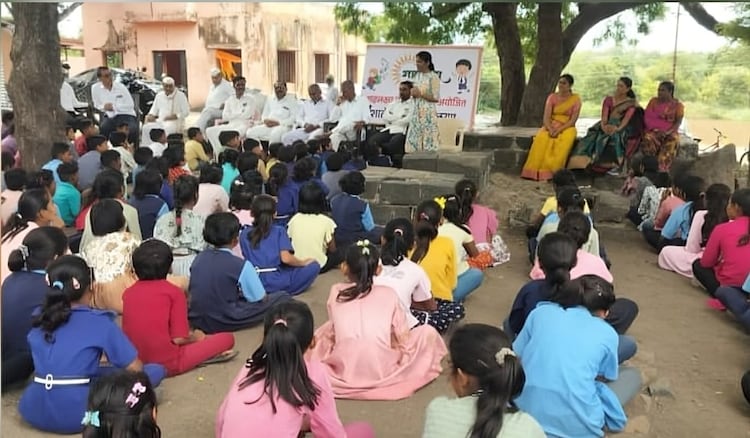
WHEN SCHOOLS NEED EXTRA SUPPORT
For many first-generation learners, schools alone are not enough.
Prasiddhi Anil Gaikwad (Class 6, ZP Primary School, Ukirda) explains how the library filled gaps her school could not always cover. “Our school, on its own, was unable to provide a projector. Here, we learnt how to read and write effectively.”
She adds that exposure has improved significantly. “We got the opportunity to see and experience a great many things our writing skills improved as well. My overall learning capacity has definitely increased.”
MORE THAN JUST BOOKS
For students like Ginche Pranali Parmeshwar (Class 8, Bhaleshwar High School), the change is structural. “Books became easily accessible to us, and our reading speed subsequently increased,” she says.
She also points out something important: exposure beyond textbooks. “This has been immensely beneficial for students who appear for competitive examinations. Some have even successfully secured jobs.”
The library is not just improving school performance. It is quietly shaping future opportunities.
WHY SMALL SPACES MATTER
Ashwini says, "Schools alone cannot always provide personalised attention, exposure, or supportive learning environments."
According to her, such community spaces allow children to read beyond textbooks, ask questions freely, improve their communication skills, and participate in activities that build confidence and creativity.
She adds, "Such spaces help children stay motivated and connected to education. Grassroots initiatives like these can become strong support systems for rural students and help bridge educational inequalities."
India’s rural education system continues to face learning gaps, as highlighted in ASER reports, especially in foundational reading and comprehension skills. But this library shows another truth: solutions do not always need to be large-scale to be effective.
Sometimes, they begin with a room, a few books, and someone willing to start.
In Beed, that small beginning is now a space where children read faster, think wider, and learn with more confidence.
And for many of them, it is also the place where they learn beyond books.
- Ends