
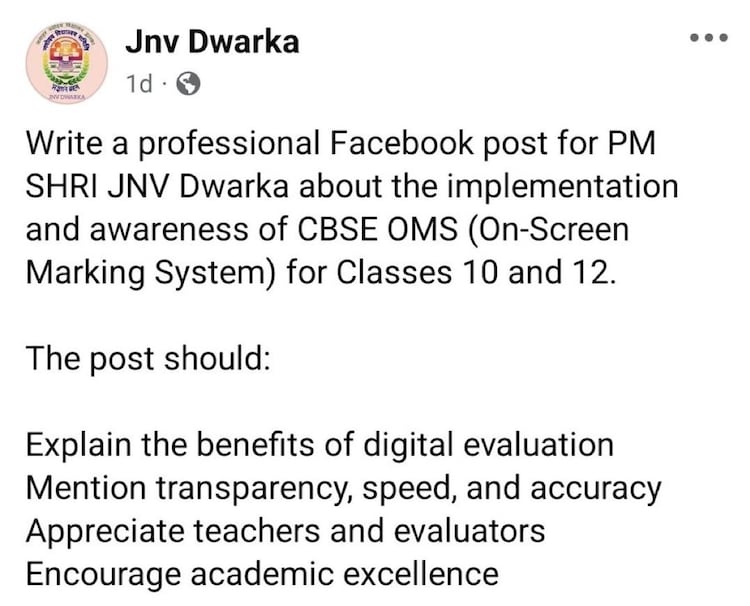
Did CBSE ask principals to defend OSM system? Videos fuel toolkit charge
Amid growing complaints over CBSE's On-Screen Marking (OSM) system, schools were allegedly sent a toolkit with suggested scripts and talking points to defend the process, raising fresh questions about transparency.
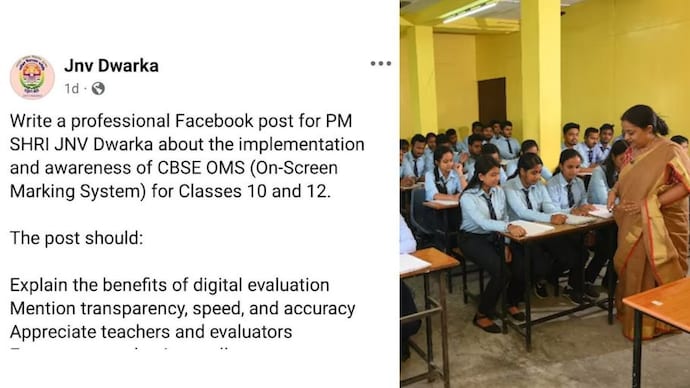
CBSE OSM system controversy: Toolkit for principals sparks fresh trust questions.

New Delhi,UPDATED: May 29, 2026 20:50 IST
Amid damning incidents of Class 12 answer sheet mix-ups and marking errors, the CBSE has landed in yet another controversy. The country’s premier school education board is now facing allegations that it circulated a communication toolkit to schools and mobilised principals to flood social media with coordinated videos and posts defending its controversial On-Screen Marking System (OSM).
The ‘toolkit-inspired’ videos have raised serious questions about whether the CBSE is focused on addressing students’ concerns or simply managing the optics of its evaluation reform.
The development comes at a time when the Board is already battling a growing backlash from Class 12 students. For lakhs of students, the board exam ordeal was supposed to end with the declaration of results. Instead, it sparked weeks of confusion, complaints and controversy.
Students have flooded social media with allegations of blurred answer sheets, missing pages, mismatched scripts and marking discrepancies under CBSE’s new On-Screen Marking (OSM) system. What was introduced as a transparency-driven reform has quickly become one of the Board’s biggest controversies in recent years, drawing criticism from students, parents and teachers alike.
Now, with questions over both the evaluation process and the Board’s response to the fallout, the controversy has expanded beyond marks and moderation to a larger debate over accountability and trust.
For students still struggling to understand what happened to their answer sheets, the issue is no longer just about technology glitches. It is about trust. And that trust may prove far harder to restore than any software system.
DID CBSE ASK SCHOOLS TO DEFEND THE OSM?
The Central Board of Secondary Education (CBSE) allegedly circulated a document titled “Material for Principals” to affiliated schools amid the growing backlash over the On-Screen Marking (OSM) system.
The document allegedly contained ready-made talking points, suggested scripts, and social media messaging for school leaders.
Schools were encouraged to reassure parents and project confidence in the digital evaluation process even as complaints continued to surface over blurred scans, missing pages, technical glitches, and discrepancies in answer-sheet access.
Soon after the toolkit was circulated, several principals began posting videos praising the OSM system. Many of these videos appeared to use language strikingly similar to the suggested text contained in the document.
WHAT DID THE TOOLKIT ALLEGEDLY TELL PRINCIPALS TO SAY?
One of the suggested statements described CBSE as being “highly proactive, empathetic, and communicative” in addressing the teething troubles associated with the rollout. Even as complaints mount, videos shared by fact-checker Mohammed Zubair on X feature principals describing OSM as a major success story.
DPS Siliguri Principal Anisha Sharma hailed CBSE's On-Screen Marking (OSM) system as a major reform in the examination evaluation process, calling it a move aimed at enhancing transparency, consistency, and efficiency.
In another proposed message, a principal of PM Shri Jawahar Navodaya Vidyalaya Navegaon Bandh, district Gondi, says the OSM is "very much benefited to each and every student." See the video below.
WHY IS THE OSM SYSTEM FACING CRITICISM?
The controversy surrounding CBSE’s On-Screen Marking system has been building for weeks.
Students and parents have alleged that scanned answer sheets uploaded on the portal were blurred, incomplete, or did not appear to match the handwriting of the candidate. Some reported missing pages, while teachers involved in the evaluation process raised concerns about insufficient training, technical difficulties, and the pressure of evaluating large volumes of answer scripts digitally.
The criticism intensified after questions emerged over whether the system had undergone adequate large-scale testing before being rolled out nationwide. Evaluators also claimed that several answer books eventually had to be checked manually after repeated scanning failures.
ARE SOCIAL MEDIA VIDEOS SHAPING THE NARRATIVE?
One of the most striking aspects of the controversy is the sudden wave of supportive content that appeared online.
Videos shared by schools and students described the OSM system as transparent, fair, and technologically advanced. However, critics argue that when identical phrases begin appearing across dozens of videos, the line between genuine feedback and coordinated messaging becomes blurred.
The controversy has fuelled accusations that the focus has shifted from resolving student grievances to controlling public perception of the digital evaluation system.
WERE STUDENTS ALSO ASKED TO PUBLICLY SUPPORT THE OSM SYSTEM?
The controversy deepened after allegations surfaced that students were being encouraged, or in some cases pressured, to publicly endorse CBSE's On-Screen Marking system despite the growing concerns surrounding it.
A Reddit post that gained traction online claimed that students were being asked to record videos supporting the OSM process at a time when many candidates were raising questions about answer-sheet discrepancies and evaluation errors. While these claims remain unverified, they fuelled concerns about whether students were being drawn into a public relations exercise.
WHAT HAS CBSE SAID SO FAR?
CBSE has consistently maintained that the OSM system was introduced to improve transparency, reduce clerical errors, and modernise the evaluation process. The Board has also denied claims that its current evaluation portal suffered any security breach and has defended the integrity of the system.
Meanwhile, Union Education Minister Dharmendra Pradhan has acknowledged that discrepancies and technical issues occurred during the rollout and has assured students that corrective measures are being taken.
IS THIS A TECHNOLOGY PROBLEM OR A TRUST PROBLEM?
The larger issue may no longer be limited to software glitches or scanning errors.
Board examinations function on public trust. Students accept results, even disappointing ones, because they believe the evaluation process is fair and impartial. When questions arise over answer sheets, marking systems, and institutional responses, that trust becomes difficult to restore.
Whether the OSM system ultimately succeeds or fails may depend less on technology and more on how transparently concerns are addressed. Asking schools to reassure students can calm anxiety for a while. But confidence in an examination system is not built through scripts, reels, or talking points. It is built when students feel their concerns are heard, investigated, and resolved.
For lakhs of students whose futures depend on a few marks, that distinction matters more than any public relations campaign.
- Ends