
The permanent exam scandal: How India keeps failing 22 lakh students every year
From committees and CBI probes to promises of reform, the NEET crisis keeps repeating itself. The real scandal is not just the leak, it is a system that learns nothing from its own failures.
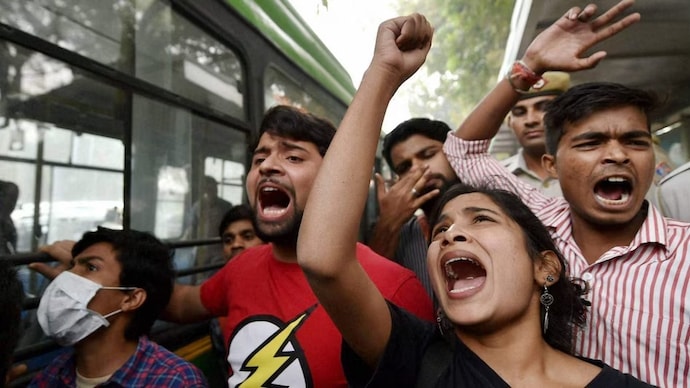

There is a particular cruelty embedded in the NEET paper leak. It is not the cruelty of incompetence, which is forgivable. It is the cruelty of repetition, which is not.
On May 3, 2026, over 22 lakh students sat for the National Eligibility cum Entrance Test. They were not the children of politicians or industrialists.
They were, by and large, the children of aspirational India from Sikar coaching centres, from Patna lodges, from satellite towns where becoming a doctor is less a career choice and more a civilisational ambition, the one route out of precarity that a generation has been taught to trust above all else.
They had spent a year or more in preparation. Some had been three or four years old. They sat down at 2 PM and wrote their exam.
Nine days later, the National Testing Agency cancelled it.
The Rajasthan Special Operations Group found a handwritten suggestion paper whose 120 questions matched the actual NEET paper — approximately 90 Biology questions and 30 Chemistry questions. Reports claim the circulated material contained 120 to 135 similar questions worth nearly 600 marks out of a total of 720. This was not a rumour.
This was not Twitter outrage. This was a recovered document. A physical artefact. Evidence that someone, somewhere, had the paper before the paper existed in the hands of 22 lakh students.
And the government, the same government that had been here before, cancelled the exam, ordered a CBI probe, and told 22 lakh students to wait for fresh dates.
The word "again" does a lot of work in this story
In May 2024, NEET-UG faced allegations of question paper leaks. In Patna, Bihar, police arrested 13 people, including four examinees, who had allegedly paid Rs 30 lakh to Rs 50 lakh to obtain the question paper beforehand. That was 2024.
The Supreme Court of India acknowledged that at least 155 students directly benefited from the paper leak but declined to order a full re-examination, ruling there was no systemic failure at scale.
The government's response in 2024 was textbook damage control. On June 13, 2024, Union Minister of Education Dharmendra Pradhan rejected allegations of a paper leak as baseless, stating that "the allegations of corruption in the NTA are unfounded." Then, six days later, the same ministry cancelled the UGC-NET exam. Then it postponed NEET-PG.
Then it postponed CSIR-NET. Then it postponed CUET results. On June 22, 2024, the government dismissed NTA's Director General Subodh Kumar Singh from his position and handed the NEET irregularities case to the CBI.
A new DG was appointed. A high-powered committee was formed. A report was submitted.
And then, in May 2026, the paper leaked again.
The committee is worth pausing on, because it is perhaps the most damning exhibit in this case.
The seven-member committee headed by former ISRO chairman K Radhakrishnan was constituted by the Union Ministry of Education in June 2024 in the wake of the NEET-UG paper leak. The report was submitted in October 2024. The committee suggested a set of 101 recommendations on digital infrastructure, secure question paper transportation, sealed test centres, presiding officers, mobile testing centres, computer adaptive testing, and a Digi-Exam system modelled on Digi-Yatra.
One hundred and one recommendations. The government had, conservatively, six months to begin implementing them before the May 2026 cycle. A core proposal was to transition to online exams, which would limit the physical handling of question papers.
Physical handling of question papers is precisely how a handwritten "suggestion paper" ends up circulating in Sikar with 600 marks worth of matching questions.
The committee told the government what to do. The government nodded, accepted the report, and conducted another pen-and-paper exam. The paper leaked.
This is not a failure of knowledge. It is a failure of will.
Consider the arithmetic of what is at stake
As of 2026, India has approximately 1,08,915 MBBS seats across 706 medical colleges. Against that, 22 lakh students appeared for this exam. The ratio of aspirants to seats is roughly 20:1, and that is before accounting for the fact that government college seats, which most families can actually afford, number far fewer. This means the examination is not merely a test of knowledge. It is a civilisational chokepoint. Every decimal point of rank determines whether a student goes to AIIMS Delhi or a private college where the fee runs to a crore and a half.
In this context, a leaked paper is not an administrative irregularity. It is a market intervention. It redistributes scarce, life-altering resources from the meritorious to the moneyed.
The paper leak mafia allegedly charged Rs 30 lakh to Rs 50 lakh from candidates, providing them with question papers in Patna lodges for memorisation the night before the exam. This is a price point that makes the clientele obvious. Not the poor student from Sikar burning through coaching fees and ramen packets. The rich student whose family treats NEET not as an examination but as a procurement problem.
The ones who pay for the leak are, in a very direct sense, buying seats that belong to someone else. And the state, the NTA, the Ministry of Education, the Union government are the institutions that make this theft possible by failing, year after year, to secure the paper.
The government's defence, such as it is, collapses on contact with facts
The NTA was established in 2017. Its mandate was to bring world-class, technology-enabled, secure examination infrastructure to India. Nine years later, it cannot transport a question paper from a printer to an exam centre without that paper appearing on WhatsApp.
Critics have long questioned how the NTA is managed, saying it lacks transparency and public accountability, and multiple news reports have flagged issues, including paper leaks, unfair grace marks, and technical or administrative problems at exam centres.
The 2024 scandal added a layer of almost farcical incompetence. That year, 67 students achieved a perfect score of 720 out of 720, with 44 of them receiving grace marks despite answering a basic physics question incorrectly. Several examinees received scores of 718 or 719, which students argued was mathematically impossible under the exam's marking scheme.
Six students from the same centre in Jhajjar, Haryana, all scored 720. The NTA's explanation — grace marks for lost exam time, an error in the NCERT book — satisfied no one, because it explained the arithmetic while leaving the suspicion entirely intact.
Now, in 2026, we are back to the CBI. Back to the "strict action." Back to the press releases about transparency and integrity. The language is identical. Only the year has changed.
What makes this inexcusable is that solutions exist and have been named
India conducts elections for a billion-plus population with reasonable integrity. The Election Commission manages booth-level logistics, state-level administration, central oversight, and technology integration without the national result becoming a procurement scandal. UPSC, with far smaller numbers but comparable stakes, has not had a comparable systemic paper leak crisis.
The Radhakrishnan committee specifically recommended that, before scheduled exams, testing centres be sealed in the presence of district administration and police, and unsealed for the exam only in the presence of district administration and NTA officials. It recommended moving toward computer-based testing. It recommended reducing dependence on private test delivery agencies.
None of this is technologically radical. Countries with a fraction of India's bureaucratic capacity conduct standardised high-stakes exams online without incident. The problem is not that India lacks the knowledge to fix NEET. The problem is that someone benefits from keeping it broken.
The political class has perfected the grammar of concern without consequence
After 2024, there was outrage, there were protests, there were court petitions, there was a Supreme Court hearing, there was a committee, there were 101 recommendations, there was a new DG, there was a promise. After 2026, there is outrage again, there are protests again, the CBI has been called again, and somewhere in the Ministry of Education, someone is probably constituting another committee.
What there is not, what there has never been, is accountability at the level that matters. Not a single minister has resigned over NEET. Not a single systemic reform has been implemented in a manner that actually prevented the next leak.
The DG who was removed in 2024 was a bureaucrat, a scapegoat at the operational level. The political architecture that under funds the NTA, which allows it to rely on contractual staff and private logistics vendors, does not mandate a transition to digital exams even after being explicitly told by its own committee that the architecture remains entirely intact.
Rahul Gandhi said NEET 2026 had become "an auction, with papers allegedly sold on WhatsApp before the test." He is not wrong about the description. But the opposition should be careful about the comfort of outrage without ownership: the foundations of this mess are older than 2014, and every political formation that has governed this country shares some portion of the blame for the decades-long failure to build examination infrastructure worthy of the aspirations placed upon it.
The specific failure of 2026, though, belongs to this government and this ministry. They had the report. They had a committee. They had 101 recommendations. They had the warning, written in the same ink as the 2024 catastrophe.
They chose another pen-and-paper exam. The paper leaked.
Twenty-two lakh students will now sit the exam again, on a date not yet announced, at centres already rattled by the knowledge that the system meant to give them a fair shot is either unable or unwilling to protect the integrity of a single question paper.
That is the actual scandal, not any individual leak, not any specific gang arrested in Sikar or Patna. The scandal is the tolerance for repetition. The scandal is a government that makes the same mistake twice, calls it a tragedy once and an administrative matter the second time, and then asks the same 22 lakh children to trust it with their futures one more time.
The children, to their credit, don't have a choice. They will study again, appear again, and sit at 2 PM in some examination centre, hoping this time the paper is only in their hands.
The least the government could do is make sure that it is actually true.