Advertisement

PM Modi cites Manmohan Singh's remark to jab Congress, party reacts

Prime Minister Narendra Modi's election speech in Rajasthan's Banswara has sparked a controversy over his references to Muslims, with leaders of the Opposition bloc INDIA calling the speech an attempt to divert attention from "real issues". "This 'urban Naxal' mindset, mothers and sisters, they will not even leave your 'mangalsutra'. They can go to that level... The Congress manifesto says they will calculate the gold with mothers and sisters, get information about it and then distribute that property. They will distribute it to whom - Manmohan Singh's government had said Muslims have the first right on the country's assets," PM Modi said at the rally on Sunday. "It will be distributed to infiltrators. Should your hard-earned money go to infiltrators? Do you approve of this?" PM Modi said. Congress MP Rahul Gandhi, reacting to PM Modi's attack on Dr Singh, in a post on the microblogging website X said the Prime Minister now wants to divert the attention of the public from issues. "After the disappointment in the first phase of voting, the level of Narendra Modi's lies has fallen so much that out of fear, he now wants to divert the attention of the public from the issues. Trends have started coming regarding the immense support that Congress's 'Revolutionary Manifesto' is receiving," Mr Gandhi said in the post.

Read More

VIDEOS FROM OTHER SECTIONS

LATEST VIDEOS

Iran has no choice but to fight back ferociously: Esmaeil Baghaei on war with US

In an exclusive interview with India Today TV, Esmaeil Baghaei, the spokesperson of the Ministry of Foreign Affairs of Iran, discussed Tehran's response to US President Donald Trump's threats. He detailed the history of Tehran's diplomatic engagement with Washington, highlighting the US withdrawal from the JCPOA and the assassination of IRGC Commander Qassem Soleimani. He explained Iran's recent proposal to end the war and reopen the Strait of Hormuz, which the US rejected. Baghaei stated, "Blockade itself is a declaration of an act of war," attributing the current international maritime and energy crises, including those affecting India, to actions by the US and Israel. He also questioned why the disarmament of Israel's nuclear weapons is not part of global demands, noting Iran's compliance with the NPT. Addressing the possibility of a ground invasion by the US, Baghaei affirmed Iran's military readiness, warning, "We have no other choice other than fighting back ferociously." He emphasised that Iran is defending its homeland and international law against aggression.
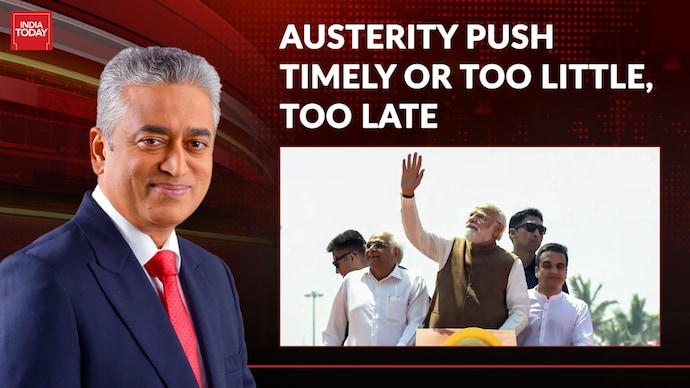
Call for austerity after election campaigning? Experts decode timing of PM's appeal

The Prime Minister has urged citizens to adopt austerity measures, including reducing fuel consumption and limiting gold purchases, as escalating West Asia tensions drive global crude oil prices higher. State-owned oil firms face significant financial losses while the national currency weakens against the dollar. During a televised debate, the ruling party defended these measures as necessary for economic stability, while the opposition criticised the government for placing the burden on citizens. In Tamil Nadu, the AIADMK faces a potential split as thirty rebel lawmakers met the pro-tem speaker ahead of a crucial floor test. Meanwhile, in Telangana, a Union Minister's son has been booked under the POCSO Act for alleged sexual harassment, leading to accusations of delayed investigations. In Kerala, the national leadership has yet to finalise a Chief Minister candidate a week after election victory. Additionally, a film producer addressed censor board delays and a lead actor's political transition. These developments highlight significant political and economic shifts across India, from energy policy to regional leadership transitions.

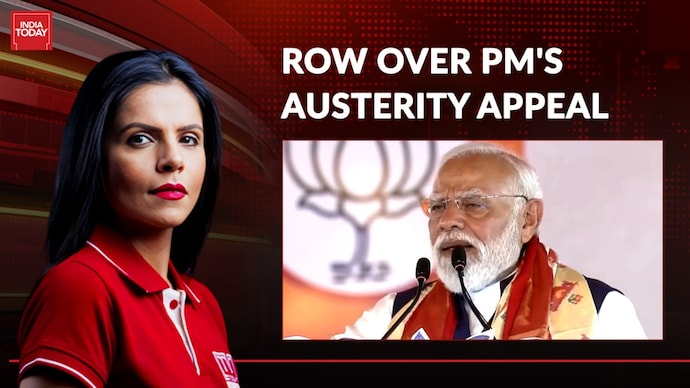
PM’s austerity push sparks political firestorm. Message for people, not politicians?

Prime Minister Narendra Modi's appeal to the public for the adoption of several austerity measures to mitigate the economic impact of the West Asia crisis has sparked a political confrontation. He urged citizens to reduce fuel consumption, utilise public transport, and limit gold purchases to preserve foreign exchange reserves. Opposition leaders criticised the appeal, questioning the continuation of large-scale political roadshows and demanding a special parliament session to address inflation and fuel taxes. During televised debates, ruling party representatives defended the nation's economic stability, while analysts highlighted structural financial strains. Simultaneously, West Bengal announced an administrative reshuffle, appointing the former Chief Electoral Officer as Chief Secretary and the Special Observer as Chief Adviser to the Chief Minister. In Kerala, the Congress high command continues deliberations over the next Chief Minister. Key contenders include the former leader of the opposition and a prominent organisational strategist. Former state party presidents have been summoned to the national capital for consultations as the party evaluates legislative support and ally preferences before making a final announcement.

advertisement

No gold for a year, fuel use cuts: Is PM readying India for a West Asia war flare-up?

Amid escalating West Asia tensions and surging global crude oil prices, the government has issued a ten-point advisory urging economic discipline to stabilise the currency. Citizens are requested to reduce fuel consumption, postpone non-essential international travel, and halt gold purchases for one year to prevent foreign exchange outflow. Recommendations include adopting electric vehicles, utilising public transport, and promoting domestically manufactured goods. Economic experts analyse these measures, emphasising the need for government austerity and policies to boost exports. Concurrently, the United States has rejected an Iranian peace proposal, heightening geopolitical concerns regarding the Strait of Hormuz and nuclear sanctions. In a separate development, the Prime Minister marked the seventy-fifth anniversary of the Somnath Temple Prana Pratishtha, releasing a commemorative stamp and coin. This visit coincided with the anniversary of the 1998 nuclear tests, linking spiritual heritage with national security and scientific progress. The broadcast highlights the intersection of civilisational significance, strategic military strength, and the urgent need for renewable energy adoption during this global crisis.