
Brilliant Minds: Why Zachary Quinto's medical drama felt more human than most shows
NBC has cancelled Brilliant Minds after two seasons, ending Zachary Quinto's reflective medical drama. Its quiet, humane take on neurology leaves behind an unfinished but affecting legacy.
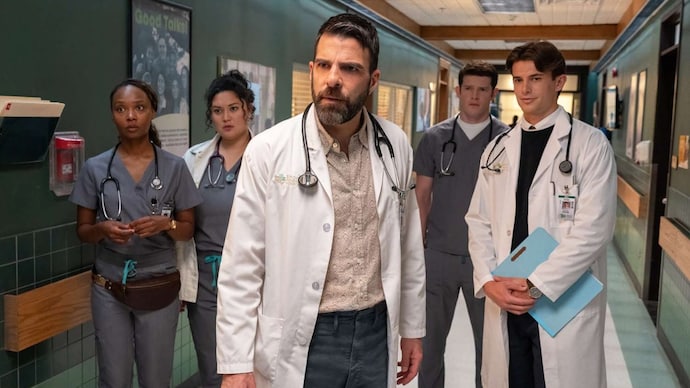

In a television landscape crowded with high-stakes medical procedurals that often feel more like glossy emergencies than human stories, back in 2024 Brilliant Minds arrived like a thoughtful late-night conversation rather than a siren-blaring spectacle.
Starring Zachary Quinto as Dr Oliver Wolf, the story is about a team of neurologists who treat the mysterious workings of the brain while also grappling with the deeply human stories behind each case. The story arrived in 2024, returned for a second season in 2025, and was recently cancelled by NBC after two seasons. Yet its departure feels less like a loud failure and more like the quiet end of something sincere that never quite found its full audience.
At its core, Brilliant Minds was never chasing dramatic miracles or quick-fix cures. It focused instead on the fragile space where science meets the unknown corners of the human mind. Quinto’s Oliver Wolf served as a compelling centre: a gifted neurologist (who suffers from face blindness) whose own neurological challenges sometimes blurred the line between doctor and patient. This detail was handled with care and nuance rather than becoming a cheap dramatic trick.
It allowed the show to explore how personal vulnerability can actually deepen understanding and empathy. Quinto brought a precise, quietly intense presence to the role – calm on the surface, yet clearly carrying layers of thought and doubt underneath. You believed him as someone who saw connections others missed because life had forced him to look at the world differently.
What made the series special was its patience with both its characters and its audience. While many medical shows race from crisis to resolution, Brilliant Minds took time to sit inside a patient’s fractured memories or follow the emotional toll a difficult case left on the doctors. The supporting cast (Teddy Sears, Tamberla Perry, and the interns) felt like genuine colleagues rather than simple background players. Their interactions carried a natural rhythm, especially in the second season, when the writers grew more confident, weaving longer storylines about exhaustion, moral weight, and the quiet cost of caring for others day after day.
Visually, the show had a calm, almost reflective quality. Hospital scenes at the Bronx General used soft lighting and measured pacing that made the environment feel lived-in rather than chaotic. Brain scans and surgical moments were filmed with curiosity and respect, never veering into sensationalism. The writing trusted viewers to stay with uncertainty and complexity. An episode might leave a diagnosis unresolved or a character’s choice open to interpretation, inviting reflection rather than delivering easy answers.
This same strength probably explains why the show struggled to become a breakout hit. Brilliant Minds refused to lean heavily into romantic entanglements or addictive soap-opera twists to keep people hooked. Its tone remained intimate and sometimes gently melancholic, closer to a thoughtful character study than fast-paced network entertainment. In today’s crowded television world, a show that asks you to slow down and think can feel like a risk. Yet for those who connected with it, that slower pace became one of its greatest pleasures.
The second season pushed deeper into questions of memory, identity, and what truly shapes who we are. One particularly moving storyline followed a creative professional whose brain condition changed how he experienced art and sound, turning something once beautiful into something strange and frightening. Through cases like these, the series quietly examined bigger ideas: how much of our self is biology, how much is experience, and how we rebuild when that balance shifts. Quinto’s performance grew even stronger here as Oliver Wolf confronted his own limitations, both as a doctor and as a person. The show never pretended these questions had simple solutions, and that honesty gave it real emotional weight.
Of course, the series was not without its imperfections. A few episodes in Season 2 wandered a little too far or left certain supporting characters underdeveloped. Some storylines felt ambitious but not fully resolved by the time the final episodes aired. Still, these shortcomings came from genuine creative risk-taking rather than lack of effort. In trying to capture the delicate beauty and terror of the human mind, the show occasionally reached beyond its grasp – but that very ambition made it worth following.
Now that Brilliant Minds has ended, what remains is a gentle reminder of television’s quieter possibilities. It showed medicine not as a battlefield of heroics but as a deeply human practice built on attention, doubt, compassion, and wonder. Zachary Quinto gave us a lead character who felt refreshingly real – neither flawless saviour nor endlessly brooding anti-hero, but a thoughtful man doing his best to understand others while still learning about himself.
In the end, the show practised what its doctors preached: sometimes the most valuable thing you can offer is careful, patient attention. It may not have shone brightly enough for the network’s tastes, but for those who discovered it, Brilliant Minds offered something steady and meaningful. Its light was never the loudest in the room, yet it illuminated small truths about consciousness, connection, and care that many louder shows never even noticed.