
Delhi-NCR air turns poor in heatwave as PM10 dust drives pollution
Delhi NCR has slipped into the poor air quality category during an intense heatwave, prompting GRAP-1 measures.
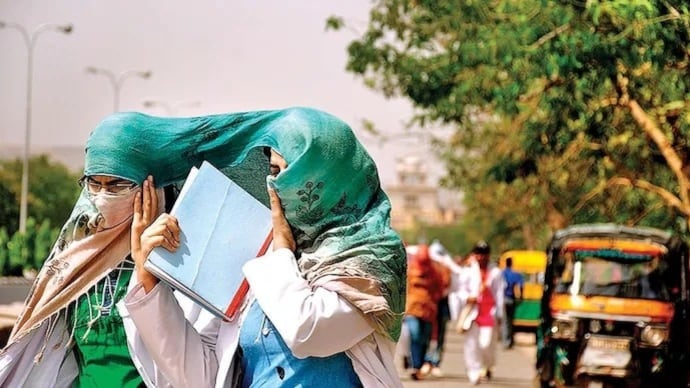
Pollution used to be a winter conversation in the national capital region. In summer, the culprit isn't smoke from stubble burning, it’s dust. (Representational image)

UPDATED: May 20, 2026 16:46 IST
The temperature in Delhi NCR is hovering around 45 degrees Celsius, but even so, the authorities recognise that pollution is here.
The Commission for Air Quality Management imposed stage 1 of the Graded Response Action Plan (GRAP) measures in Delhi NCR on Tuesday, May 19, 2026, as the air quality dipped to “poor” category, and was forecast to remain that way for the next few days.
According to the Central Pollution Control Board, AQI in Delhi on Tuesday, May 19, 2026, was 208, while in Noida it was 233, 247 in Ghaziabad, 312 in Greater Noida, and slightly better in Gurugram, at 178. But the recurring theme across these areas was the prominent pollutant. Not PM2.5, but PM10 (except in Gurugram, where both were equally prominent).
Pollution used to be a winter conversation in the national capital region. During winters, AQI is always high, there are barely any “good” category days – only “severe” or “hazardous”, and smog just becomes a part of life. But what most people don’t realise is that just because the season changed, it doesn’t mean that there is no pollution now. Only the dominant pollutant changed.
In summer, the culprit isn't smoke from stubble burning, it’s dust.
PM2.5 VERSUS PM10
Particulate matter (PM) in general refers to suspended particles in air that are small enough to be inhaled, with potential harmful effects to human health. They are classified based on size: PM10 has a diameter of 10 microns or less, which is less than the width of a single human hair strand. PM2.5 is even smaller.
Both PM10 and PM2.5 can enter the lungs when inhaled. Because of its small size, PM2.5 can deposit deep inside the lungs.
In India, dust particles primarily constitute PM10, while fossil fuel combustion, biomass burning, and vehicular emissions make up PM2.5 pollution.
DUST POLLUTION
In winter, PM2.5 is the dominating pollutant. In summer across north India, PM10 takes over. Three factors affect this: dust, wind, and geography.
The Thar Desert lies to the west and northwest of northern plains, covering parts of Rajasthan, Pakistan, and Afghanistan.
During summer, high temperatures can cause a thermal low-pressure system to develop over North India. According to Prarthana Borah, Fellow at the Council on Energy, Environment and Water, this system extends all the way to Iran. It is called a heat low and is a significant climatic phenomenon observed in dry regions at low latitudes when solar radiation is intense. The land heats up during the daytime, hot air rises upwards, creating an area of low pressure.
This heat low pulls in hot winds from surrounding areas, which can go up to 40-60 km/hour. We commonly call this “Loo”.
These winds don't travel empty. Loo carries dust from West Asia and the Thar Desert over north India and towards the Bay of Bengal.
Geography of the Indo-Gangetic Plains traps this dust. The northern plains are flanked by the Himalayas in the north, and the peninsular plateau in the south, leaving no room for the dust to disperse and escape.
This, in addition to alignment of large-scale weather systems, maintains pressure conditions in such a way that a steady supply of winds from the west, along with dust, continues for a few days during Loo episodes, raising PM10 pollutants, Borah explained.
The dust usually settles once the monsoon washes it out, but until then, these particles cause the spike in PM10 pollution in north India.
“Summer winds in north India are westerlies, which consistently bring in dust from Thar Desert to the plains, causing PM10 to dominate summer pollution,” Mahesh Palawat, Vice President of Meteorology and Climate Change at Skymet Weather, said.
Localised dust sources in north India add to PM10 levels. Unchecked construction adds dust to our atmosphere. The dust on our roads gets picked up by the winds and begins to circulate. Heat causes soil to dry, and this loose soil contributes to PM10 in the air.
“Hot weather desiccates the soil far more aggressively, leaving loose particles on every broken road and barren land parcel, ready to be lifted into the air,” Borah said.
“Heat accelerates soil desiccation and increases wind turbulence, allowing dust to travel significant distances and impact areas well beyond the original source,” she added.
GROUND-LEVEL OZONE POLLUTION
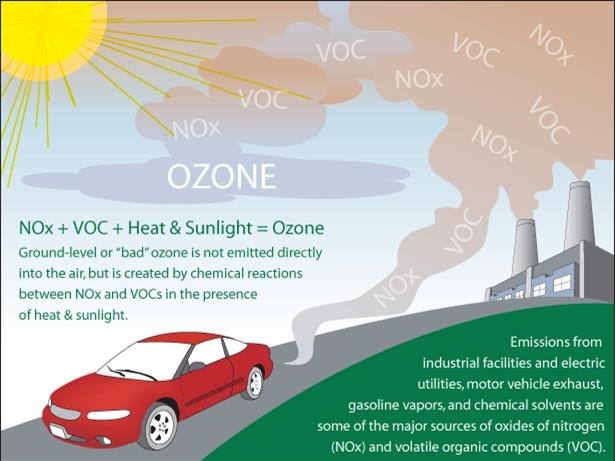
Three atoms of oxygen form the ozone gas molecule. When it’s high up in the atmosphere, it shields the earth from the ultraviolet rays of the sun. But when it forms near the ground, ozone acts as a pollutant.
Ground-level ozone is not directly emitted into the air. It forms as a result of chemical reactions between nitrogen oxides (NOx) and volatile organic compounds (VOC), which are usually released as emissions from vehicles, coal plants, and other industries.
These reactions are driven by heat and sunlight, which is why ground-level ozone pollution is a much bigger problem in summer months than in winters.
“Ground-level ozone is harmful for lung tubes and tissue, causes inflammation, irritation and damage, and worsens bronchial asthma,” Dr Gurmeet Singh Chabbra, pulmonologist at Yatharth Hospital, Faridabad, said.
SUMMER VS WINTER POLLUTION
One question that often comes up is that winters in north India are generally dry. Western disturbances used to contribute to crucial rain in the northern plains and snow in higher latitudes, but this phenomenon has reduced drastically in the past few years. But if winters are dry just like the summer, why is dust not a concern of the same stature then?
Dust pollution isn’t just about dry conditions. It needs energy to circulate, and winter in north India doesn’t have surface winds of the same intensity as summer Loo.
In winters, there is no heat low in north India. Wind systems are calmer, if not stagnant. This means that there isn’t enough force to carry the dust around.
Also, winters come after monsoon, when soil has enough residual moisture to hold the particles down. Early-morning dew and fog also helps bind soil particles, reducing suspension.
This does not mean that there is no dust and no PM10 pollutants in suspension during winter. It just means that the other source, PM2.5, has the opportunity to become the dominant pollutant.
Vehicular exhaust, stubble burning, and wood fires used for heating release PM2.5. Winters also see a phenomenon called temperature inversion, where the cold air is trapped by a layer of hot air above it, preventing PM2.5 from dispersing. The constant release of PM2.5 from ground activities overwhelms the air, making it the dominant pollutant and driving AQI readings.
“PM2.5 and PM10 can affect the upper airway, leading to sinus infections, worsening of allergic rhinitis causing symptoms like headache, nasal blockage, nasal discharge, sneezing, post-nasal drip, redness, irritation, watering and itching of eyes, throat irritation leading to persistent cough, throat clearing and changes in voice,” Dr Chhabra said, listing the ill effects of particulate pollution on human health.
“Local authorities should work towards addressing the root causes such as paving broken roads end-to-end and managing construction sites through stricter compliance monitoring to avoid such pollution spikes year on year,” Borah said on reducing dust pollution in Delhi NCR.
- Ends