
How diabetes rates have changed in India since 2015, new health survey reveals
While child and maternal health saw improved results, the latest National Family Health Survey paints a grim picture of lifestyle diseases like diabetes, obesity and hypertension.

Among women, the prevalence of diabetes rose from 13.5% in NFHS-5 to 17.8% in NFHS-6. (Photo: Getty Images)

New Delhi,UPDATED: Jun 1, 2026 16:29 IST
The sixth round of the National Family Health Survey-6 (NFHS-6) has revealed that diabetes is witnessing a sharp rise.
The survey, released by the Health Ministry on May 29, gives snapshot of the growing burden of lifestyle diseases, with obesity, diabetes and high blood pressure increasing among both men and women across the country.
Conducted in 2023-24 across nearly 6.79 lakh households in 715 districts, NFHS-6 provides one of the most comprehensive assessments of India's health.
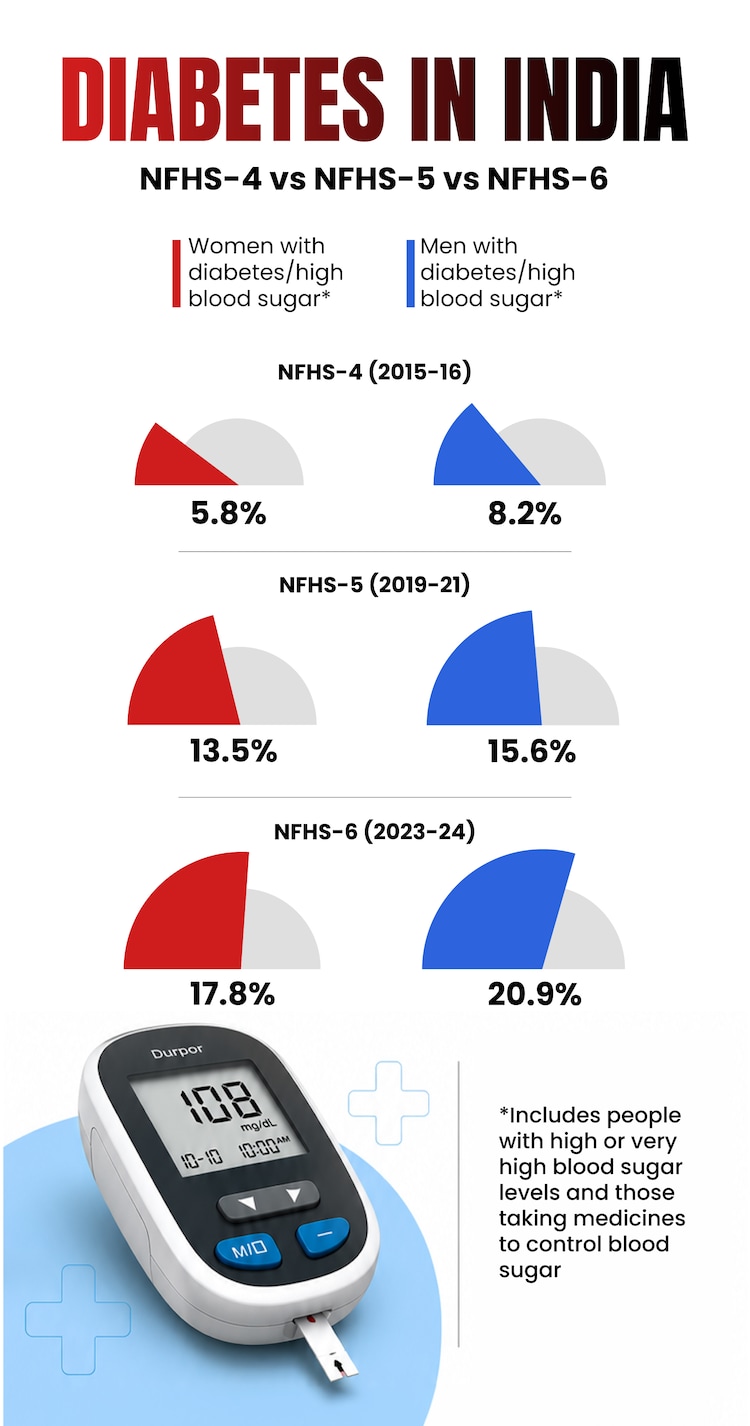
The survey found that diabetes, measured as high blood sugar levels or the use of medicines to control blood sugar, has increased significantly over the past five years.
Among women, the prevalence rose from 13.5% in NFHS-5 (2019-2021) to 17.8% in NFHS-6.
Among men, it increased from 15.6% to 20.9%, meaning that more than one in five Indian men now has diabetes or elevated blood sugar levels.
The findings come alongside a sharp increase in obesity, one of the biggest risk factors for Type 2 diabetes.
Obesity among women aged 15-49 increased from 24% in NFHS-5 to 30.7% in NFHS-6. Among men, the figure rose from 22.9% to 27.3%.
The survey notes that the rise in obesity between NFHS-5 and NFHS-6 is larger than the increase recorded between the previous two survey rounds, suggesting that the problem is accelerating.
The NFHS-6 also points to rising rates of hypertension. Around 15% of women and 16% of men were found to have mildly to moderately high blood pressure levels.
Obesity, diabetes and hypertension are closely linked and together increase the risk of heart disease, stroke, kidney disease and other chronic illnesses.
According to the World Health Organisation (WHO), excess body weight is one of the strongest risk factors for developing Type 2 diabetes. Excess fat, especially around the abdomen, can make the body's cells resistant to insulin, making it harder to control blood sugar levels.
The NFHS-6 findings show that while India has made progress in maternal and child health, it is also facing a growing epidemic of lifestyle diseases.
As obesity and diabetes continue to rise, prevention through healthier diets, regular exercise and early screening will be critical to reducing the country's future disease burden.
- Ends